
Chimpanzee Trekking Safaris in Uganda & Rwanda
Tailor-made chimpanzee treks in Uganda’s Kibale, Budongo & Kalinzu forests and Rwanda’s Nyungwe — permits secured, seasoned local guides, and eco-luxury lodges close to the trails.

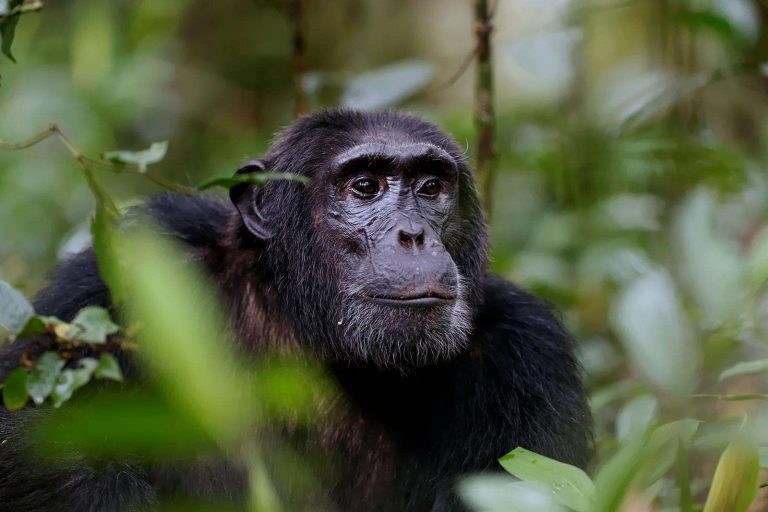
8-Day Classic Uganda Primates & Wildlife Safari
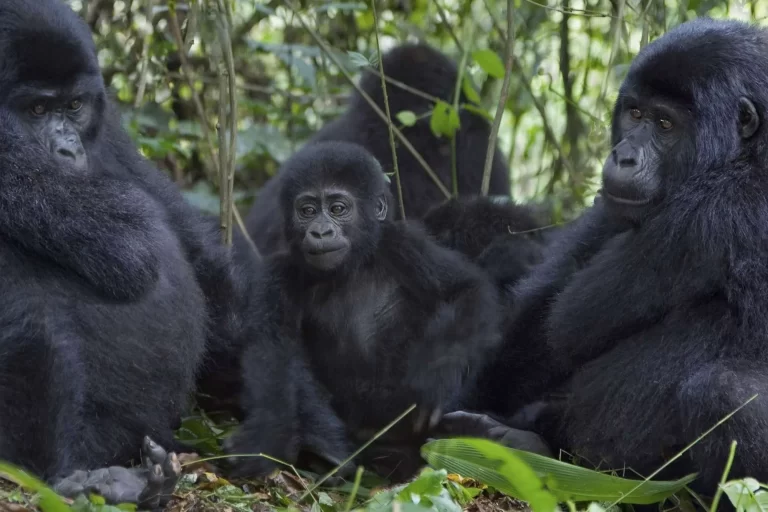
10-Day Classic Rwanda Primates Safari

10-Day Honeymoon in Uganda — Gorillas, the Nile & Chimpanzees
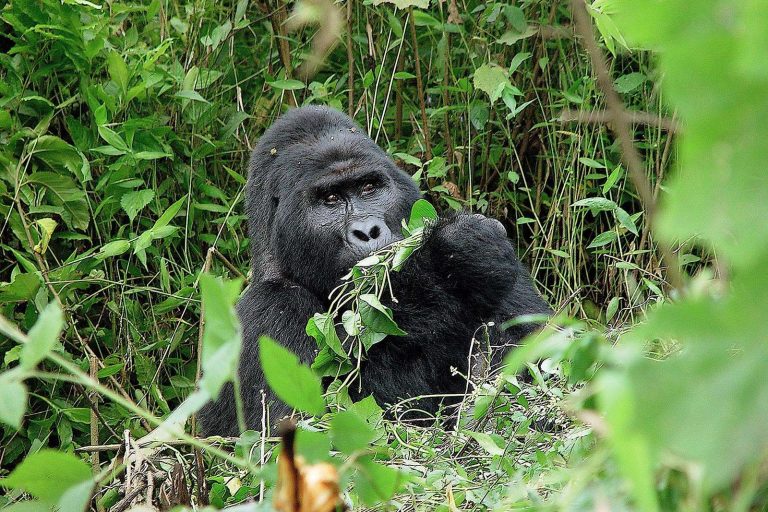
16-Day Explore Uganda — The Pearl of Africa Adventure

16-Day Rwanda Bird Watching Safari
16-Day Safari to Uganda’s Top National Parks

20-Day Uganda Bird Watching, Wildlife & Primates Safari

5-Day Chimps & Canopy Walk in Nyungwe Forest, Rwanda
7-Day Rwanda Primates Safari — Gorillas & Chimpanzees

8-Day Classic Uganda Primates & Wildlife Safari

9-Day Luxury Gorilla Safari in Uganda

9-Day Rwanda Family Safari — Primates, Nature Walks & Lake Kivu
The Chimpanzee Trekking Experience
Chimpanzee trekking is a guided hike through Uganda or Rwanda’s tropical forests to spend time with a habituated troop in the wild. Groups of 6–8 visitors, led by rangers, follow forest trails until the chimps are located, and the experience allows one hour of observation at close but regulated distance. It is one of the most popular primate encounters in East Africa, combining adventure with conservation impact.
The experience itself is dynamic and often sound-led. You may hear pant-hoots and drumming calls long before you see the chimps. Suddenly the canopy erupts with movement: juveniles swinging in play, mothers grooming carefully, alpha males asserting their rank. Unlike the calm, ground-based gorillas, chimpanzees are noisy, fast-moving, and highly social, giving you a vivid sense of their complex society.
- Standard Trek: One hour with a habituated troop. Small groups (6–8 trekkers). Minimum age: Uganda 12; Rwanda 15.
- Habituation Experience (Kibale only): Up to four hours alongside researchers, following chimps from their dawn nests to evening bedding. Very limited availability.
Curious about joining a habituation trek? Check availability with our team.
How it compares to gorilla trekking:
- Chimps: faster, louder, mostly in the trees. Gorillas: calmer, usually on the ground.
- Chimp treks: generally shorter and less strenuous.
- Permits: more accessible and affordable than gorilla permits, making chimps an easy add-on to a wider safari.
Where to Go Chimpanzee Trekking (Uganda & Rwanda)
Chimpanzee trekking is available in a handful of protected forests in Uganda and Rwanda. Each site offers a different blend of accessibility, success rates, and surrounding attractions. Choosing where to go depends on whether you want the highest chance of seeing chimps, a quieter off-the-beaten-path forest, or the ability to combine the trek with gorilla safaris or savannah game viewing.
Uganda
- Kibale Forest National Park: Known as Africa’s primate capital, with over 1,500 chimps and 13 primate species. Highest success rates (over 90%), plus the unique habituation program.
- Budongo Forest (Murchison Falls): Remote, old-growth mahogany forest, excellent birdlife and strong chimp populations. Works well with Murchison Falls safaris.
- Kalinzu Forest (near Queen Elizabeth NP): Smaller, affordable permits, strong sightings. Often added to big-game itineraries.
- Kyambura Gorge (Queen Elizabeth NP): Scenic canyon setting, lower chimp density but dramatic landscapes. Best as part of a savannah itinerary.
Rwanda
- Nyungwe Forest National Park: UNESCO-listed montane rainforest with chimps, 12 other primates, and a famous canopy walk. Success rates moderate but the overall forest experience is unmatched.
- Gishwati-Mukura National Park: Newly re-established forest corridor with a small chimp population. Fewer visitors, highly conservation-focused.
At a glance:
| Location | Permit Price (2025) | Success Rate | Trek Duration | Highlights |
|---|---|---|---|---|
| Kibale (Uganda) | USD 250 | Very high | 2–5 hrs | Primate capital, habituation option |
| Budongo (Uganda) | USD 130 | High | 2–4 hrs | Old-growth forest, near Murchison Falls |
| Kalinzu (Uganda) | USD 130 | Moderate | 2–4 hrs | Budget-friendly, near QENP |
| Kyambura (Uganda) | USD 100 | Low–moderate | 2–4 hrs | Scenic gorge, adventure feel |
| Nyungwe (Rwanda) | USD 150 | Moderate | 2–5 hrs | Canopy walk, biodiversity hotspot |
| Gishwati (Rwanda) | Varies (research-focused) | Low | 2–4 hrs | New park, intimate conservation focus |
Not sure which forest suits you best? Plan with a safari expert and we’ll match your dates and style.
What’s Included in a Chimpanzee Trekking Safari
When you book a chimpanzee trekking safari with Nkuringo, the essentials are covered from start to finish. This ensures your permits are guaranteed, logistics run smoothly, and you can focus fully on the experience in the forest.
- Permits: Secured and date-specific. We handle the allocation process directly with park authorities.
- Expert Guiding: Ranger escorts and our professional driver-guides provide safety, interpretation, and seamless coordination.
- Private Transfers: Dedicated 4×4 vehicle and driver-guide for all trailhead access and lodge transfers.
- Eco-Luxury Lodges: Hand-picked stays such as Mirima Kibale Lodge and Papyrus Guesthouse, plus vetted partners near trekking sites.
- Meals & Park Fees: Full board on trekking days, national park entry, and conservation levies included.
- Not Included: International flights, visas, insurance, gratuities, and personal expenses (e.g. drinks not listed).
See a sample itinerary with inclusions spelled out
When to Go Chimp Trekking
Chimpanzee trekking is offered year-round in Uganda and Rwanda, and sightings are reliable in every season. The difference lies in trail conditions, visitor numbers, and travel value.
- Best months: June–September and December–February are the driest seasons. Trails are firmer underfoot, access roads easier, and conditions more comfortable for trekking.
- Green season (March–May, October–November): Forests are at their lushest and birdlife peaks. Fewer trekkers mean quieter encounters and lower lodge rates, though trails can be muddier and more slippery.
- Year-round access: Chimps are present and habituated groups are tracked daily regardless of season. Permits are limited and always in demand, so book well in advance for any month.
Need help choosing the right month?
Talk to a consultant about your travel dates
Responsible Chimpanzee Trekking & Community Impact
Responsible chimp trekking means three things: protecting the chimpanzees, safeguarding the forest, and ensuring local people benefit. Our trips are designed around park authority guidance (UWA in Uganda, RDB in Rwanda) and our own community commitments.
Wildlife welfare (non‑negotiable rules):
– Small groups (6–8) led by rangers; minimum age 12.
– Keep at least 10 meters from the chimps; visits limited to one hour (habituation up to four).
– No flash, no feeding, no imitating calls, and keep voices low.
– If you’re unwell with a cold or other infectious illness, you will not trek; we help re‑plan where possible.
Community & conservation impact (where your money goes):
– Your permit and park fees fund habitat protection, ranger operations, and research in Kibale, Budongo, Kalinzu, Kyambura, and Nyungwe.
– Your booking sustains skilled local jobs—driver‑guides, trackers, lodge teams—and fair local supply chains.
– A portion of every safari supports Gorilla Junction Foundation programs (skills training, education support, and community‑led conservation projects around the forests).
– Around Kibale, the Bigodi Wetland Sanctuary is a strong example: local guides lead tours, and tourism revenue supports schools, women’s enterprises, and habitat restoration.
Low‑impact travel practices we build into your itinerary:
– Smart routing to reduce road time and emissions; vetted lodges with strong sustainability standards.
– Refillable water systems and reduced single‑use plastics; pack out what you bring in.
– Stay on marked trails; follow Leave No Trace hygiene (bury waste 30 cm deep where facilities are absent).
– Camera sound muted; keep phones on silent during the hour with the chimps.
– Masks may be recommended at the ranger’s discretion during briefings in line with current health advice.
Travel with a company that treats primate welfare and community benefit as part of the experience—not an afterthought.
Plan an ethical safari with us
Where You’ll Stay
The forests are the highlight, but where you stay shapes how well your trek flows. We select lodges for access, comfort, and their sustainability track record.
Uganda Stays
– Mirima Kibale Lodge: Eco-luxury base overlooking crater lakes and forest edges, purpose-built for chimp trekking in Kibale.
– Papyrus Guesthouse (Entebbe): Ideal stop on arrival or departure, set in tropical gardens just 15 minutes from the airport.
– Partner lodges near Queen Elizabeth NP and Bwindi make it easy to combine chimpanzees with gorilla treks or big-game safaris.
Rwanda Stays
– Nyungwe Forest Lodge (luxury) and Top View Hill Hotel (mid-range): Comfortable options with direct access to Nyungwe treks and canopy walks.
– Kigali: Boutique partners such as Heaven Boutique Hotel provide a stylish city base before or after your forest experience.
👉 Want to see rooms and rates for these lodges?

Some of Our
Frequently Asked Questions
Uganda: 12 years. Rwanda (Nyungwe/Gishwati): 15 years.
Groups are limited to 6–8 trekkers per troop to reduce stress on the chimpanzees.
Most treks last 2–5 hours depending on where the troop is located. Standard permits allow one hour with a habituated troop. The Kibale habituation experience extends this to up to four hours.
Uganda: USD 250 (Kibale), USD 200 (Budongo), USD 50 (Kalinzu/Kyambura). Rwanda: USD 150 (Nyungwe), USD 100 (Gishwati). Permits are date-specific and must be purchased through licensed operators.
Unique to Kibale Forest, the habituation trek allows you to accompany researchers and spend up to four hours with a semi-habituated troop as they go about their full day.
The driest months (June–September and December–February) offer the easiest trails and most comfortable conditions, but chimpanzee trekking is available year-round.
Kibale Forest offers a 90%+ success rate, among the highest in Africa. Other sites like Budongo, Kalinzu, and Nyungwe have slightly lower but still strong success rates.
Generally yes. Chimp treks are often shorter and less steep, though trails can still be muddy and challenging, especially in the rainy season.
Yes, photography is allowed, but flash is strictly prohibited. Keep cameras quiet, follow ranger instructions, and respect the 10‑meter distance.
No. The age limit is 12. Families with younger children can explore nearby activities like the Bigodi Wetland Sanctuary, which offers rich primate and bird experiences.
Yes. Many itineraries combine Kibale or Nyungwe chimps with gorilla treks in Bwindi (Uganda) or Volcanoes NP (Rwanda). It’s one of the most popular multi-primate safari options.
Yes. All treks are ranger-led, with strict distance and conduct rules. Rangers are trained to manage group safety and animal welfare.
If you are sick with a cold, flu, or other infectious illness, you may not trek to prevent disease transmission to the chimps. Masks may be required at the ranger’s discretion.
Permits are limited and can sell out 6–12 months in advance, especially in the peak seasons (June–September, December–February). Early booking secures your preferred dates and location.
A moderate level of fitness is recommended. Trails can be muddy and steep, particularly in the wet season, but porters are available to assist and hiring them supports local livelihoods.
Testimonials
