
The Great Migration, Big Five & Kilimanjaro
Tanzania Safaris
Tanzania is East Africa’s classic safari destination — home to the Serengeti, the Ngorongoro Crater, and the annual Great Migration of over two million wildebeest and zebra. It holds the full Big Five, the continent’s highest peak in Kilimanjaro, and the island of Zanzibar for post-safari beach time. Whether you’re tracking lions across open plains or climbing above the clouds, Tanzania delivers the defining African safari experience.

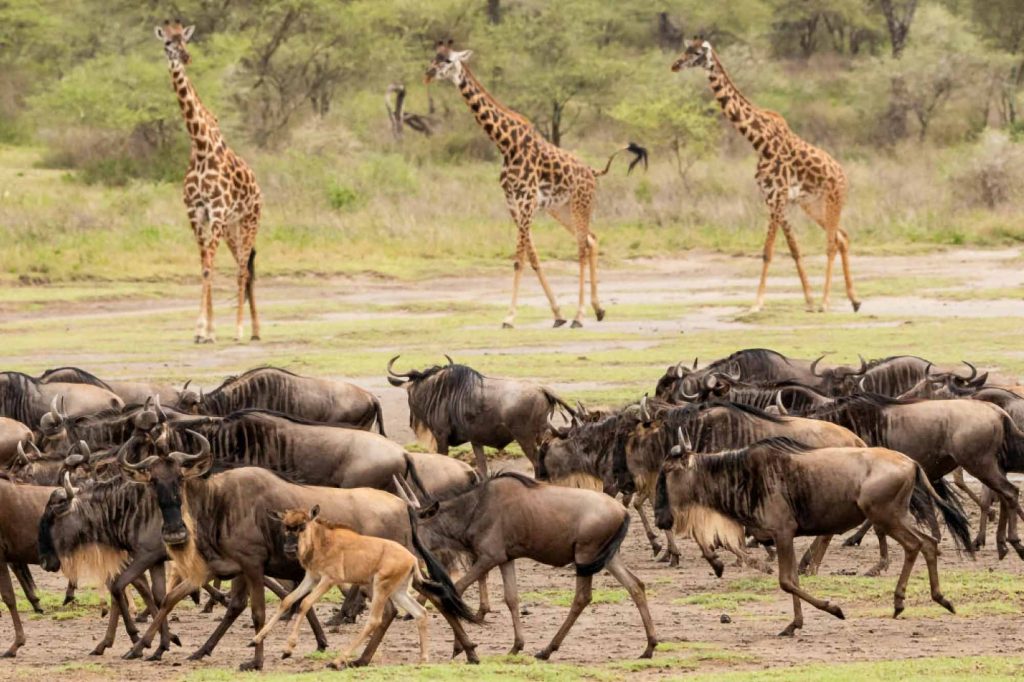
Tanzania is the country that defined what most people picture when they think of an African safari. The Serengeti — 14,763 km² of open savannah — holds the world’s largest intact land-mammal migration: more than two million wildebeest, zebra, and gazelle moving in a continuous annual loop between Tanzania’s southern plains and Kenya’s Masai Mara. The river crossings at the Grumeti and Mara rivers, where crocodiles wait in the shallows as animals plunge across, are among the most dramatic wildlife events on earth.
The Ngorongoro Conservation Area adds a second, entirely different experience: a collapsed volcanic caldera 19 km across, sheltering a self-contained ecosystem with Africa’s highest concentration of large predators and one of the continent’s last viable black rhino populations. Unlike most of Tanzania’s parks, Ngorongoro almost guarantees Big Five sightings on a single day’s drive.
Beyond the north, southern Tanzania offers the Selous Game Reserve (now Nyerere National Park) — Africa’s largest protected area — and Ruaha National Park, both known for remoteness, exclusivity, and wild dog sightings. Mahale Mountains and Gombe Stream give access to chimpanzees in forest habitats. These southern parks see a fraction of the northern circuit’s visitor numbers.
Climbing Kilimanjaro — at 5,895m Africa’s highest peak — stands apart as its own expedition. Multiple routes lead to the summit across five climatic zones, from rainforest to glacier, over five to nine days. No technical climbing experience is required, but physical preparation and altitude acclimatisation are essential.
Finally, Zanzibar provides a natural end point: a spice island off Tanzania’s coast with white-sand beaches, turquoise Indian Ocean water, and Stone Town, a UNESCO World Heritage Site whose narrow streets carry the layered history of Arab, Portuguese, and British influence. A safari-and-beach combination using Tanzania is one of the most natural in Africa.
Tanzania suits first-time safari travellers drawn by the iconic Serengeti and Ngorongoro circuit, experienced safari-goers seeking the remote southern parks, trekkers targeting Kilimanjaro, and those wanting wildlife and beach in a single itinerary. It pairs naturally with Kenya on a multi-country east Africa circuit, or with Uganda or Rwanda for those combining savannah with gorilla trekking.
Climbing Mount Kilimanjaro

**Mount Kilimanjaro is Africa’s highest peak — a 5,895m dormant volcano in northern Tanzania visible from 150 km away on a clear day. Approximately 12,000 climbers attempt the summit each year, with around 64% reaching Uhuru Peak. No technical climbing gear is required — but altitude, preparation, and route choice determine success. Most climbers combine Kilimanjaro with a Tanzania safari or Amboseli National Park in Kenya.
Kidepo Valley National Park

Kidepo Valley National Park is Uganda’s most remote national park — a semi-arid wilderness in the far northeast near the South Sudan border, as different from the western circuit parks as it is possible to get in a single country. It holds 20 predator species including cheetah, caracal, and wild dog, along with northern-specialist wildlife unavailable anywhere else in Uganda. Visitor numbers remain very low. Flying in is the most practical approach.
Lake Manyara National Park
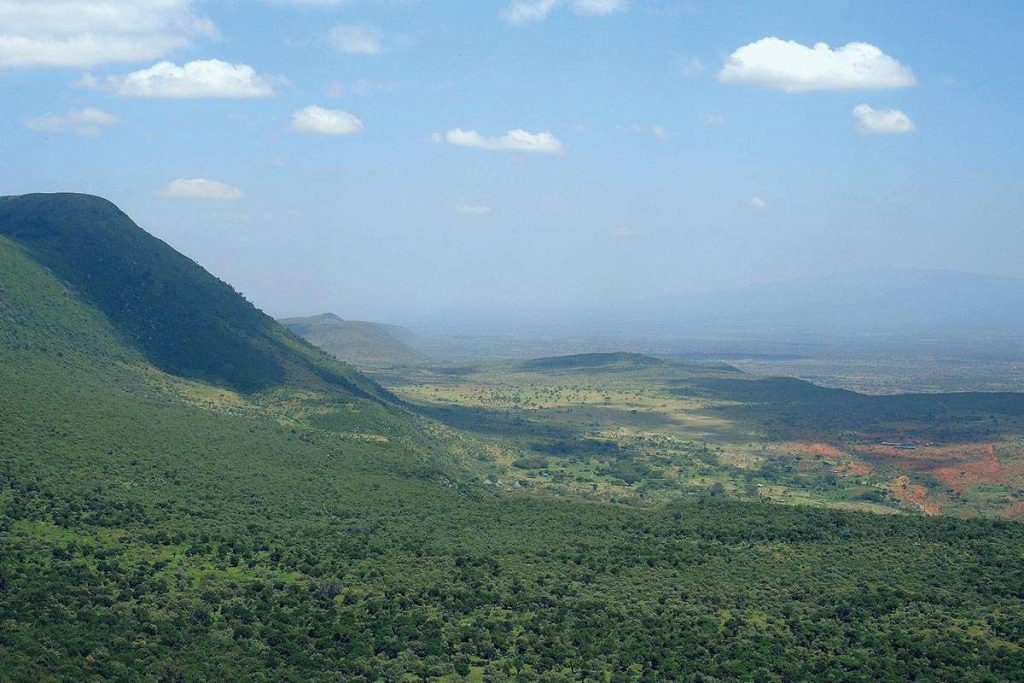
Lake Manyara National Park is a compact 330 km² park in northern Tanzania, 126 km west of Arusha on the floor of the Great Rift Valley. Famous for its tree-climbing lions, dense elephant population, flamingo-fringed lake, and 400+ bird species, it sits naturally as a first-day stop on the Tanzania northern circuit — en route to both Ngorongoro Conservation Area and the Serengeti.
Ngorongoro Conservation Area
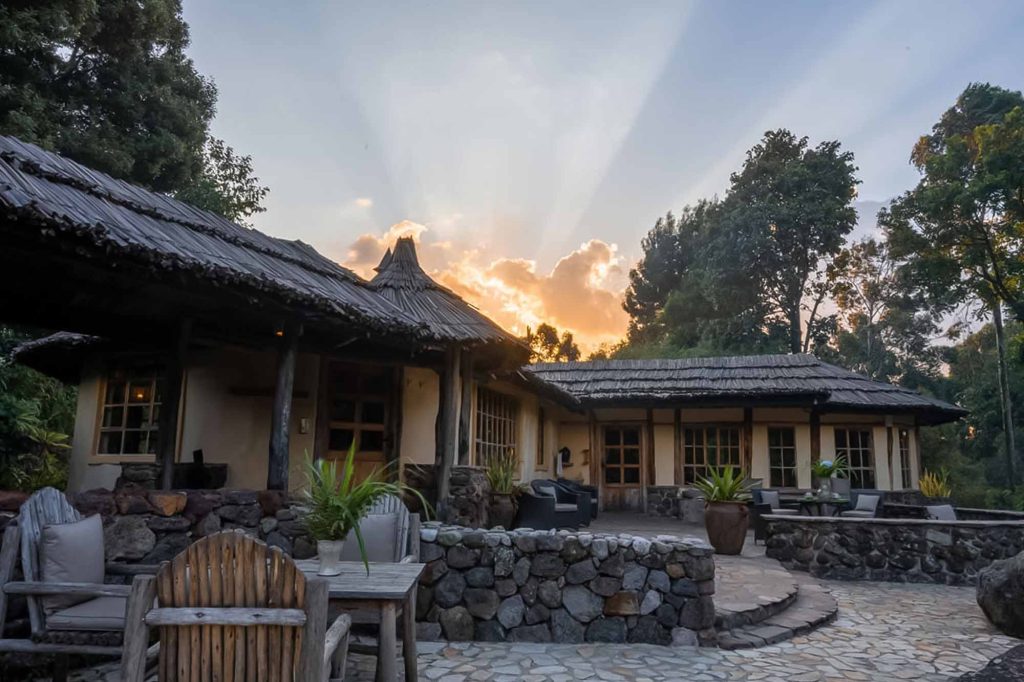
The Ngorongoro Conservation Area is a UNESCO World Heritage Site in northern Tanzania covering 8,300 km² of volcanic highlands, ancient gorge, and the Ngorongoro Crater — the world’s largest intact volcanic caldera. The crater floor holds the highest predator concentration in Africa, with all of the Big Five, including endangered black rhino, in a self-contained 260 km² bowl. Three hours by road from Arusha and directly connected to the Serengeti.
Rwenzori Mountains National Park
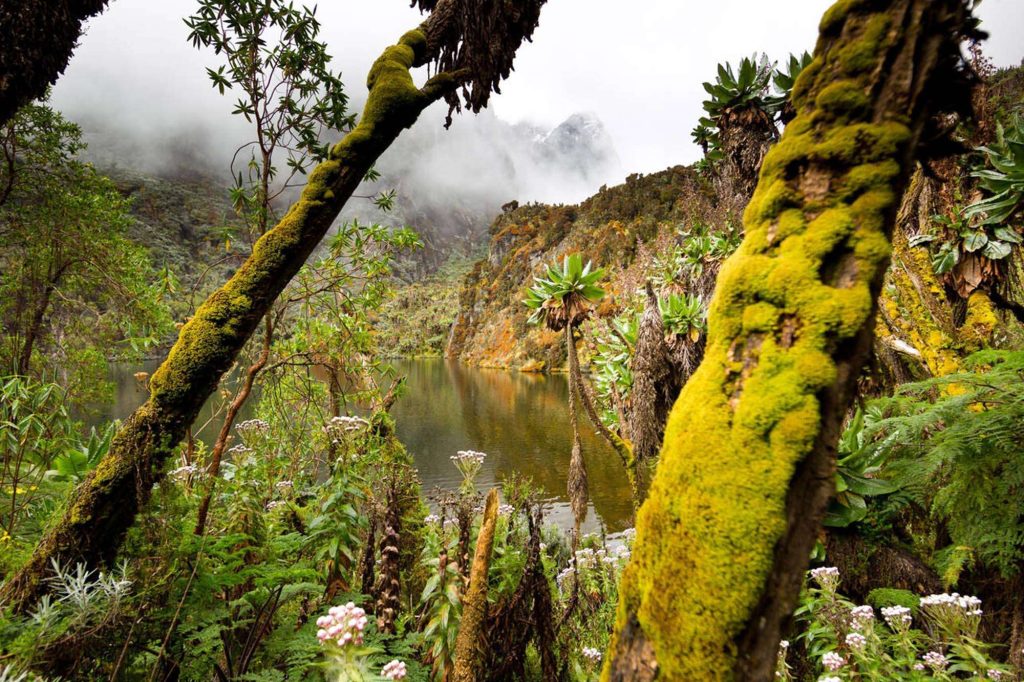
Rwenzori Mountains National Park is a 996 km² UNESCO World Heritage Site on Uganda’s western border with the DRC, protecting Africa’s third highest massif. Margherita Peak on Mount Stanley reaches 5,109m — one of only three glaciated mountain ranges remaining in Africa. The Rwenzoris offer trekking routes ranging from 2-day lower slope walks to the 9-day central circuit to Margherita Peak, through some of the most extraordinary mountain vegetation on the continent.
Serengeti National Park
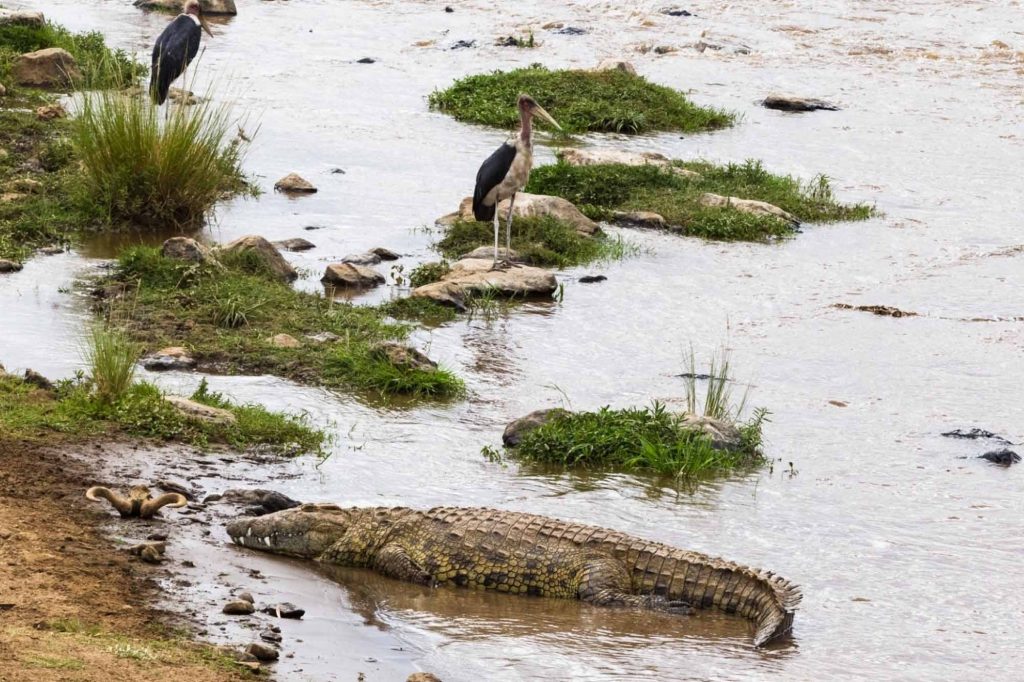
Serengeti National Park is a 15,000 km² UNESCO World Heritage Site in northern Tanzania — the world’s most celebrated wildlife destination. Home to the Great Migration of over 1.5 million wildebeest and 250,000 zebra, and the best place on earth to see lion, leopard, and cheetah together, it forms the Tanzanian heart of the Serengeti-Mara ecosystem shared with Kenya’s Masai Mara. Three days is the minimum for a first visit; flying in is strongly recommended.
Tanzania’s northern circuit — the Serengeti and Ngorongoro — is a year-round destination, with conditions and experiences varying significantly across seasons. The single biggest driver of timing for most visitors is the Great Migration: a year-round event but with a clear peak for the famous river crossings. The southern circuit (Selous, Ruaha) is seasonal, with camps typically closed during the long rains. Kilimanjaro can be climbed year-round, with two preferred windows.
The dry season (June–October) is Tanzania’s peak safari period: grass is low, wildlife is concentrated around water, and the Serengeti’s northern corridor sees the migration river crossings at their most dramatic. The great migration is a year-round phenomenon — understanding which part of it you are likely to encounter is one of the most important planning decisions for a Tanzania itinerary.
The short dry season brings some of the best game viewing of the year. In January and February, the wildebeest calving season occurs in the short grass plains of the southern Serengeti — hundreds of thousands of calves are born in a three-week window, drawing lion, cheetah, and hyena in exceptional concentrations. This is the best time for predator action in the Ngorongoro Crater and southern Serengeti. Kilimanjaro views are clear and the mountain is in excellent condition for climbing. Visitor numbers are moderate and rates are competitive against peak dry-season prices.
The long rains arrive in March, intensifying through April and into May. This is the quietest and cheapest period for Tanzania safaris. Many camps in the southern circuit close, and some northern camps operate on reduced programmes. Roads in the Serengeti can become difficult after sustained rain. However, the landscape is lush and green, birds are prolific (including European migrants), and the northern parks remain accessible. Rates drop significantly and camps are largely empty — suited to experienced safari travellers who prioritise exclusivity and value over peak conditions.
Tanzania’s main dry season and peak travel window. This is when the Great Migration river crossings occur — July and August see the herds concentrated in the northern Serengeti near the Mara River, with crossings at their most dramatic. Lions, leopards, and cheetahs are active in open habitat with low vegetation. The Serengeti and Ngorongoro are at their busiest — book camps and lodges well in advance. Southern circuit camps are operational and conditions are excellent. Kilimanjaro is drier in July–August but can be cold at altitude. Accommodation rates are at their highest.
The short rains arrive in November, typically lasting four to six weeks before clearing in December. November is a transitional month: camps are less crowded than peak season, rates ease, and the landscape begins to green. The Ngorongoro Crater remains excellent year-round. By December, conditions improve again and the southern Serengeti begins to fill with wildebeest moving towards the calving grounds. December is a popular month for family travel, with rates rising again for the Christmas and New Year period. Zanzibar is hot and generally dry in December — a good time to finish a safari with beach time.
Entry and Visa: Most nationalities require a visa for Tanzania. A single-entry tourist visa costs USD $50, available online through the Tanzania e-visa portal (eservices.immigration.go.tz) or on arrival at major entry points, though online applications are strongly recommended to avoid queues. Citizens of some East African Community member states and select other countries may enter without a visa — check current requirements with your nearest Tanzanian embassy before travelling. Your passport must be valid for at least six months beyond your intended departure date.
A Yellow Fever vaccination certificate is required for entry if arriving from a country with a risk of yellow fever transmission. Proof may be requested at the border. Always carry the original certificate.
Health: Malaria is present throughout most of Tanzania, including in safari areas and on Zanzibar. Consult your travel health provider about appropriate prophylactic medication well in advance of travel. DEET-based insect repellent and covering up at dusk are standard precautions. For Kilimanjaro climbers, altitude sickness is a significant risk above 3,000m — acclimatisation built into longer routes (seven days or more) substantially reduces the risk. Travel insurance covering emergency medical evacuation is strongly recommended.
Getting There: Tanzania’s main international gateway is Julius Nyerere International Airport (DAR) in Dar es Salaam. Kilimanjaro International Airport (JRO) near Arusha is the primary entry point for the northern safari circuit and is directly connected to several European hubs including Amsterdam (KLM), and via Nairobi or Addis Ababa with Ethiopian Airlines and Kenya Airways. Zanzibar International Airport (ZNZ) has direct regional connections and can also be reached on short domestic hops.
Within Tanzania, the northern circuit (Serengeti, Ngorongoro, Tarangire) is typically accessed from Arusha by light aircraft to bush airstrips, or by road transfer. Domestic carriers including Coastal Aviation, Auric Air, and Air Excel connect Arusha and Dar es Salaam to airstrips throughout the northern and southern circuits. The baggage allowance on light aircraft is typically 15 kg per person including hand luggage, in soft-sided bags.
Budget: Tanzania’s national park fees are among the highest in Africa, particularly in the Serengeti (currently USD $82 per person per day for the main park area). These fees are not always included in lodge rates — always clarify what is and is not covered before booking. Most premium camps in the Serengeti operate on an all-inclusive rate that covers accommodation, meals, game drives, park fees, and often drinks. Budget and mid-range options operate on a full-board rate, with park fees and activities billed separately.
As a rough guide: mid-range camps and lodges in the northern circuit typically run USD $400–600 per person per night all-inclusive; luxury camps USD $600–1,200+. Ngorongoro Crater descents require a separate vehicle and crater fee on top of the Conservation Area entry fee.





Tanzania Safari Itineraries
Plan Your Tanzania Safari
Tanzania’s safari circuits suit a wide range of trip lengths and priorities. A classic northern circuit — Serengeti, Ngorongoro, and Tarangire — can be covered in seven to nine days and is the natural starting point for first-time visitors. Longer itineraries add the southern parks, a Kilimanjaro climb, or a Zanzibar beach extension. Tanzania also connects naturally with Kenya, Uganda, and Rwanda on multi-country east Africa trips.

7-Day Serengeti & Ngorongoro Wilderness Safari

9-Day Serengeti & Zanzibar Tanzania Safari
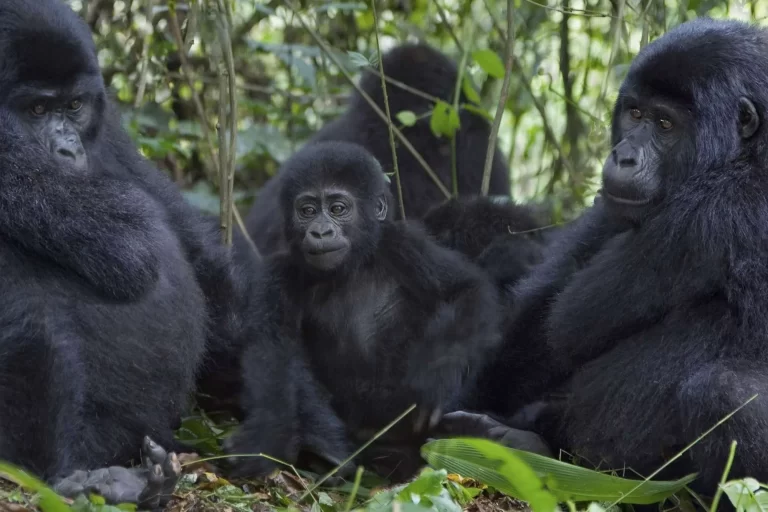
9-Day Tanzania & Rwanda Luxury Safari — Gorillas and the Serengeti

9-Day Treasures of Tanzania Safari
Some of Our
Frequently Asked Questions
The dry season from June to October is the most popular period for wildlife viewing — low vegetation, concentrated animals, and the Great Migration river crossings in the northern Serengeti in July and August. January and February offer an alternative peak: the calving season in the southern Serengeti draws exceptional predator concentrations and is less crowded than the main dry season. The long rains (March–May) are the quietest and cheapest period, with some camps closed.
The Great Migration is the continuous movement of approximately two million wildebeest, zebra, and Thomson’s gazelle in a circular route between the Serengeti and Kenya’s Masai Mara. It is a year-round event with different phases: calving in the southern Serengeti from December to March, a northward movement through the central and western Serengeti from April to June, dramatic Mara River crossings in the northern Serengeti from July to October, and a southward return from November. The river crossings — where crocodiles ambush animals entering the water — are the most dramatic phase and peak in July and August.
Not at all — Tanzania alone supports a full and varied safari itinerary. However, combining the two countries is popular because the Great Migration straddles the border: the Serengeti and the Masai Mara are part of the same ecosystem, and following the herds from Tanzania into Kenya (or vice versa) gives a more complete picture of the migration. A combined Tanzania–Kenya trip of 10–14 days covers the most ground. Most travellers fly between the two countries rather than driving.
Kilimanjaro requires no technical climbing skills — it is a high-altitude trek, not a technical ascent. That said, reaching the Uhuru Peak summit (5,895m) is physically demanding and altitude sickness is the primary risk, affecting roughly half of those who attempt it. Success rates are significantly higher on longer routes (seven or more days) that allow more acclimatisation time. Most operators recommend the Lemosho or Machame routes for their acclimatisation profiles. Good physical fitness and appropriate preparation are essential. See the full Kilimanjaro climbing guide for more.
The Ngorongoro Conservation Area protects a 19 km-wide volcanic caldera — the world’s largest intact and unflooded caldera — whose steep walls create a self-contained ecosystem. Unlike the Serengeti, where wildlife disperses across vast plains and sightings require active tracking, Ngorongoro’s enclosed geography means animals are confined within the crater. It holds around 25,000 large animals including all Big Five — notably one of Africa’s last viable black rhino populations. A crater floor descent is typically a half-day or full-day activity included as part of a northern circuit itinerary.
Yes — this is one of the most common Tanzania itinerary structures. A seven to ten-day northern circuit safari is followed by four to seven nights on Zanzibar for beach time. Zanzibar is a 30-minute flight from Dar es Salaam or a short hop from Kilimanjaro Airport. The island offers Indian Ocean beaches, snorkelling and diving on coral reefs, and Stone Town — a UNESCO-listed historic centre whose architecture reflects Arab, Portuguese, Indian, and British colonial layers. Best beach conditions are December–February and June–September, which align with Tanzania’s peak safari seasons.
Testimonials
