
Rwanda's Big Five Safari Park
Akagera National Park
Akagera National Park is a 1,122 km² wildlife reserve in northeastern Rwanda on the Tanzania border — the only place in Rwanda where you can see the Big Five. A mosaic of savannah, woodland, and extensive wetlands covering over a third of the park, it holds 520+ bird species including the shoebill, lions and black rhino reintroduced after decades of absence, and Lake Ihema for boat safaris. Two to three hours from Kigali by road.

Akagera is Rwanda’s only savannah park and its only Big Five destination — a completely different character from the country’s forest and volcano experiences at Nyungwe and Volcanoes. It fills the game drive and open-plains gap in a Rwanda circuit, and it does so in a landscape of genuine beauty: papyrus-fringed lakes, rolling acacia woodland, and open grassland that looks nothing like the country’s highland interior.
The Big Five are all present:
- Lion — reintroduced from South Africa in 2015 and 2017; breeding population established
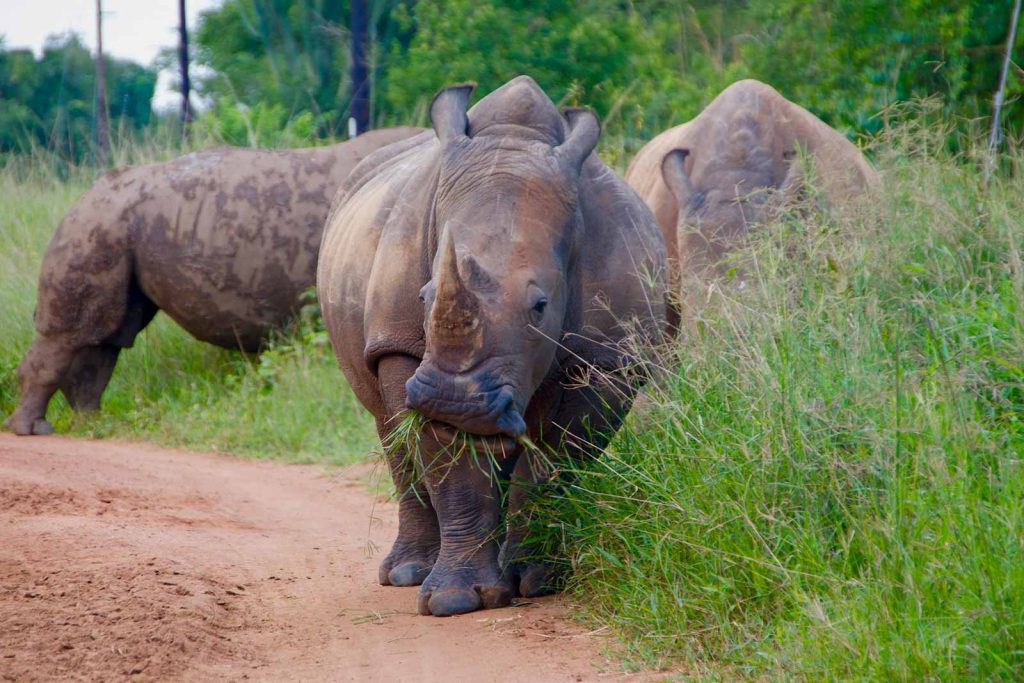
- Black rhino — reintroduced in 2017 and 2019 after the last wild individual was lost to poaching; population growing
- Elephant — large herds, regularly seen at waterholes and lake margins
- Leopard — present throughout the woodland zones
- Buffalo — abundant across the savannah
The wider wildlife list is strong:
- Masai giraffe, Burchell’s zebra, hippo, Nile crocodile
- 11 antelope species — topi, roan antelope, waterbuck, eland, impala, sitatunga, klipspringer, oribi, and others
- Olive baboon, vervet monkey, hyena, serval, warthog, and bushpig
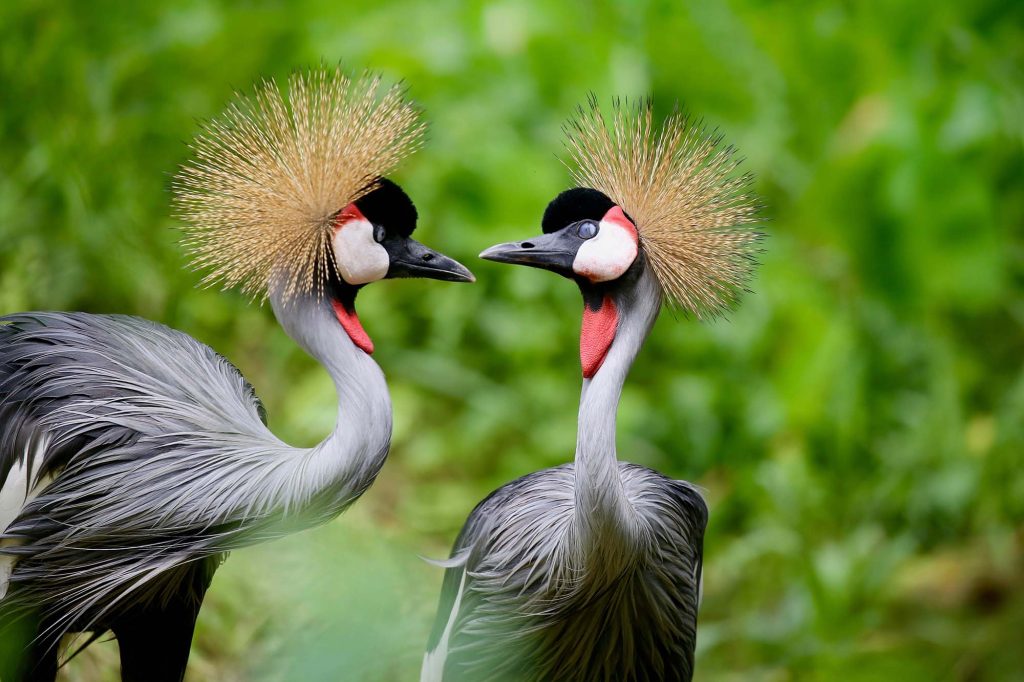
Birding is the other major draw. 520+ recorded species make Akagera one of the most species-rich parks in the region. Shoebill is possible in the northern papyrus swamps. Papyrus gonolek, African fish eagle, grey crowned crane, saddle-billed stork, and a strong selection of Palearctic migrants (October to April) all feature.
Activities beyond game drives:
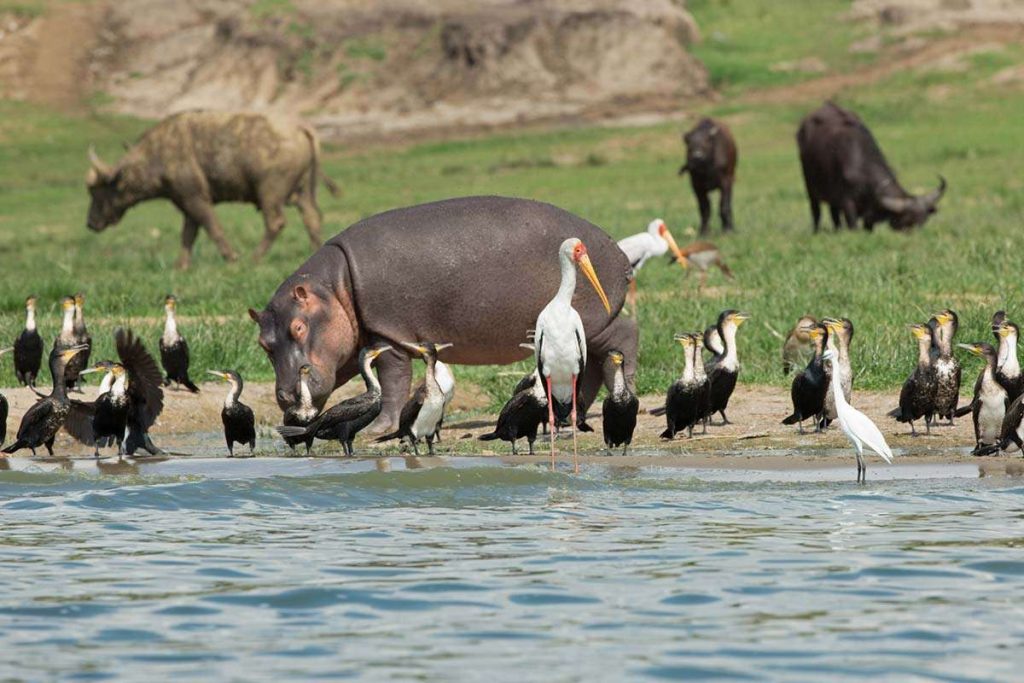
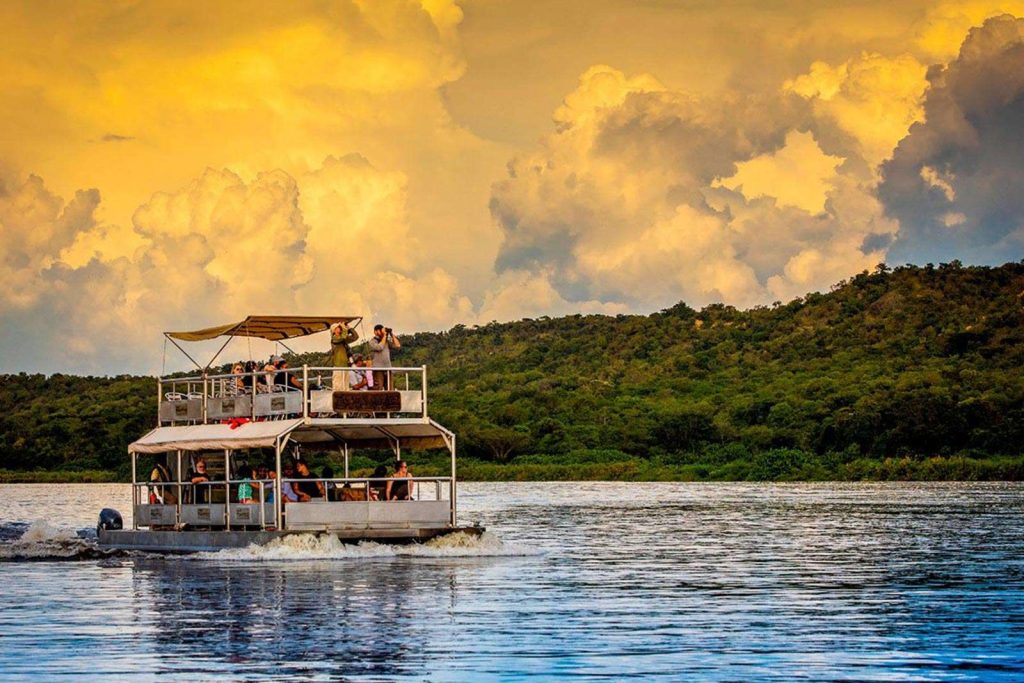
- Boat safaris on Lake Ihema — hippos, crocs, and waterbirds at close range
- Night game drives in the southern sector — aardvark, genet, and nocturnal cats
- Sport fishing on Lake Shakani
- Walk the Line Tour (7 km, 2 hours, $30/adult) along the park’s perimeter fence
- Primitive Walking Trail (40 km, 3 nights, August–October only)
Akagera suits Rwanda-focused travellers wanting to add a savannah dimension to a primates-and-forest circuit, first-time Rwanda visitors wanting the Big Five, and dedicated birders targeting the shoebill and Lake Victoria Biome species.
Akagera is a year-round destination. Its savannah character means it functions well in all seasons, with the dry periods offering the most predictable game viewing and accessible roads.
The dry seasons — June to early September and December to February — are the best overall windows. Wildlife concentrates around the lake system and remaining waterholes. Vegetation is lower and sightlines are clearer. The wet seasons (March to May and late September to November) bring lush landscapes and excellent birding — Palearctic migrants are present from October to April — but roads can become muddy and some areas less accessible.
Main dry season and peak game viewing. Wildlife concentrates around the lakes and waterholes. Lion and rhino sightings are most reliable. Roads are in their best condition. Birding is strong but the wet season migration window adds more diversity. Avoid August if heat-sensitive — temperatures peak and some animals retreat to shade.
Short dry season. Good conditions throughout with clear sightlines and dry roads. One of the best windows for lion sightings as vegetation is low. Palearctic migrants still present from December. Fewer visitors than the June–September peak and competitive rates at some lodges.
Wet seasons bring lush green landscapes and the strongest birding of the year — October to April is the prime Palearctic migrant window. Shoebill sighting probability increases as water levels rise in the northern swamps. Roads can be muddy and some remote areas less accessible. Lower accommodation rates and fewer visitors.
Getting here: Akagera is approximately 110 km from Kigali — 2–3 hours by road on a well-maintained tarmac highway, transitioning to a 28 km dirt road to the park headquarters. A 4×4 is strongly recommended. Charter flights are available from Kigali International Airport via Akagera Aviation — significantly faster but at additional cost. Nkuringo Safaris collects from Kigali in a safari vehicle.
Entry fees and activities:
- Half-day game drive (5 hours): from $180 pp
- Full-day game drive (11.5 hours): from $280 pp
- Night game drive (2.5 hours): $40 adults, $25 children aged 6–12
- Boat safari — morning trips from $35 pp; sunset cruise from $100 pp; private boat from $180
- Walk the Line Tour: $30 adults, $20 children
- Self-drive is permitted but a guide is strongly recommended for lion and rhino location
Accommodation:
- Ruzizi Tented Lodge (luxury) — 9 eco-tents on Lake Ihema’s shore; max 20 guests; solar-powered; night drives and boat excursions included
- Magashi Camp (luxury) — 8 tents overlooking Lake Rwanyakazinga in the north; private decks; conservation-focused; gourmet dining
- Mantis Akagera Game Lodge (mid-range) — hilltop position with park views; pool and restaurant; guided drives available
- Karenge Bush Camp (mid-range) — rustic tented camp; community-focused; guided drives and walking
- Akagera Game Lodge (budget/mid-range) — near the park entrance; basic amenities; most affordable option
All accommodation rates confirmed at booking.
Health and practical: Standard Rwanda health precautions apply — anti-malarial prophylaxis recommended; Akagera’s lower altitude and warmer temperatures present a higher malaria risk than highland Rwanda. Yellow fever vaccination requirements depend on travel history. Rwanda e-visas at migration.gov.rw. Plastic bags banned in Rwanda — do not bring them.







Some of Our
Frequently Asked Questions
Yes. Akagera National Park is the only protected area in Rwanda where all five of the Big Five can be seen — lion, leopard, elephant, buffalo, and black rhino. Lion and black rhino were both reintroduced after being lost to poaching: lions from South Africa in 2015 and 2017; black rhino in 2017 and 2019. Both populations are breeding and growing under the management of African Parks, which has co-managed the park since 2010.
The shoebill — one of Africa’s most sought-after birds — is present in Akagera’s northern papyrus swamps but sightings are not guaranteed. The northern wetlands around Lakes Hago and Rwanyakazinga give the best probability. Water levels affect shoebill positioning; the wet season (October to April) can concentrate them closer to accessible areas. A dedicated birding guide who knows current shoebill locations significantly improves the chances of a sighting.
Approximately 110 km — 2–3 hours by road. The main Kigali-to-Akagera highway is well-maintained tarmac; the final 28 km to the park headquarters is a dirt road that is manageable year-round but muddier after heavy rain. Charter flights from Kigali International Airport via Akagera Aviation are available for those wanting to reduce the journey time.
Yes — Akagera is typically added at either end of a Rwanda gorilla circuit. It sits 2–3 hours east of Kigali and is most naturally visited at the start of a trip (before driving northwest to Volcanoes National Park) or at the end (returning east from Volcanoes via Kigali). The 10-Day Classic Rwanda Primates Safari and the 16-Day Rwanda Birding Safari both include Akagera as a standard circuit stop.
For an immersive lake setting, Ruzizi Tented Lodge (9 eco-tents, Lake Ihema shore, luxury) is the park’s most distinctive option — maximum 20 guests and solar-powered. Magashi Camp in the north (8 tents, luxury) is the most exclusive and is best for northern zone lion and rhino game drives. For a mid-range option, Mantis Akagera Game Lodge offers a comfortable hilltop base. All confirmed at booking with current rates.
Yes. Game drives, the Lake Ihema boat safari, and sport fishing on Lake Shakani all work well for mixed-age groups. Night drives are available for children over 6 (charged at $25 for ages 6–12). The park is not heavily congested and the lodge infrastructure is family-friendly. Akagera works particularly well as a lower-pressure introduction to Big Five game viewing before or after the more active gorilla trekking component of a Rwanda trip.
Testimonials
