
Kenya's Private Conservancy Wilderness
Laikipia Plateau
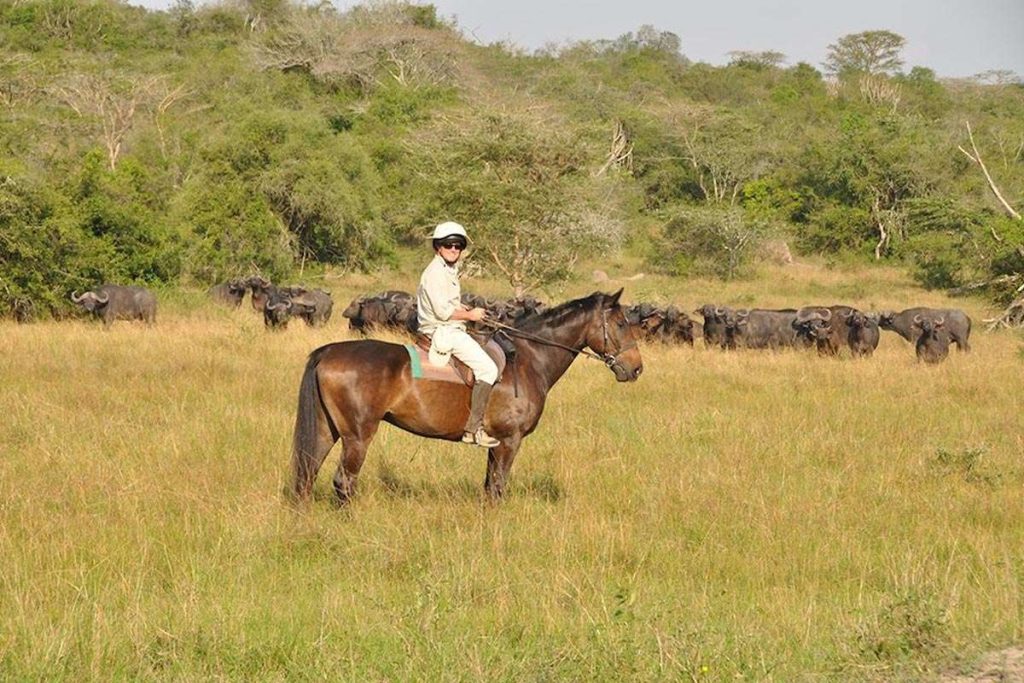
The Laikipia Plateau is a 9,500 km² patchwork of private conservancies and community ranches stretching from the northwestern slopes of Mount Kenya to the Rift Valley rim. It holds Kenya’s second-highest wildlife density after the Masai Mara — including the Big Five, wild dogs, Grevy’s zebra, and black rhino — with night drives, bush walks, and horseback safaris that national parks simply don’t permit.

Laikipia is where Kenya’s most progressive conservation happens — and it shows in the quality of the safari experience. Because the land is privately managed rather than a national park, camps can offer activities unavailable elsewhere: night drives, guided bush walks, horseback safaris, and camel treks. Vehicle numbers are low and game drive areas are often exclusive to a single camp.
Wildlife highlights:
- Big Five all present — lion, elephant, buffalo, leopard, and both black and white rhino
- Wild dogs — Laikipia is the best place in East Africa to see African wild dogs
- Grevy’s zebra — endangered species, reliably seen in northern Laikipia
- Reticulated giraffe, gerenuk, Jackson’s hartebeest, oryx — northern Kenya specialities
- Ol Pejeta Conservancy — the largest black rhino sanctuary in East Africa; also has a chimpanzee sanctuary
Habitats are dramatically varied. The landscape shifts from arid semi-desert scrub in the north to thick cedar and olive forest in the east, all in the shadow of Mount Kenya. Altitudes range from 1,700m to 2,600m — cool nights are the norm and Mount Kenya views are a constant backdrop.
It suits active travellers and families. The conservancy model works especially well for those who want more than a vehicle-based game drive. Families, couples, and repeat Kenya safari visitors who’ve already done the Masai Mara typically find Laikipia the most rewarding next step.
Laikipia is a year-round destination. Its higher altitude and more varied rainfall pattern mean it doesn’t follow Kenya’s standard safari seasons exactly — but the dry periods still offer the best game viewing conditions.
The dry seasons — June to September and January to February — give the clearest skies, lowest vegetation, and most concentrated wildlife around water sources. Mount Kenya views are sharpest in these windows. The wet seasons (March–May and October–November) bring green landscapes and lower rates but can make some of the plateau’s rougher dirt roads challenging.
The main dry season and peak travel window. Wildlife concentrates around waterholes and rivers. Clear air gives the best Mount Kenya views from across the plateau. Night drives and bush walks are excellent with dry conditions underfoot. Rates are at their highest — book well in advance for the most popular camps.
The short dry season. Excellent game viewing with dry tracks and clear skies. Grevy’s zebra and wild dog sightings are consistently good. Lower visitor numbers than the June–September peak, with competitive rates. One of the most underrated windows for Laikipia.
Wet seasons bring lush green landscapes and strong birding as migrants arrive. Some dirt roads in the more remote northern areas become difficult after sustained rain. Rates are lowest and availability is best. A good option for budget-conscious travellers who don’t mind the possibility of some rain.
Getting here: The town of Nanyuki on the A2 road is the main service centre for Laikipia — a 3–4 hour drive from Nairobi. Nanyuki airstrip is served by AirKenya and Safarilink from Nairobi’s Wilson Airport (approximately 45 minutes). For Lewa Wildlife Conservancy, Lewa Downs airstrip serves the same airlines. Remote northern conservancies such as Loisaba and Ol Malo are best reached by flight — your camp will arrange the transfer.
Conservancy fees: Most Laikipia camps include conservancy fees in their published rates. Confirm at booking — the fee structure varies significantly between properties.
Accommodation: Key options across price tiers:
- Porini Rhino Camp (~$400/night) — in Ol Pejeta, eco-friendly, includes conservancy fees and chimp sanctuary visit
- Sabuk Lodge (~$420/night) — northwest Laikipia, camel safaris, rustic but characterful; fly-in recommended
- Borana Lodge (~$600/night) — panoramic Samangua Valley and Mount Kenya views, family-friendly ranch setting
- Il Ngwesi Eco Lodge (~$600/night) — community-owned, north of Lewa, excellent sustainability credentials
- Ol Malo Lodge (~$750/night) — northern plateau, child-friendly, conservancy fees and activities included
- Lewa Wilderness Lodge (~$760/night) — owner-run Craig family ranch, deep conservation engagement; minimum 3 nights
- Loisaba Tented Camp (~$816/night) — Elewana Collection, northern Laikipia, star beds available
All rates are approximate starting prices — confirm current pricing at booking.
Health and practical: Laikipia’s altitude (1,700–2,600m) means cool to cold nights year-round — bring warm layers for early morning game drives and evening activities. Malaria risk is lower at this altitude than in coastal or lowland areas but present — anti-malarial prophylaxis is still recommended. Kenya e-visas are available at evisa.go.ke. Baggage on bush flights is limited to 15 kg including hand luggage; soft-sided bags required.








13-Day Classic Luxury Safari in Kenya

11-Day Ultimate Kenya Family Safari Vacation
Some of Our
Frequently Asked Questions
Laikipia is privately managed — a patchwork of conservancies and ranches rather than a government national park. This means camps can offer night drives, guided bush walks, horseback safaris, and camel treks that are simply not permitted inside Kenya’s national parks. Vehicle numbers are very low, game drive areas are often exclusive to a single camp, and the wildlife encounters have a quality of privacy and intimacy you rarely find in the Masai Mara or Amboseli.
Wild dogs and Grevy’s zebra are the two species that draw dedicated wildlife enthusiasts specifically to Laikipia — it is the best place in East Africa to see both. The Big Five are all present. Black rhino are reliably seen at Ol Pejeta, which holds the largest sanctuary population in East Africa. Reticulated giraffe, gerenuk, Jackson’s hartebeest, and oryx add a northern Kenya character not found in the southern parks.
Yes — it is one of Kenya’s best family safari destinations. The conservancy model provides a wide range of activities beyond standard game drives: horseback riding, camel treks, guided bush walks, and direct community interactions are all available. Several camps (Borana, Ol Malo, Il Ngwesi) are specifically recommended for families. Night drives give children experiences unavailable in national parks.
Nanyuki is the main hub — a 3–4 hour drive from Nairobi or a 45-minute scheduled flight from Wilson Airport with AirKenya or Safarilink. Lewa Downs airstrip serves the Lewa and Borana area. Remote northern conservancies (Loisaba, Ol Malo, Sabuk) are best reached by charter or scheduled flight — your camp handles the transfer. Self-driving to the more remote areas is not recommended.
Wild dog sightings are possible year-round but are most reliable when packs are denning — typically during the dry season when movement is more predictable. January to February and June to September are the most productive windows. A knowledgeable local guide is the key variable — the best camps track pack movements daily and position game drives accordingly.
Yes — this is the most natural Kenya combination. Two to three nights in Laikipia followed by three to four nights in the Masai Mara covers both Kenya’s conservancy safari and its classic migration destination efficiently. The 13-Day Classic Luxury Kenya Safari and the 11-Day Ultimate Kenya Family Safari both include Laikipia as a standard circuit stop
Testimonials
