
Africa's Highest Summit
Mount Kilimanjaro
**Mount Kilimanjaro is Africa’s highest peak — a 5,895m dormant volcano in northern Tanzania visible from 150 km away on a clear day. Approximately 12,000 climbers attempt the summit each year, with around 64% reaching Uhuru Peak. No technical climbing gear is required — but altitude, preparation, and route choice determine success. Most climbers combine Kilimanjaro with a Tanzania safari or Amboseli National Park in Kenya.

Mount Kilimanjaro is the world’s highest free-standing mountain and Africa’s most accessible high-altitude summit. It requires no ropes, ice axes, or technical mountaineering skill — anyone with good fitness and the right preparation can attempt it. The challenge is altitude, not technique.
The summit and key points:
- Uhuru Peak — 5,895m (19,336 ft) — the true summit; approximately 64% of climbers reach it
- Stella Point — 5,745m (18,848 ft) — reached before Uhuru on most routes; earns a summit certificate
- Gilman’s Point — 5,681m (18,638 ft) — the crater rim; also earns a summit certificate
- Every climber who attempts Kili receives a certificate from the Kilimanjaro Parks Authority
Five ecological zones on the ascent:
- Cultivated farmland — banana and maize plantations around Moshi at the mountain’s base
- Montane forest (1,800–2,800m) — humid, rich in wildlife; black-and-white colobus, rare impatiens flowers, lichen-draped trees
- Heath and shrubland (2,800–3,800m) — giant Erica arborea shrubs, everlasting flowers, open views
- Alpine desert (3,800–5,000m) — volcanic rock, hyrax, white-naped raven; moonscape terrain
- Glaciers and summit (5,000–5,895m) — ancient glaciers slowly receding; snow, ice, and open sky
The climb pairs naturally with:
- Serengeti National Park and Ngorongoro Crater for a Tanzania wildlife and mountain circuit
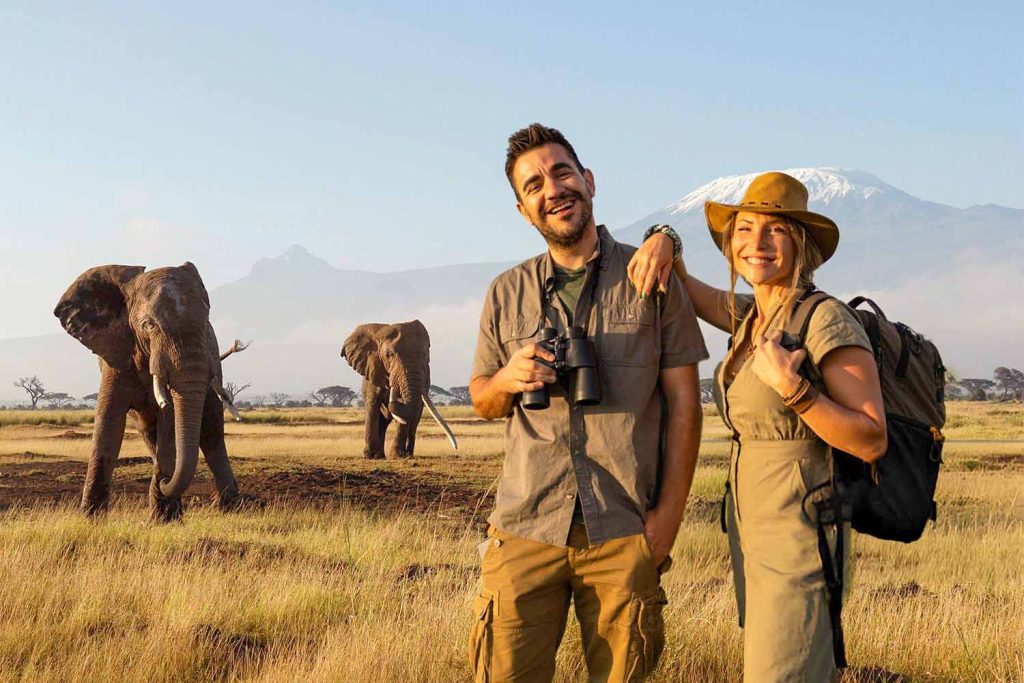
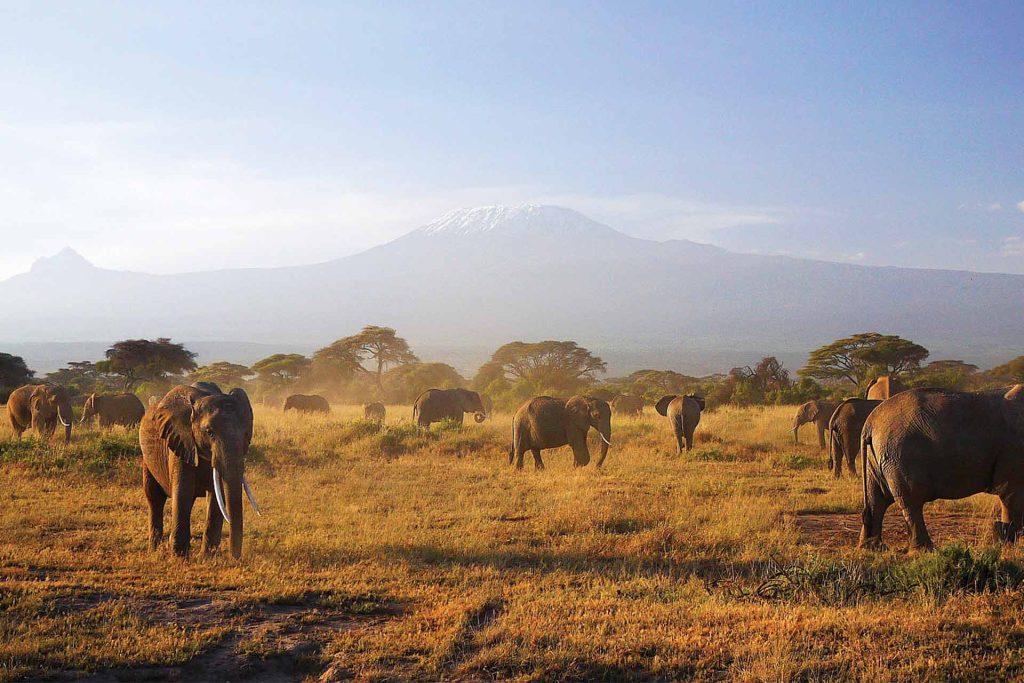
- Amboseli National Park in Kenya — Kilimanjaro is visible from Amboseli’s open plains
- The Rwenzori Mountains in Uganda for a two-mountain East Africa trekking combination
Kilimanjaro can be climbed year-round but two windows give significantly better summit conditions than the rest.
Best overall windows: mid-December to February and September to October — warm, clear days with stable weather and reliable summit views. June to August is also excellent for trekking but summit temperatures are colder, often dropping to −16°C at Uhuru Peak.
Wettest months to avoid: November and March to May bring the heaviest rainfall and some snowfall at altitude — trails are muddier and summit visibility is reduced. These months are feasible but less reliable.
Temperature range by zone:
- Forest base: 28–38°C during the day
- Summit: −2°C to −16°C; drops approximately 1°C per 200m ascent
One of the two best climbing windows. Warm, clear days and stable weather across all routes. Excellent summit visibility. Colder than the June–August window at altitude but with more reliable daytime warmth on the lower slopes. Popular with year-end travellers combining Kilimanjaro with a Tanzania or Kenya safari.
Peak season. Very reliable summit weather with low rainfall across most routes. Cold summit nights — temperatures regularly hit −10°C to −16°C at Uhuru Peak. The most popular climbing window globally — expect more trekkers on the popular routes (Marangu, Machame) during July and August.
September–October The second best window, combining good summit weather with lower visitor numbers than July–August. Clear conditions and reliable trail access on all routes. A strong value option before the short rains arrive in November.
Getting to Kilimanjaro:
- By air: Kilimanjaro International Airport (JRO) receives direct flights from KLM, Turkish Airlines, and Qatar Airways. Kenya Airways, Ethiopian, British Airways, and South African Airways fly via Nairobi with onward connections to JRO. KLM also serves JRO from Amsterdam. Direct flights connect Zanzibar and Kilimanjaro Airport. JRO is approximately 50 km from Arusha and 45 km from Moshi.
- By road: Nairobi to Moshi is a 5–6 hour shuttle bus. Dar es Salaam to Arusha/Moshi is 7–8 hours.
Starting point: Most treks begin from Moshi — a small town at the mountain’s base with licensed guides, trekking operators, gear shops, and accommodation. Arusha (a further 90 km west) is an alternative hub for climbers combining Kili with northern Tanzania safaris.
Routes: Eight routes serve the summit:
| Route | Duration | Character |
| Marangu | 5 days | Shortest; hut accommodation; easiest gradient |
| Rongai | 6 days | Quietest; approaches from the Kenyan border side |
| Lemosho | 7–8 days | Scenic; good acclimatisation; recommended |
| Machame | 6–7 days | Popular; demanding; excellent scenery |
| Shira | 7 days | High start; demanding |
| Umbwe | 6 days | Steepest and most direct; not recommended for first-timers |
| Northern Circuit | 8–9 days | Longest; most wilderness character; lowest foot traffic |
| Mweka | Descent only | Used as descent route from the western side |
Park fees: Approximately $70 per person per day plus a $20 rescue fee, excluding VAT — confirm these are included in your trekking operator’s quote.
Fitness and preparation: Physical training is strongly recommended in the weeks before the climb — uphill walking with a pack, squats, and cardiovascular endurance. Altitude sickness is the primary risk: walk slowly, hydrate consistently (3–5 litres of water per day; approximately 1 litre per 1,000m of ascent), and choose a longer route for better acclimatisation. Symptoms of altitude sickness — headache, nausea, dizziness — should be communicated immediately to your guide.




Some of Our
Frequently Asked Questions
No. Kilimanjaro is a walk-up mountain — no ropes, ice axes, or technical mountaineering skills are required. The challenge is altitude, not terrain. Most routes involve steep but straightforward hiking on marked trails. The key preparation is cardiovascular fitness, mental stamina, and a longer route that allows better acclimatisation. Every climber is accompanied by licensed guides and porters throughout.
Approximately 64% of climbers reach Uhuru Peak (5,895m). The success rate varies significantly by route — longer routes with better acclimatisation profiles (Lemosho, Northern Circuit) have higher summit rates than the shortest route (Marangu 5-day). All climbers who make a genuine attempt receive a certificate from the Kilimanjaro Parks Authority, regardless of which point they reach. Stella Point (5,745m) and Gilman’s Point (5,681m) are also certificated summit points.
Lemosho (7–8 days) is the most recommended route for first-timers — it provides excellent acclimatisation time, strong summit success rates, outstanding scenery, and manageable daily stages. Machame (6–7 days) is the most popular overall and a strong choice for fit, experienced hikers. Marangu (5 days) is the shortest and only route with hut accommodation, but its brevity reduces acclimatisation time and lowers summit success rates. Rongai is the quietest and approaches from the north, close to the Kenyan border.
Park fees are approximately $70 per person per day plus a $20 rescue fee, excluding VAT. These fees should be included in your trekking operator’s quoted price — confirm this before booking. Most multi-day climbs involve 5–9 days on the mountain, so fees accumulate significantly. Always use a licensed operator registered with the Tanzania Tourist Board.
Altitude sickness — AMS (Acute Mountain Sickness) — is the primary reason most climbers do not reach the summit. Key precautions: choose a longer route (7+ days) for more acclimatisation time; ascend slowly and never rush; drink 3–5 litres of water per day; inform your guide immediately of any symptoms (headache, nausea, dizziness, loss of coordination). Diamox (acetazolamide) is commonly used as a preventative — consult a doctor before the climb. Spending a day or two acclimatising at altitude (Moshi is at 900m; consider hiking nearby Mt. Meru at 4,565m first) can also improve success rates.
Yes — both are natural combinations. Arusha is the hub for Tanzania’s northern circuit (Serengeti, Ngorongoro, Lake Manyara) and is 90 km from Moshi — most climbers add a 3–5 day safari before or after the climb. Amboseli National Park in Kenya sits directly north of Kilimanjaro and offers the iconic elephant-and-mountain photography that is impossible from the mountain itself. The Rwenzori Mountains in Uganda offer a second high-altitude trekking challenge for those wanting a two-mountain East Africa circuit.
Testimonials
