Safari Blog
Why Uganda is Called The Pearl of Africa


More Than Just a Name: Discovering the Truth Behind Uganda’s ‘Pearl of Africa’ Title.
Uganda, an East African, is commonly called the “Pearl of Africa” because it evokes images of rare beauty and precious value. While the exact origin of this phrase is debated, the popularization of this beautiful nickname is often attributed to Sir Winston Churchill. In his 1908 travelogue, “My African Journey,” Churchill eloquently described Uganda as a land of “magnificence, for variety of form and colour, for profusion of brilliant life—bird, insect, reptile, beast—for vast scale.“
Over a century later, Churchill’s words continue to ring true. Uganda remains a captivating African destination, enchanting visitors with its breathtaking landscapes, abundant wildlife, vibrant cultures, and warm hospitality. While Churchill’s quote is often cited as the sole origin of the “Pearl of Africa” title, the truth is that Uganda’s allure runs far deeper.
This article will delve into the multifaceted reasons why Uganda continues to shine as a true jewel in the heart of Africa, from its geographical wonders and extraordinary biodiversity to its rich cultural heritage and promising future.
Join us on a journey to uncover the secrets of this extraordinary land, and discover why Uganda truly deserves its sparkling reputation as the Pearl of Africa.
Churchill’s Uganda: A Glimpse into Colonial Africa
In 1907, a 32-year-old Winston Churchill, then Under-Secretary of State for the Colonies, embarked on an official tour of British East Africa. His journey took him through Uganda, a protectorate under British rule since 1894. Churchill’s keen eye and sharp pen captured the essence of colonial life in Uganda, offering a unique glimpse into a land undergoing rapid transformation.
In his 1908 book “My African Journey,” Churchill eloquently summed up his impressions of Uganda, writing: “For magnificence, for variety of form and colour, for profusion of brilliant life—bird, insect, reptile, beast—for vast scale—Uganda is truly ‘the Pearl of Africa.”
This evocative phrase resonated with readers and quickly became synonymous with Uganda. It captured the country’s extraordinary natural beauty and diversity, painting a picture of a land teeming with life and brimming with potential.

Churchill was not alone in his admiration for Uganda. Other explorers and adventurers, drawn to the mysteries of the African continent, also found themselves captivated by this “Pearl.”
Henry Morton Stanley, the famous journalist and explorer who traced the course of the Congo River, described Uganda as “a very garden of the Hesperides.”
Ernest Hemingway, the celebrated American author, was so enamored with Uganda’s wildlife and landscapes that he set his short story “The Snows of Kilimanjaro” partly in the country.
Even Theodore Roosevelt, the 26th President of the United States, was not immune to Uganda’s charms. During his 1909 safari through East Africa, Roosevelt was awestruck by the abundance of wildlife in Uganda’s national parks. In his book “African Game Trails,” he wrote, “The scenery was beautiful… and the abundance of the game made it a veritable hunter’s paradise.”
These shared experiences and observations highlight the enduring appeal of Uganda as a land of extraordinary beauty and diversity. While popularized by Churchill, the “Pearl of Africa” moniker reflects a collective appreciation for the country’s unique natural and cultural heritage. This legacy continues to inspire and enchant visitors to this day.

Inspiring Quotes
Read the most inspiring quotes about Africa Safari and its wonders.
The Geographical Wonder
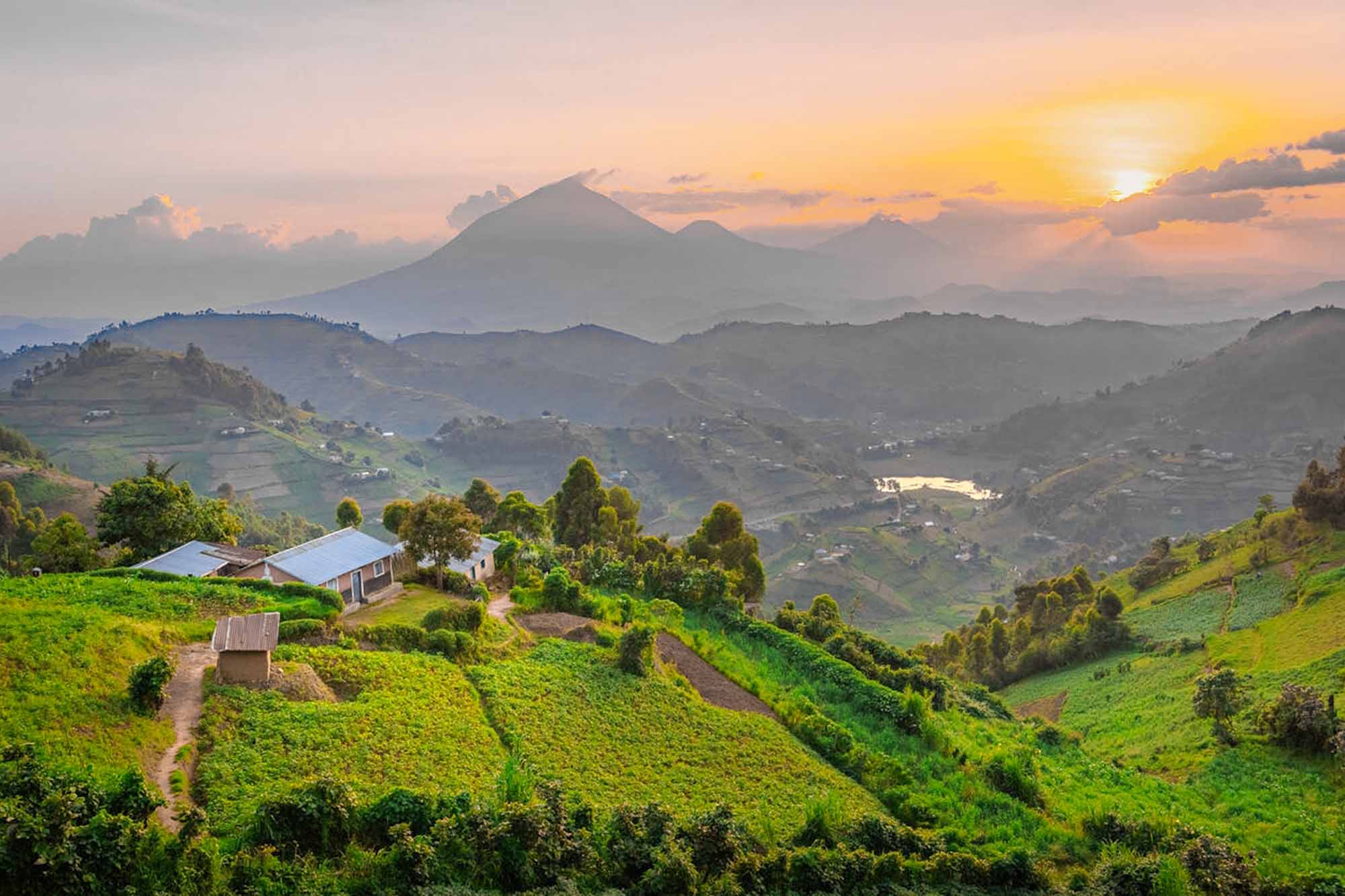
Uganda is a landlocked nation in East Africa bordered by Kenya to the east, South Sudan to the north, the Democratic Republic of the Congo to the west, Rwanda to the southwest, and Tanzania to the south. The country boasts a diverse and dramatic landscape that plays a significant role in its reputation as the Pearl of Africa.

Imagine a land where snow-capped peaks pierce the equatorial sky, where emerald lakes shimmer like jewels scattered across a vast green canvas. Envision sprawling savannahs that transition seamlessly into dense rainforests, where the air is alive with the calls of rare birds and the rustle of unseen creatures.
Picture the mighty Nile River snaking its way through this Edenic landscape, connecting shimmering lakes and cascading over thundering falls. This is Uganda, a country where geographical diversity beats the expectations of those who visit for the first time. The country is also home to the source of the Nile River, the longest river in the world, which begins its journey in Jinja, Uganda.
From the arid plains of the north, where hardy nomads roam with their cattle, to the fertile hills of the central region, where coffee plantations blanket the slopes, Uganda’s topography is a masterpiece of contrasts.
In the west and southwest, the rugged landscape rises to meet the Rwenzori Mountains, their glacial peaks shrouded in mist and mystery. As dubbed by early explorers, these “Mountains of the Moon” are a haven for hikers and climbers seeking adventure in an otherworldly alpine environment.

The central and western regions of Uganda are adorned with sparkling lakes, each a unique jewel in its own right. Lake Victoria, the largest lake in Africa, sprawls across the southern border, its shores dotted with fishing villages and bustling towns. To the west, Lake Albert and Lake Edward shimmer like twin emeralds, their waters teeming with fish and crocodiles. Lake George, the smallest of the Great Lakes, is a haven for birdwatchers, its shores teeming with vibrant avian life.
And then there’s the Nile, the lifeblood of Africa, winding its way through Uganda’s heartland. It flows out of Lake Victoria at Jinja, the “Source of the Nile,” and embarks on a meandering journey northwards. It passes through Lake Kyoga, a sprawling labyrinth of waterways, before reaching the Murchison Falls National Park, where it plunges over a dramatic precipice, creating a thunderous spectacle of raw power.
These extraordinary landscapes, where mountains, lakes, rivers, and plains converge, are the very essence of Uganda’s “Pearl of Africa” title. It’s a land where nature’s artistry is on full display, a place where the sheer diversity of scenery is as captivating as the wildlife that calls it home.

Trekking The Mountains of The Moon
Hike the lower slopes of the Rwenzori Mountains. Not as tough as the peaks!
Spectacular Natural Habitats and Ecosystems
This geographical diversity not only provides a stunning backdrop for visitors but also supports a rich array of ecosystems and habitats, further enhancing Uganda’s natural allure.

1. Mountains of the Moon
The Rwenzori Mountains, often referred to as the “Mountains of the Moon” due to their perpetually snow-capped peaks, are one of Uganda’s most iconic landmarks. This UNESCO World Heritage Site is home to Africa’s third-highest peak, Margherita Peak. It offers breathtaking views of glaciers, alpine meadows, and unique vegetation. The mountains are also a haven for hikers and climbers drawn to the challenge and beauty of this unique alpine environment.

2. Source of the Nile
In Uganda, you find the source of the mighty Nile, the longest river in the world. The Nile’s journey begins at Jinja, where it flows out of Lake Victoria and embarks on a 6,650-kilometer (4,132-mile) voyage to the Mediterranean Sea. Visitors to Jinja can witness the dramatic spectacle of the Nile’s birth, take boat trips to the source, and even try their hand at white-water rafting on the river’s exhilarating rapids.

Nile Honeymoon
Liven the explorer in you and your better half. Spend your Honeymoon at the Nile source, in Kibale with chimps and Bwindi with gorillas.

3. Lake Victoria
As the largest lake in Africa and the second-largest freshwater lake in the world, Lake Victoria is a vital resource for Uganda and its neighbors. 45% of Lake Victoria’s total surface area of approximately 59,947 km2 is located within Uganda. Tanzania takes the other 49% (33,700 km2) and Kenya 6% (4,100 km2). The lake’s shores offer a tranquil escape, with opportunities for fishing, boating, and birdwatching. The Ssese Islands, a picturesque archipelago in Lake Victoria, are a popular destination for their pristine beaches and relaxed atmosphere.

4. Savannah Plains
Uganda’s vast savannah plains, dotted with acacia trees and teeming with wildlife, are a quintessential African landscape. These grasslands are home to iconic animals like lions, elephants, giraffes, zebras, and countless antelope species. National parks like Queen Elizabeth, Lake Mburo, Pian Upe, Kidepo Valley, and Murchison Falls offer exceptional Uganda safaris for game drives and wildlife encounters.

5. Rainforests
Uganda’s rainforests, including the Bwindi Impenetrable National Park, Mgahinga Gorilla National Park, Semuliki National Park, and Kibale National Park, are biodiversity hotspots, home to a staggering array of flora and fauna. These lush forests are most famous for their populations of endangered mountain gorillas and chimpanzees, offering visitors a chance to observe Africa’s incredible primates in their natural habitat.
Biodiversity Hotspot: A Haven for Wildlife
Uganda’s diverse landscapes provide rich habitats for astonishing biodiversity, earning it the reputation a s a biodiversity hotspot in Africa. The country boasts over 345 species of mammals, 1,100 species of birds, 142 species of reptiles, 86 species of amphibians, and countless species of insects and other invertebrates. This abundance of life, from the majestic mountain gorillas to the vibrant birdlife, is why Uganda is committed to conservation and its status as a wildlife haven.
1. Primate Paradise: Gorillas, Chimpanzees, and More
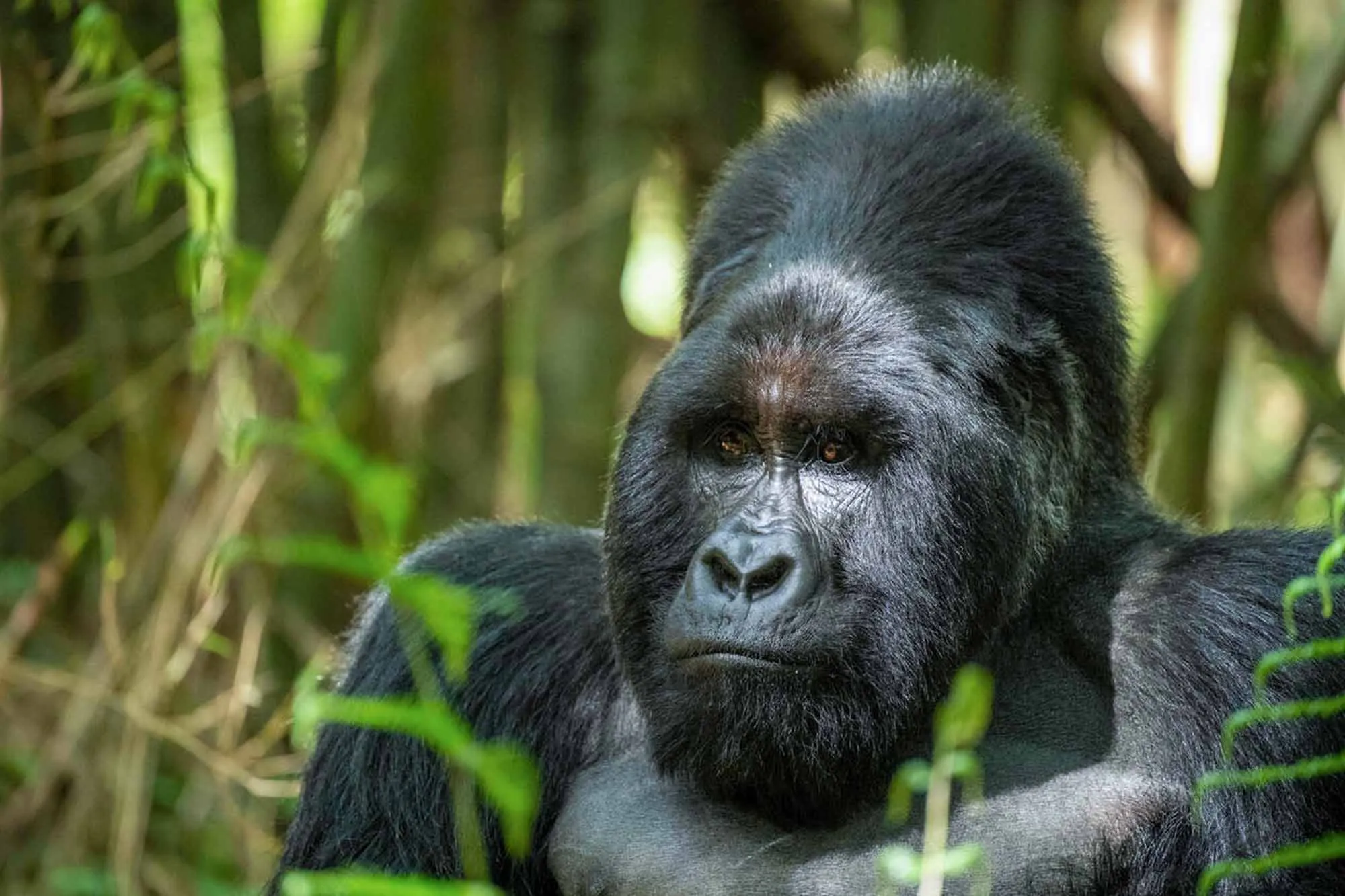
Uganda is one of the few places on Earth where visitors can come face-to-face with endangered mountain gorillas and 13 other primate species, including the chimpanzee and the endangered golden monkey.

Bwindi Impenetrable National Park, a UNESCO World Heritage Site, and Mgahinga Gorilla National Park are home to roughly half the world’s remaining mountain gorilla population. Trekking through the dense, misty rainforest to encounter these gentle giants is an unforgettable experience. Gorilla trekking adventures take small groups of tourists on daily excursions into the misty mountains to observe them in their natural habitat, interacting, playing, and caring for their young.

Kibale National Park is another primate sanctuary, renowned for its chimpanzee population. Here, visitors can embark on chimpanzee tracking expeditions, following these intelligent and playful apes through the forest canopy. Other primates found in Uganda’s forests include the golden monkey, the red-tailed monkey, and the L’Hoest’s monkey.

2. Big Game Safari: Lions, Elephants, and the “Big Five”
Uganda’s savannah parks, such as Queen Elizabeth National Park, Lake Mburo National Park, Pian Upe Game Reserve, Kidepo National Park, and Murchison Falls National Park, offer exceptional opportunities for big game safaris. These parks are home to the “Big Five” – lions, elephants, buffaloes, leopards, and rhinoceroses – as well as a plethora of other wildlife, including giraffes, zebras, hippos, crocodiles, and countless antelope species.
Game drives and boat cruises through these parks reveal the raw beauty and drama of the African wilderness. Witnessing a pride of lions on the hunt, observing a herd of elephants bathing in a watering hole, or spotting a leopard camouflaged in a tree are just a few of the unforgettable encounters that await visitors.

3. Uganda is a Birdwatcher’s Paradise
Uganda is a dream destination for birdwatchers, with over 1,100 bird species making up 50% of the Africa’s total and 11% of the world’s bird species count. From the colorful kingfishers and sunbirds that flit through the forests to the majestic eagles and vultures that soar above the plains, Uganda’s avian diversity is truly remarkable.
The Mabamba Swamp, a Ramsar Wetland of International Importance, is a haven for waterbirds, including the iconic shoebill stork. Other prime birding spots include Semuliki National Park, Budongo Forest Reserve, and the shores of Lake Victoria, where flocks of flamingos and other waterbirds congregate.
Birder’s Journey
Take this birdwatching adventure into Uganda’s best birding spots: Meet species unique to the equatorial region.

Conservation and Its Success Stories
Thanks to the dedication of local communities, government agencies like the Uganda Wildlife Authority, and international organizations, Uganda has made significant strides in wildlife conservation. The country’s national parks and reserves are well-managed and play a crucial role in protecting endangered species and their habitats.
Community-based conservation initiatives, such as the Bwindi Impenetrable Forest Conservation Trust and the Kibale Association for Rural and Environmental Development, have empowered local communities to become stewards of their natural resources, ensuring a sustainable future for both people and wildlife.

Looking for epic eco-adventures?
Here’s a list of the most underrated eco-adventures in Africa – Uganda is top!

Uganda’s Cultural Richness Makes it The Pearl of Africa
Uganda’s cultural heritage is as diverse and vibrant as its landscapes, a captivating blend of indigenous traditions and foreign influences. With over 50 distinct ethnic groups, each with its own language, customs, and beliefs, the country is a melting pot of cultures. This rich mosaic is woven by a shared sense of community and national pride, creating a strong and harmonious society.

Uganda Words
Learn the basic Ugandan words before you go. Catch up on what Ugandan foods to eat.
Language Diversity
Uganda’s linguistic diversity is a testament to its multiculturalism. While Luganda, the language of the Baganda people, is widely spoken, particularly in the central region, it’s just one of over 40 languages spoken across the country. From the Luo and Acholi languages of the north to the Runyankole and Rukiga languages of the west, each region boasts its own unique linguistic heritage.
Swahili, a lingua franca across East Africa, is also spoken by many Ugandans, particularly in urban areas and along trade routes. And, of course, English, a legacy of British colonial rule, is the official language widely used in education, government, and business.

A Fusion of Fashion
Ugandan fashion is a visual feast, a vibrant expression of cultural identity and personal style. Traditional attire varies from region to region, showcasing various fabrics, patterns, and embellishments. The colorful gomesi (long dress) worn by Baganda women, the beaded jewelry of the Karamojong people, and the bark cloth garments of the western regions are just a few examples of Uganda’s unique fashion traditions.
In modern times, Ugandan fashion has evolved to embrace contemporary trends while still honoring traditional elements. Local designers are gaining international recognition for their innovative creations, often incorporating traditional fabrics and techniques into modern styles. This fusion of old and new reflects Uganda’s dynamic cultural landscape, where tradition and modernity coexist harmoniously. The country’s rich cultural heritage is reflected in its traditional music and dance, with each ethnic group having its own unique style and instruments.

Rich Cuisine: A Culinary Melting Pot
Ugandan cuisine is a delicious reflection of its diverse cultural influences and abundant natural resources. Staples like matooke (steamed green bananas), cassava, sweet potatoes, and maize form the basis of many dishes. These are often accompanied by hearty stews of meat, fish, or vegetables, seasoned with aromatic spices and herbs.
Street food is a popular and affordable way to sample local flavors, with dishes like rolex (a chapati rolled with eggs and vegetables), muchomo (grilled meat skewers), and mandazi (sweet fried dough) readily available. For a more upscale dining experience, restaurants in cities like Kampala offer a wide range of international and fusion cuisine, showcasing the creativity and culinary talents of Ugandan chefs.

Ugandan Food
Ugandan snacks you just got to try: Chapatis, Plantain chips, Roasted Plantain, and more.
Colonial Legacies and Cultural Adaptation
Uganda’s colonial past has left its mark on its culture, which is evident in its legal system, education system, and even some aspects of its cuisine. However, Ugandans have adapted and integrated these foreign influences into their own unique cultural adaptations.
Christianity and Islam, introduced during colonial times, coexist peacefully with indigenous religions and spiritual practices. English, the language of the colonizers, is now embraced as a tool for communication and education, while local languages continue to thrive in daily life.
This ability to adapt and embrace change while preserving their cultural heritage proves the resilience and openness of the Ugandan people. This unique blend of tradition and modernity makes Uganda’s cultural landscape so fascinating and dynamic.

Music and Dance
Music and dance are integral to Ugandan culture, expressing joy, sorrow, celebration, and spirituality. Each ethnic group has its own distinctive musical styles and dance forms, reflecting their unique histories and worldviews.
Traditional instruments like the adungu (harp), endingidi (tube fiddle), and amadinda (xylophone) create enchanting melodies that accompany lively dances. The rhythmic beats of drums, the harmonious vocals of choirs, and the graceful movements of dancers create a sensory feast that captivates audiences.
Modern Ugandan music, a fusion of traditional sounds with contemporary influences, has gained international recognition. Artists like Eddy Kenzo, Jose Chameleone, and Bobi Wine have become cultural ambassadors, showcasing Uganda’s musical talent on the global stage.

Craftsmanship
Uganda’s artisans are renowned for their skill and creativity, crafting exquisite works of art that reflect their cultural heritage and connection to nature. From intricate wood carvings and vibrant bark cloth paintings to colorful beaded jewelry and woven baskets, Ugandan crafts are a testament to the country’s artistic traditions.
Visitors can explore bustling craft markets, visit artisan workshops, and even participate in hands-on workshops to learn traditional techniques. By purchasing locally made crafts, tourists not only support local livelihoods but also take home a piece of Uganda’s vibrant cultural heritage.
Modern Uganda: The Pearl of Africa in Progress
While Uganda’s rich history and natural beauty are undeniable, the country also faces its share of challenges in the 21st century. Poverty, inequality, and poor politics are ongoing issues that the nation grapples with. However, amidst these challenges, Uganda’s resilience, potential, and commitment to sustainable development shine through, reaffirming its status as a pearl in progress.

Economic Growth and Development
Uganda has experienced significant economic growth in recent years, driven by sectors like agriculture, tourism, and services. The government has implemented various initiatives to improve infrastructure, promote investment, and create job opportunities. While progress has been made, there is still a long way to go to ensure that the benefits of economic growth are distributed equitably and reach all segments of society.
Ecotourism and Conservation
Uganda’s commitment to ecotourism and conservation is evident in its well-managed national parks and reserves. These protected areas not only safeguard the country’s unique biodiversity but also provide sustainable livelihoods for local communities through tourism-related activities like guiding, lodging, and crafts.
The government has also launched initiatives to promote sustainable agriculture and reduce deforestation, recognizing the importance of preserving the environment for future generations. These efforts are crucial not only for Uganda’s ecological health but also for its economic prosperity, as tourism plays a vital role in the country’s economy.
A Young and Dynamic Population
With over 78% of its population under 30, Uganda is a young and dynamic nation full of potential. The country’s youth are increasingly educated, ambitious, and eager to contribute to their country’s development. They are at the forefront of innovation, entrepreneurship, and social change, driving Uganda forward into a brighter future.
Challenges and Opportunities
While Uganda has made significant strides in recent years, the country still faces significant challenges. Poverty, inequality, and access to basic healthcare and quality education remain pressing issues. Corruption also pose obstacles to progress.
However, Uganda’s resilience, natural resources, and youthful population offer immense opportunities for growth and development. By investing in education, healthcare, infrastructure, and sustainable industries, Uganda can unlock its full potential and emerge as a true pearl in the heart of Africa. Uganda is actively working towards achieving the United Nations Sustainable Development Goals, with a focus on poverty reduction, quality education, and climate action.

Expedition Uganda; safari across the country’s wildlife national parks
16 Days

Honeymoon safari: the nile, chimps, gorillas & wildlife.
10 Days
Books, Documentaries, and Movies About Uganda
Whether you’re seeking adventure in the wilderness, cultural immersion in bustling markets, or tranquil relaxation on the shores of a lake, Uganda has something to offer every traveler. It is a land that ignites the imagination, stirs the soul, and leaves a lasting impression on all who visit.
As you plan your journey to this extraordinary country, consider delving deeper into its rich history and cultural heritage.
Here is some content that gives you a great picture of Uganda:
Books:
- “Uganda – Culture Smart!: The Essential Guide to Customs & Culture” by Ian Clarke: This book provides key insights into Ugandan life and offers practical tips on navigating the country’s cultural norms and etiquette. It covers topics like traditions, values, social interactions, and more.
- “Uganda Safari” by Andrew Roberts: A comprehensive guide to Uganda’s national parks, wildlife, people, and cultures, with practical tips for planning a safari.
- “Kintu” by Jennifer Nansubuga Makumbi: This acclaimed novel is considered a must-read for Ugandans, as it traces the origins of a family and connects the dots of their descendants’ lives, reconciling the country’s past traditions with the modern world. It provides a rich exploration of Ugandan culture and identity.
- Bradt Guide to Uganda by Philip Briggs & Andrew Roberts: This is an excellent resource for travelers, offering detailed information on everything from practical tips to cultural insights and historical context.
- A History of Modern Uganda by Richard J. Reid: This comprehensive book provides a thorough account of Uganda’s history from pre-colonial times to the present day, exploring political, social, and economic developments.
- The First Woman by Jennifer Nansubuga Makumbi: This novel tells the story of Kirabo, a young Ugandan woman who navigates tradition and modernity, and the challenges of finding her place in a changing society. It won the 2021 Jhalak Prize and was longlisted for the Women’s Prize for Fiction.
- Touching the Moon by Richard Preston: A thrilling account of the exploration of the Rwenzori Mountains and the search for the source of the Nile.
- “Song of Lawino and Song of Ocol” by Okot p’Bitek: This seminal work of poetry addresses the identity crisis facing a liberated Africa, using a dialogue between a woman named Lawino and her husband Ocol to explore cultural clashes between tradition and modernization in Uganda. It’s considered a classic of Ugandan literature.
Documentaries:
- The Best Job Ever – 14 Wild Days Around Uganda Documentary
- Uganda – A Travel Documentary
- Wild Uganda – Perils in Paradise
- Uganda – The Pearl of Africa Documentary: https://youtu.be/zVuNPP_VG3U
- The Uganda Series by Thomas Alex Norman
- The Chimp Empire: Exploring the fascinating world of the largest chimpanzee society ever discovered as they navigate complex social politics, family dynamics and dangerous territory disputes.
Movies:
- The Last King of Scotland (2006): A fictionalized account of Idi Amin’s regime, offering a glimpse into a turbulent period in Ugandan history.
- The Queen of Katwe (2016): Based on the true story of a young Ugandan girl who becomes a chess champion. The movie set depicts Uganda’s low-income society.
- Gorillas in the Mist (1988): The classic film about Dian Fossey’s work with mountain gorillas in Rwanda, which borders Uganda. Although not about Uganda, but clearly depicts how conservation in the Virunga mountains kicked off.
Visit The Pearl of Africa Now
Plan your adventure to Uganda today and uncover the secrets of this extraordinary destination. Experience the thrill of a gorilla trek, embark on a wildlife safari, immerse yourself in local traditions, and create memories that will last a lifetime. Visit the Pearl of Africa today!

Testimonials
What Our Travellers Say
Discover more about
Our sustainability and conservation commitment
Nkuringo Safaris gives back by supporting local education, conservation, and creating jobs through community-driven tourism.