Safari Blog
Gorillas vs Chimps: Key Differences for Trekkers in Uganda & Rwanda

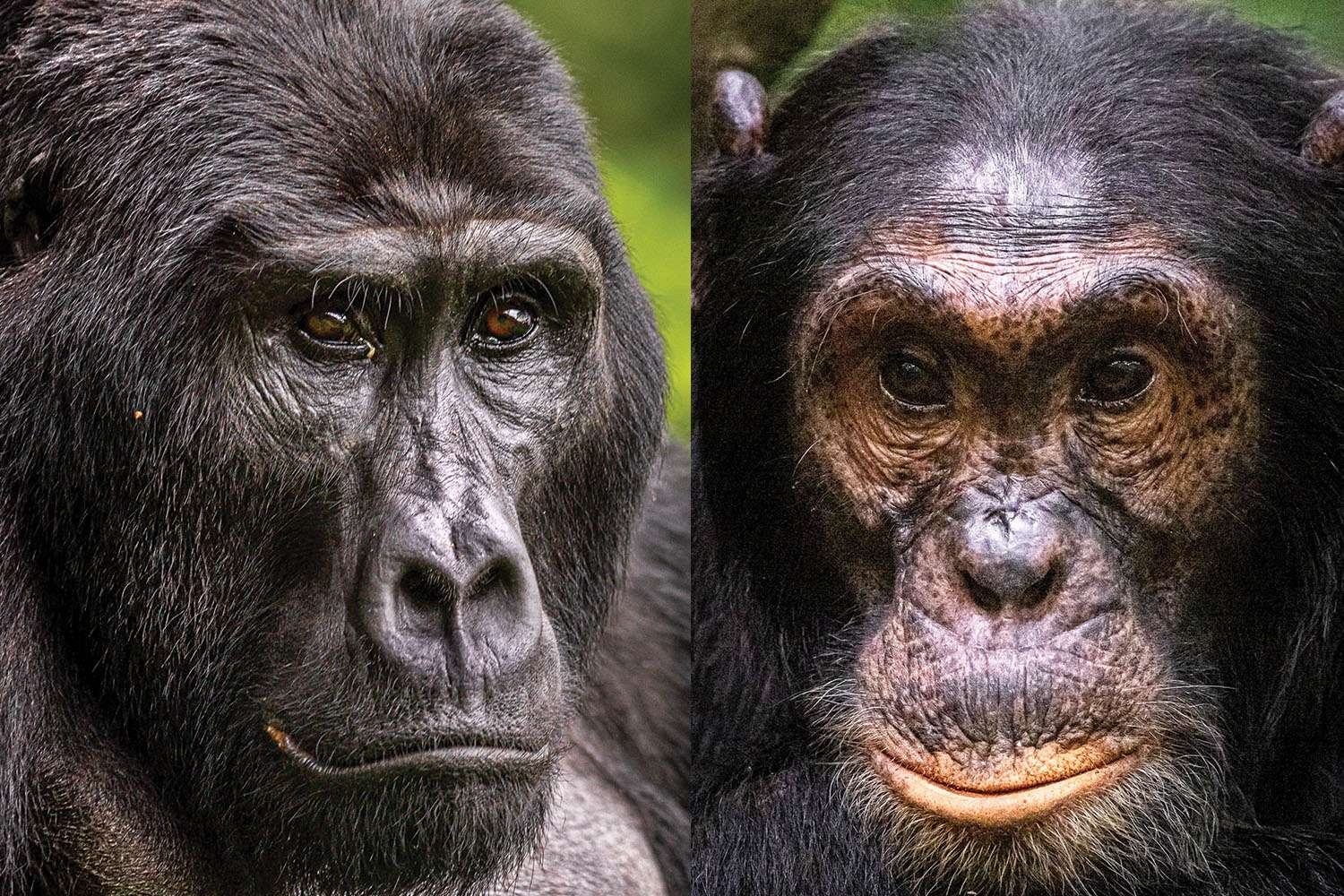
Gorilla trekking or chimpanzee trekking? Discover the contrasts in behavior, terrain, costs, and conservation impact to select the primate experience that best suits your journey.
Planning a safari in East Africa often comes down to a rare decision: gorilla trekking in Uganda or Rwanda, or following the wild energy of chimpanzees in forests like Kibale and Nyungwe. Both primate encounters are extraordinary—but they couldn’t feel more different. One is measured in stillness and deep, steady eye contact with a gorilla family; the other in a whirlwind of sound and movement as chimpanzees swing, argue, and play through the trees.
For trekkers, the real question is not if you should go, but which primate experience fits you best—or how to combine both into one journey. The permits, trekking terrain, and group rules differ, and those regulations exist for a reason: they protect endangered primates from stress and disease while giving travelers a safe, ethical encounter.
This guide compares gorilla and chimpanzee trekking side by side: behaviors you’ll witness, trail conditions, conservation rules, and the latest permit costs in Uganda and Rwanda. The aim is simple—to help you picture yourself on the trail, weigh the practicalities, and choose the trek that matches your fitness, budget, and sense of wonder.
Gorillas vs Chimps — Behavior & Atmosphere

Gorillas: Gentle Giants of the Forest
Mountain gorillas (Gorilla beringei beringei) live in tight-knit families averaging 10–20 individuals, led by a dominant silverback whose calm authority sets the rhythm of the group. Encounters on a gorilla trek in Uganda’s Bwindi or Rwanda’s Volcanoes National Park are striking for their stillness. You’ll often find gorillas on the ground, foraging, grooming, or simply resting, their movements unhurried and deliberate.
What lingers for most trekkers is the intimacy: the unblinking gaze of a silverback holding your eyes, the quiet tenderness of a mother nursing her infant. This pace gives photographers space to frame expressions and gestures with care—gorillas reward patience with profound moments of connection.

Chimps: Forest Nomads in Motion
Chimpanzees (Pan troglodytes) share about 98–99% of our DNA, and watching them feels uncannily familiar yet wildly unpredictable. They live in much larger communities—sometimes 50 to more than 100 chimps—that constantly split and rejoin in what scientists call a “fission–fusion” society. On a chimpanzee trek in Kibale Forest or Nyungwe, you rarely find stillness; the forest often erupts with hoots, drumming, and branches crashing before you see them.
Chimps move between ground and canopy with speed. One moment you’re following a small party along a trail; the next they vanish into the treetops or explode into a chase. For trekkers, the experience is thrilling and kinetic. For photographers, it’s a test: quick shutter speeds, constant focus shifts, and fleeting opportunities to capture behavior that dissolves in seconds.
Atmosphere in Contrast
- Gorilla trekking experiences: grounded, measured, quietly profound.
- Chimpanzee trekking experiences: electric, unpredictable, full of sound and speed.
Both species are endangered—gorillas critically so, with fewer than 1,100 surviving worldwide, and chimpanzees declining across Africa. Trekking them is not just adventure; it’s participation in conservation, with every rule followed and permit purchased directly supporting their survival.
Compare our Gorilla Trekking Experiences and Chimpanzee Trekking Adventures
The Trek Itself — Terrain, Duration, Difficulty

Gorilla Trekking: Steep Rainforests, Slow Rewards
Gorilla trekking in Uganda’s Bwindi Impenetrable Forest and Rwanda’s Volcanoes National Park takes you into some of the most dramatic terrain in Africa. Trails rise and fall through montane rainforest, with altitudes ranging from 1,160 to over 2,600 meters in Bwindi, and up to 4,500 meters in the Virunga volcanoes. Expect steep slopes, tangled undergrowth, and the occasional need to use your hands for balance.
The duration varies widely—your gorilla family may be a short 90-minute walk from the trailhead, or a demanding six-hour climb away. Bwindi treks are often longer because of its vast, rugged forest, while Mgahinga and Volcanoes National Park can be shorter and more predictable thanks to smaller forest blocks. Once found, rules are clear: no more than eight trekkers with each family, one hour maximum in their company, and a minimum distance of ten meters .
For most travelers, the effort is worth the intimacy. Porters can be hired to carry bags or lend a hand on the climbs, and sedan chairs are available in Bwindi for those with limited mobility. While challenging, gorilla trekking is accessible to anyone with moderate fitness and the right preparation.
Chimpanzee Trekking: Gentler Forest Walks
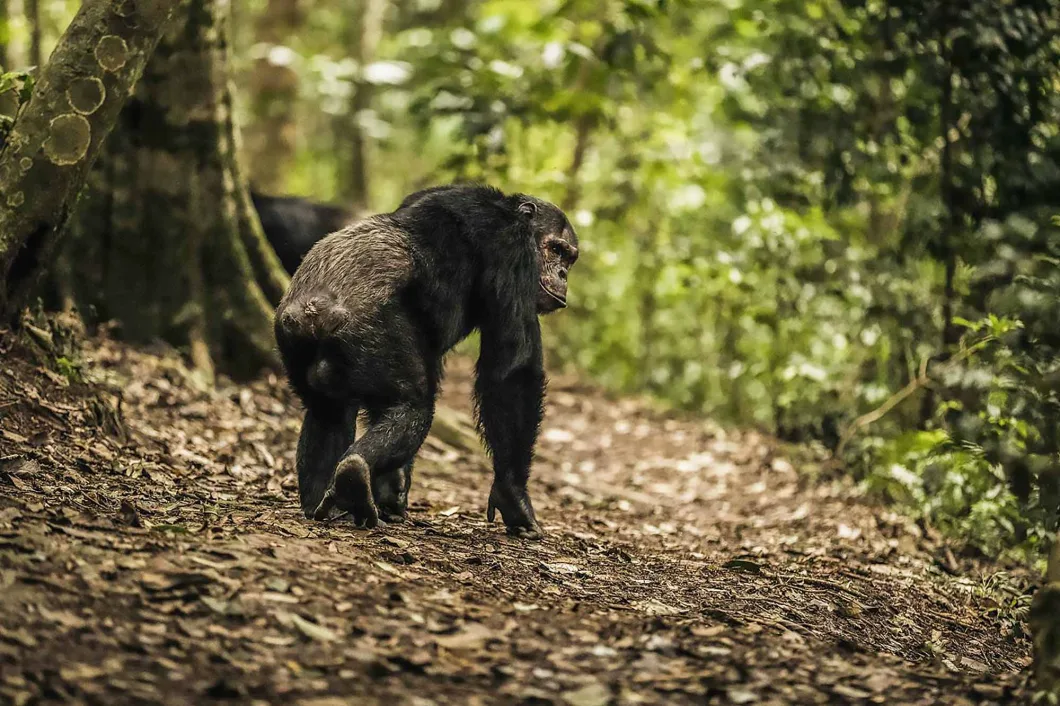
Chimpanzee trekking is a different kind of challenge. In Kibale National Park, the “primate capital of the world,” guided treks run at set times (8:00, 11:00, and 14:00), typically lasting two to five hours including tracking. Trails wind through mid-altitude rainforest, less steep than Bwindi but demanding in another way—chimps rarely stay in one place.
Trekkers may follow them through thickets, up and down gentle ridges, or stand beneath trees craning necks as chimps vocalize and move above. High humidity and wet-season mud can make even level trails feel strenuous. Visits are restricted to one hour with the troop, with a 12-year minimum age limit and the same ten-meter distance rule .
Where gorilla trekking is about steady immersion, chimp trekking is about stamina and attentiveness—you need to be ready to move quickly when the forest comes alive with sound.
Difficulty at a Glance
- Gorillas: Steep, unpredictable climbs; moderate to challenging fitness; slower pace once gorillas are found.
- Chimps: Flatter terrain but more movement; easier climbs; faster pace during encounters.
Both treks demand flexibility and respect for ranger guidance, but each suits a different rhythm of adventure. And while gorilla treks are physically tougher, chimpanzee treks can be just as exhausting in their pace—one reason permits are priced differently, and gorilla permits are booked far in advance.
Ask our safari planners to match trek difficulty to your fitness and camera goals.
Permits & Costs — What You Need to Know
Gorilla Trekking Permits
Gorilla permits are the most coveted in East Africa, and securing them is often the first step in planning your safari.
- Uganda (UWA 2024–26 tariff):
- Foreign Non-Residents: USD 800 per person.
- Foreign Residents: USD 700 per person.
- East African Citizens: UGX 300,000.
- Gorilla Habituation Experience: USD 1,500 for four hours with a semi-habituated family — available only in Bwindi.
- Rwanda (RDB):
- Gorilla trekking permit: USD 1,500 flat rate for all foreign visitors.
- Rwanda occasionally runs promotions for African nationals or resident groups, but international travelers should budget for the standard rate.
In Uganda, gorilla permits are issued not only by date but also by sector (Buhoma, Ruhija, Rushaga, Nkuringo) within Bwindi Impenetrable National Park. Choosing the right sector can significantly shape your trek’s difficulty and the lodge options nearby — one reason travelers rely on Nkuringo to match permits with the best routes and accommodations.
Chimpanzee Trekking Permits
Chimpanzee trekking is more affordable and easier to secure, but still subject to strict controls.
- Uganda (UWA 2024–26 tariff):
- Kibale National Park: USD 250.
- Kyambura Gorge (Queen Elizabeth NP): USD 100.
- Budongo Forest (near Murchison Falls): USD 120.
- Chimpanzee Habituation Experience: USD 300 in Kibale, allowing up to four hours with researchers and semi-habituated chimps.
- Rwanda (RDB, Nyungwe NP):
- Rates vary by source but range from USD 150–250 for foreign non-residents, plus park entry. Travelers should confirm the latest fee structure at booking, as updates are less consistently published than gorilla permits.
Rules That Protect Primates
Both gorilla and chimp trekking follow conservation rules designed to safeguard endangered populations:
- Age limits: 15+ for gorillas, 12+ for chimps.
- Time limits: Maximum of 1 hour (4 hrs for habituation experiences).
- Group size: 8 trekkers per gorilla family; smaller groups for chimps, depending on park guidelines.
- Distance: Keep at least 10 meters away — a buffer against stress and disease transmission .
These regulations may feel restrictive in the moment, but they are what keep trekking sustainable. Every permit purchased directly funds ranger patrols, habitat protection, and community projects — in Uganda, around 20% of gorilla permit revenue is shared with local communities, supporting schools, clinics, and conservation jobs.
Timing & Availability
- High demand: June–September and December–February; permits often sell out 6–12 months in advance.
- Shoulder seasons: March–May and October–November; higher chance of availability, fewer crowds, and often discounted lodge rates, though trails can be muddier.
Nkuringo manages allocations directly through UWA and RDB, handles cancellations and rescheduling policies, and ensures your gorilla or chimpanzee trekking permits align seamlessly with your safari itinerary.
Talk to us about securing your gorilla and chimpanzee trekking permits — we manage the entire process and align trek dates with your safari itinerary.
Who Each Trek Suits

Families & Younger Travelers
For families traveling with teenagers, chimpanzee trekking in Uganda or Rwanda is often the better fit. The minimum age is 12 years (versus 15 for gorilla trekking), and permits are more affordable. Shorter chimp treks in Kibale or Nyungwe make it a gentler introduction to primate trekking. In Rwanda, gorilla treks in Volcanoes NP can also suit families thanks to easier access and generally shorter hikes compared to Bwindi’s steeper trails. Many parents value the conservation lesson: trekking shows young travelers how their fees directly protect endangered species.
Photographers
For portrait work and close, steady encounters, gorilla trekking in Bwindi or Volcanoes NP is unmatched. Gorillas’ deliberate movements allow time to capture expressions and family dynamics. Lighting varies by location: Bwindi’s dense undergrowth creates moody, low-light conditions, while Volcanoes NP often offers brighter shots in bamboo zones.
Chimpanzee trekking, by contrast, rewards photographers with action shots: canopy leaps, vocal displays, and playful skirmishes. It’s technically demanding — fast lenses and high ISO settings are essential — but the payoff is dynamic images that tell a story of constant motion.

Adventurers & Hikers
Trekkers who thrive on challenge will find gorilla trekking in Bwindi or Mgahinga demanding and rewarding. Bwindi’s rugged slopes test stamina, while Mgahinga’s volcanic trails offer dramatic ascents and sweeping views. Each trek feels like a true expedition through untamed rainforest.
Chimpanzee trekking provides a different thrill: a faster pace as you follow chimps through the forest, ready to pivot when the community erupts in sound and movement. Adventurers often choose both experiences to enjoy the contrast of gorillas’ calm authority and chimps’ kinetic energy.

First-Time Safari Travelers
If you only have time for one primate trek, most first-timers prioritize gorilla trekking in Uganda or Rwanda. The exclusivity of permits, the difficulty in securing them, and the intimacy of the encounter make it a once-in-a-lifetime milestone.
Yet chimpanzee trekking should not be overlooked. It’s more budget-friendly, easier to book, and often pairs naturally with classic savannah safaris in Queen Elizabeth or Murchison Falls. Many first-time visitors start with chimps in Kibale, then head south to Bwindi for gorillas — a journey that captures the full spectrum of Uganda’s wilderness.
Quick Comparison Guide
- Families: Chimps (age 12+, affordable permits, shorter treks). Volcanoes gorillas also suitable for families seeking shorter hikes.
- Photographers: Gorillas (steady portraits, expressive faces) • Chimps (dynamic action shots, canopy drama).
- Adventurers: Bwindi & Mgahinga gorillas (steep, rugged, volcanic terrain) • Chimps (fast-paced tracking, unpredictable).
- First-Timers: Gorillas (permit exclusivity, milestone encounter) • Chimps (budget-friendly, great add-on to savannah safaris).
Not sure which trek suits you? Talk to our safari planners for a personalized primate itinerary.
Habituation Experiences — More Time in the Wild

Gorilla Habituation in Bwindi (Uganda only)
Uganda is the only country that offers a Gorilla Habituation Experience (GHE), available in Bwindi Impenetrable National Park. Instead of the standard one-hour trek, you spend up to four hours with a semi-habituated gorilla family, accompanied by researchers and trackers.
These treks start early in the morning and often last until early afternoon, meaning you spend far longer in the forest than on a standard gorilla trek. Because the gorillas are still learning to accept human presence, encounters are less predictable but more raw: silverbacks may display, juveniles may approach and retreat, mothers may lead infants away. For photographers and conservation-minded travelers, the extra time is priceless.
- Permit Cost: USD 1,500 (Foreign Non-Residents, UWA 2024–26 tariff).
- Group Size: Maximum 4 participants.
- Exclusivity: Only a handful of permits are issued each day — they often sell out faster than standard gorilla trekking permits.
- Why It Matters: Your fee supports scientific habituation work, preparing new families for long-term protection through responsible tourism.

Chimpanzee Habituation in Kibale (Uganda)
Kibale Forest National Park offers the Chimpanzee Habituation Experience (CHEX), one of the most immersive primate encounters in Africa. Instead of one hour, you spend up to four hours following chimps with researchers.
Expect more walking and constant adjustments — chimps move fast and unpredictably, and you may track them through dense forest for long stretches. Because of the extended time, you witness behaviors rarely seen on standard treks: dawn calls, troop reunions, or the construction of new nests.
- Permit Cost: USD 300 (Foreign Non-Residents, UWA 2024–26 tariff).
- Group Size: Small, usually 6 participants or fewer.
- Why It Matters: Habituation revenue funds chimp research and helps protect Kibale’s unique rainforest ecosystem.
Standard Trek vs Habituation — Quick Guide
- Time with primates: 1 hour (trekking) • 4 hours (habituation).
- Group size: 8 trekkers (gorillas) / 6+ (chimps) • 4 trekkers (gorilla habituation) / 6 or fewer (chimp habituation).
- Physical demand: Moderate (trekking) • Higher endurance (habituation, longer forest hours).
- Permit cost: USD 800 (gorilla trek, FNR) / USD 250 (Kibale chimp trek) • USD 1,500 (gorilla habituation) / USD 300 (chimp habituation).
- Best for: First-time safari-goers and families (trekking) • Photographers, researchers, and conservation enthusiasts (habituation).
Should You Choose Habituation?
Habituation isn’t for everyone. It’s longer, tougher, and less predictable — but that unpredictability is exactly what makes it extraordinary. For travelers seeking more than a glimpse, habituation offers time: time to wait for rare behaviors, to photograph without rush, and to understand the rhythm of life in primate societies.
Ask our safari planners about combining a habituation experience with your trek — the ultimate immersion for primate enthusiasts.
Practical Planning — What Trekkers Need to Know
Permit Lead Times
Securing a gorilla trekking permit in Uganda or Rwanda should be the very first step in planning your safari.
- Book 6–12 months in advance for gorilla permits, especially in Bwindi (Uganda) and Volcanoes NP (Rwanda) during high season.
- Chimpanzee trekking permits in Kibale usually need 2–3 months of lead time, though holiday periods can still fill up quickly.
- Habituation permits (gorillas in Bwindi, chimps in Kibale) are extremely limited and should be booked even earlier.
Nkuringo manages permits directly through UWA and RDB, navigating strict rescheduling and cancellation policies on your behalf. This ensures your trekking dates align smoothly with the rest of your safari.
Best Seasons for Gorilla & Chimp Trekking
- Dry seasons (June–September, December–February): Easier trails, better trekking conditions, high permit demand.
- Rainy seasons (March–May, October–November): Lush forests, fewer crowds, discounted lodge rates — but muddier treks.
- Tip: Volcanoes NP (Rwanda) tends to be slightly drier year-round than Bwindi, making it attractive for those seeking more predictable weather.
Many travelers search for the “best time to trek gorillas Uganda Rwanda” — the truth is, sightings are excellent year-round, but your comfort depends on trail conditions and crowd levels.
Fitness Preparation
You don’t need to be an athlete to trek gorillas or chimps, but a moderate level of fitness helps you enjoy the experience more. Prepare by:
- Walking 5–10 km several times a week.
- Stair climbing or hill walks to simulate altitude and slopes.
- Light cardio training (jogging, cycling, swimming).
Gorilla treks in Bwindi can last 2–6 hours over steep terrain, while chimp treks in Kibale are flatter but faster-paced. Building endurance before your safari ensures you’ll enjoy the forest rather than struggle through it.
Packing List Essentials
- Clothing: Lightweight rain jacket, quick-dry layers, long trousers, warm layer for cool nights at altitude (especially in Bwindi).
- Footwear: Waterproof hiking boots with ankle support, gaiters for mud, thick socks.
- Protection: Gardening gloves for vines/nettles, insect repellent, hat.
- Photography gear: Telephoto lens (70–200mm works well for gorillas), fast lenses for chimpanzees in the canopy, spare batteries, memory cards, dry bags.
- Extras: Reusable water bottle, high-energy snacks, backpack cover, walking stick (often provided).
Travelers often search “gorilla trekking packing list Uganda” or “chimpanzee trekking Kibale gear” — this checklist covers the essentials. Nkuringo provides a full customized packing guide with every itinerary.
Health & Ethics
- Masks may be required to reduce disease transmission risk.
- Do not trek if sick — even a cold can threaten primates.
- Keep 10 meters distance and follow ranger guidance at all times.
- Hire a porter: Porters not only carry bags and provide support on the trail; many are reformed poachers whose livelihoods now depend on tourism. Hiring them turns your trek into a direct act of conservation and community empowerment.
Sample Uganda Itinerary Flow
- Day 1–2: Kibale Forest (chimpanzee trekking or habituation).
- Day 3–4: Queen Elizabeth NP (safari drives, tree-climbing lions, Kazinga Channel cruise).
- Day 5–7: Bwindi Impenetrable Forest (gorilla trekking or habituation).
- Day 8: Return to Entebbe, or continue into Rwanda via Cyanika or Katuna border for onward flights.
This route balances activity and recovery, weaving primate trekking with classic safari. Nkuringo planners also design Rwanda-only routes (Nyungwe + Volcanoes) and cross-border safaris for travelers short on time.
Download our free Primate Trekking Planner for a complete packing checklist, fitness prep plan, and sample itineraries.
Conservation Impact — Why Your Trek Matters
Protecting Endangered Primates
Mountain gorillas are critically endangered, with just over 1,060 individuals left in the wild (about 459 in Uganda’s Bwindi and 600+ in the Virunga Massif across Rwanda, DRC, and Uganda). Chimpanzees are endangered, with populations declining rapidly due to habitat loss and poaching.
Strict trekking rules — small groups, one-hour limits, minimum age restrictions, and the 10-meter distance — are designed to minimize stress and prevent human diseases from spreading to primates. When trekkers respect these guidelines, they actively participate in keeping encounters safe and sustainable.
Revenue That Protects Forests
Every gorilla or chimpanzee permit directly funds conservation:
- Rangers: salaries, anti-poaching patrols, habitat monitoring.
- Communities: in Uganda, 20% of gorilla permit revenue is shared with local villages, supporting schools, health clinics, and livelihood projects. In Rwanda, Volcanoes NP permit revenue funds conservation while also financing infrastructure and community development around Musanze.
- Research: habituation fees sustain long-term monitoring, ensuring future generations of gorillas and chimps can be safely protected.
This model has transformed primate conservation. Gorilla populations in Bwindi and Volcanoes NP are among the only great apes in the world with slow but steady population growth — proof that responsible tourism works.
Communities as Guardians
Conservation succeeds only when local people benefit. Many of the porters you hire are former poachers who now earn a sustainable living through tourism. Community lodges and cultural programs extend the benefits further, tying healthy primate populations to thriving human communities.
When you trek with Nkuringo, hiring a porter or staying in a community-linked lodge is more than convenience — it’s an act of direct conservation support.
Trekking as Ethical Travel
Primate trekking is not only an adventure, it’s a commitment. By choosing sustainable gorilla trekking in Uganda or Rwanda or a chimpanzee trek in Kibale or Nyungwe, travelers become partners in protecting forests and wildlife.
Your permit funds:
- Rangers • Communities • Research • Forest protection
Every respectful step in the forest sends a message: these landscapes and species are worth saving. For many trekkers, this ethical dimension is what transforms a trip into a life-changing journey.
Travel with purpose — ask us how your safari can directly support conservation and community projects through the Gorilla Junction Foundation.
Conclusion — Choosing Your Primate Encounter
Gorilla or chimpanzee? Calm intimacy or wild energy? A trek through steep ridges in Bwindi or a fast-paced chase in Kibale’s rainforest? The truth is, there’s no wrong choice. Each experience offers a rare window into the lives of our closest relatives — one measured in silence and deep eye contact, the other in sound, speed, and raw vitality.
For many travelers, gorilla trekking safaris in Uganda or Rwanda feel like a once-in-a-lifetime milestone. For others, chimpanzee trekking in Kibale or Nyungwe provides the perfect blend of affordability, accessibility, and adventure. Increasingly, travelers choose to combine both — gorilla trekking in Bwindi with chimpanzee trekking in Kibale — to capture the full spectrum of East Africa’s primate encounters.
What matters most is planning well: aligning permits, seasons, and routes with your fitness, time, and sense of wonder. And remember, every permit purchased funds rangers, research, and community projects — your trek is a direct investment in conservation. Permits are limited and often sell out months in advance, so securing them early ensures both availability and peace of mind.
That’s where Nkuringo Safaris comes in. We don’t just book treks; we design journeys that connect you with wildlife, landscapes, and communities in ways that are respectful, ethical, and unforgettable.
Take the next step:
- Download our free Primate Trekking Planner for packing lists, fitness prep, and itinerary ideas.
- Or talk to one of our safari planners today — your gorilla and chimpanzee trekking journey begins the moment we start designing it with you.
Your primate encounter is waiting — let’s plan it together.

Testimonials
What Our Travellers Say
Discover more about
Our sustainability and conservation commitment
Nkuringo Safaris gives back by supporting local education, conservation, and creating jobs through community-driven tourism.