Safari Blog
Gorilla Trekking in Uganda 2026–2027 Safari Guide

The Complete 2026–2027 Guide to Gorilla Trekking in Uganda
Few wildlife encounters on Earth equal the moment you stand a few metres from a mountain gorilla in the misty forests of southwestern Uganda. The stillness, the steady breath, the forest hum folding around you, the silverback watching with unhurried curiosity—this is a private audience in an ancient forest, earned step by step on the trail.
This updated 2026–2027 guide to gorilla trekking in Uganda brings together everything you need to plan that encounter: current permit prices, where treks start, how to reach Bwindi and Mgahinga, what to pack, how demanding the hikes are, and how to choose a trip that matches your pace. It’s written by Nkuringo Safaris, an award-winning Uganda-based operator with years of field experience guiding travellers through the country’s two mountain gorilla strongholds. In 2026–27, gorilla trekking in Uganda is centred exclusively in Bwindi Impenetrable National Park and Mgahinga Gorilla National Park, with permits for foreign non-residents at USD 800.
We keep this guide current so you can plan with confidence—whether you’re flying in for a focused gorilla trek or folding Bwindi and Mgahinga into a longer East African journey. All the way through, you’ll find transparent detail, local insight, and links to hand-built gorilla trekking tours in Uganda designed by our on-the-ground team in Bwindi.
Key Facts for 2026–2027
| Detail | Information |
|---|---|
| Where to Trek | Bwindi Impenetrable NP & Mgahinga Gorilla NP |
| Permit Price | USD 800 (Foreign Non-Residents) · USD 700 (Foreign Residents) · USD 500 (EAC Citizens) |
| Age Limit | 15 years and above |
| Trek Duration | 2–8 hours hike + 1 hour with the gorillas |
| Fitness Level | Moderate to High (depends on sector) |
| Best Seasons | June–August & December–February |
| Safety | Guided by armed UWA rangers under strict park rules |
| Conservation Impact | Every permit funds anti-poaching and community projects |
Updated November 2025 — verified by Nkuringo Safaris’ on-the-ground Bwindi team.
Compare 2026–27 gorilla tours →

Why Choose Uganda for Gorilla Trekking
If you dream of meeting mountain gorillas in the wild, Uganda gives you the richest and most varied version of that experience. Uganda is home to more than half of the world’s remaining mountain gorillas, offering the widest range of trekking routes in Africa. The country protects these great apes in the high-altitude rainforests of Bwindi Impenetrable National Park and Mgahinga Gorilla National Park.
1. More gorillas, more trekking options
With 21 habituated gorilla families across four trekking sectors in Bwindi and one in Mgahinga, Uganda offers greater permit availability and a choice of locations suited to different fitness levels and travel styles. Each sector—Buhoma, Ruhija, Rushaga, Nkuringo, and Mgahinga—has its own rhythm of forest, slope, and view.
2. Authentic encounters in pristine wilderness
Uganda’s gorilla parks remain largely undeveloped and community-managed, meaning treks unfold in genuine wilderness. Trails are quieter, guides are local conservationists, and you often share the forest with just your small group and the rustle of the canopy above.
3. Value without compromise
A gorilla permit in Uganda costs USD 800 for foreign non-residents—nearly half the price of neighbouring Rwanda—yet the quality of guiding and conservation standards are world-class. The savings leave room to add another primate trek, an extra night in the forest, or a connecting safari to Queen Elizabeth or Murchison Falls.
Explore 2026–27 gorilla tours →
4. Seamless connection to classic safaris
Uganda’s parks knit easily into East Africa’s grand circuit. You can fly directly from Entebbe or drive in from Kigali, then continue to the savannahs of Queen Elizabeth, Kidepo, or the Nile. Many travellers blend gorillas with chimpanzee tracking in Kibale or a Big Five safari across the western circuit.
5. Deep community and conservation impact
Every permit fee feeds directly into anti-poaching patrols, habitat protection, and community projects surrounding the parks. Nkuringo’s own programmes—like the Gorilla Junction Foundation and the tea-buffer initiative—show how tourism can anchor livelihoods and conservation in the same breath.
6. A culture that welcomes you in
Treks begin and end in villages where hospitality feels personal. After the forest, you’re invited into homes, craft groups, and evening fireside stories that give the experience a human heart as well as a wild one.
Uganda doesn’t just offer access to gorillas; it gives you the context—the land, the people, and the conservation story that make the encounter meaningful. When you leave the forest, the hum of Bwindi still follows you.

Where to Trek: Bwindi & Mgahinga Explained
Uganda’s gorilla adventures happen in two ancient forests—Bwindi Impenetrable National Park and Mgahinga Gorilla National Park—tucked into the country’s far southwest, where the Albertine Rift mountains spill into Rwanda and the Congo. Both parks protect steep emerald valleys wrapped in mist and home to half of all the world’s remaining mountain gorillas.
You can trek mountain gorillas in two places: Bwindi Impenetrable and Mgahinga Gorilla National Parks in southwestern Uganda. These are the only destinations where visitors can meet Uganda’s gorillas in their natural habitat, each offering its own rhythm, terrain, and rewards.
Bwindi Impenetrable National Park
A UNESCO World Heritage Site, Bwindi covers more than 320 square kilometres of montane rainforest rising between 1,200 and 2,600 metres. It holds about 21 habituated gorilla families scattered across four trekking sectors. The forest lives up to its name—dense, tangled, and alive with bird calls, butterflies, and rare primates like L’Hoest’s monkey. Trails follow old elephant paths, weaving through ferns and giant mahogany.
Buhoma Sector — Gateway to Bwindi
Buhoma, in the park’s north, is Bwindi’s original trekking base. Trails here start close to park headquarters, making it the easiest sector for shorter hikes. The terrain is gentler, and lodges like Mahogany Springs and Sanctuary Gorilla Forest Camp offer comfort within minutes of the trailhead. It’s ideal for travellers who want an accessible trek without steep climbs.
Ruhija Sector — High Ridges and Birdsong
Set on elevated ridges east of Buhoma, Ruhija is cooler and prized by birders. The paths cut through bamboo and open viewpoints that look across the Rift Valley. Treks can be moderately challenging due to altitude, but sightings are consistent, and the area feels quiet and intimate. This sector also links easily with Queen Elizabeth National Park through the Ishasha route, making it a convenient stop for travellers connecting gorillas with savannah safaris.
Rushaga Sector — Variety and Close Encounters
On Bwindi’s southern edge, Rushaga hosts the largest number of habituated gorilla families. Trails vary from mild to demanding, winding through terraced hills and forested ravines. Because of its diversity, Rushaga suits mixed-ability groups and offers access to the Gorilla Habituation Experience, where guests can spend up to four hours with a semi-habituated group. Lodges range from luxury (Four Gorillas Lodge) to small community-run stays.
Nkuringo Sector — Steep, Scenic, and Rewarding
Nkuringo, in the park’s far southwest, is both the most physically demanding and the most scenic. Trails climb high ridgelines with sweeping views over the Virunga Volcanoes and the Congo basin. Treks here descend into deep valleys before meeting the gorillas, then climb back through mist and birdsong. For travellers seeking solitude, photography, or a challenge, this is the sector to choose. It’s also home to Nkuringo Bwindi Gorilla Lodge, our sustainable base overlooking the forest canopy.
Mgahinga Gorilla National Park
Uganda’s smallest park, Mgahinga covers 34 square kilometres at the junction of three volcanoes—Sabinyo, Gahinga, and Muhavura. It shelters one habituated gorilla family, the Nyakagezi group, known for its calm temperament and wide-ranging movements. Treks here combine gorillas with views of volcanic slopes and, if time allows, golden-monkey tracking or a day hike up a volcano. The park lies just 14 kilometres from Kisoro Airstrip, making it the most accessible option for travellers crossing from Rwanda.
See how to combine Mgahinga with Bwindi or Rwanda →
Comparison Table — Bwindi & Mgahinga Sectors
Here’s how Uganda’s gorilla trekking sectors compare for access, fitness, and atmosphere.
| Sector / Park | Difficulty | Best For | Access Route | Nearest Hub / Lodge |
|---|---|---|---|---|
| Buhoma (Bwindi) | Easy – Moderate | First-time trekkers, shorter hikes | Kihihi Airstrip (45-minute drive) | Mahogany Springs, Sanctuary Gorilla Forest Camp |
| Ruhija (Bwindi) | Moderate – High Altitude | Birders, photographers, cross-safari travellers | Kihihi or Kabale Road Access | Ruhija Gorilla Lodge |
| Rushaga (Bwindi) | Moderate – Challenging | Mixed-ability groups, habituation option | Kisoro Airstrip (1-hour drive) | Four Gorillas Lodge, Ichumbi Safari Lodge |
| Nkuringo (Bwindi) | Challenging – Steep | Adventurers, fit trekkers, solitude seekers | Kisoro Airstrip (1-hour drive) | Nkuringo Bwindi Gorilla Lodge |
| Mgahinga Park | Moderate | Cross-border travellers, scenic variety | Kisoro Airstrip (30-minute drive) | Mount Gahinga Lodge |
Updated November 2025 — verified by Nkuringo Safaris field team.
Each location offers the same rare hour with mountain gorillas, but the journey to reach them defines the story you’ll tell later. Some travellers remember the stillness of Ruhija’s ridges, others the steep ascent back from Nkuringo Valley under a curtain of mist. Whichever path you take, Uganda’s forests ensure the reward is equal to the effort. Long after the trek, the hush of that forest still stays with you.
Browse gorilla treks by sector →
Cost of Gorilla Trekking in Uganda (2026–2027)
How much does gorilla trekking in Uganda cost in 2026–2027?
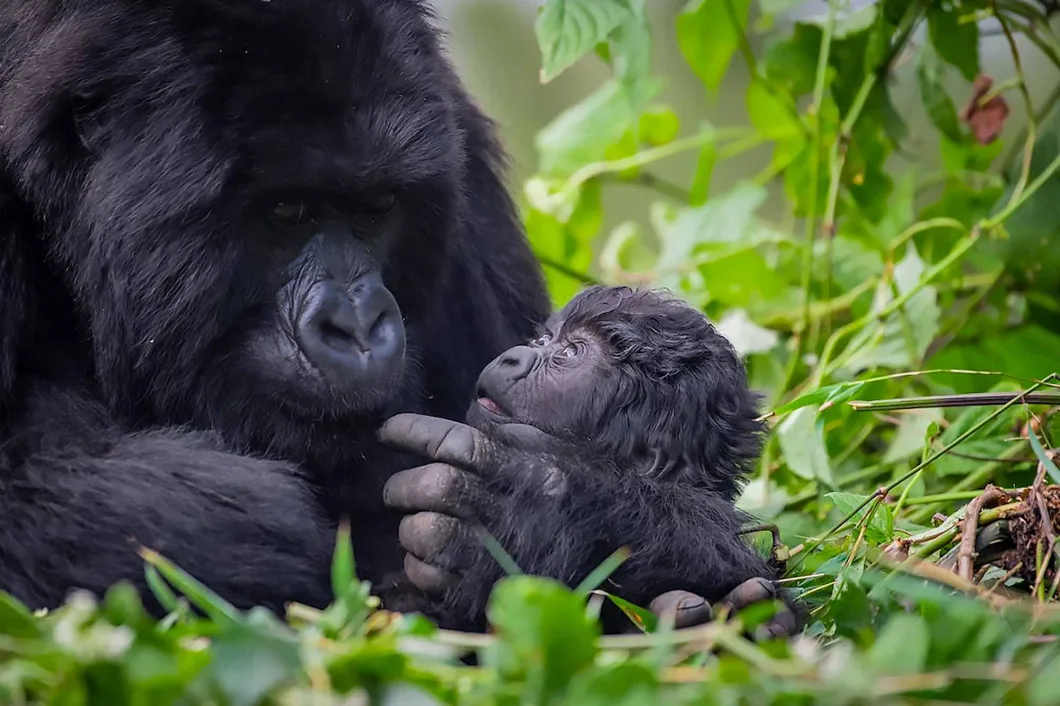
In 2026–2027, a gorilla trekking permit in Uganda costs USD 800 for non-resident foreigners, USD 700 for resident foreigners, and USD 500 for East African citizens. Permits are issued by the Uganda Wildlife Authority (UWA) and must be reserved months in advance, as daily numbers are limited to protect the gorillas and their habitat.
What’s Included in the Permit Price
Each permit grants one trek and one precious hour with a habituated gorilla family, plus:
- UWA ranger and guide services
- Park entry and conservation fees
- Gorilla monitoring and security contributions
- Access to UWA briefing and orientation facilities
Permit revenue directly supports gorilla conservation, anti-poaching patrols, and community projects that share benefits with villages bordering Bwindi and Mgahinga.
Additional Safari Costs to Expect
A permit is only one part of the full trekking budget. Typical additional expenses include:
- Accommodation: USD 150–250 per night in mid-range lodges, USD 400–900 in luxury eco-lodges like Nkuringo Bwindi Gorilla Lodge.
- Transportation: charter flight Entebbe → Kisoro or Kihihi (~USD 300–400 pp one-way) or private 4×4 transfer (~USD 100–150 per day).
- Meals & Drinks: most lodges operate on full-board basis; beverages extra.
- Porter Support: USD 20–25 per trek (+ optional tips).
- Visa & Insurance: Uganda single-entry visa USD 50 or East African Tourist Visa USD 100 (valid for Uganda, Rwanda & Kenya). Ensure trekking insurance covers altitude and evacuation.
Your spending sustains the people who make these experiences possible—the guides, porters, lodge teams, and rangers who live beside the forest.
How much does a full gorilla safari cost?
| Style of Safari | Duration | Estimated Cost (USD per person) | Includes |
|---|---|---|---|
| Short Fly-In Luxury Trek | 3–5 days | 2,400 – 3,200 | Permit + luxury lodge + domestic flights + transfers |
| Classic Primate & Wildlife Safari | 7–10 days | 3,800 – 5,500 | Chimp tracking, boat cruise & game drives + Bwindi trek |
| Cross-Border Serengeti & Gorillas | 9–12 days | 7,000 – 9,000 | Serengeti / Mara combo + Bwindi permit + luxury lodges |
Compare tour styles and prices →
Prices vary by season: rates are slightly lower in the green months (March–May and September–November) when lodges offer up to 30 % discounts.
Refunds and Permit Changes
Permits are non-refundable once confirmed, but licensed tour operators can sometimes adjust dates with UWA if notified early. Booking through a reputable partner such as Nkuringo Safaris ensures correct sector allocation, secure payment, and reliable permit handling.
Why the Cost Is Worth It
Each permit fee safeguards the species’ future. Roughly 20 % of every permit supports surrounding communities; the rest funds research, ranger welfare, and habitat protection. Paying this fee keeps gorilla populations stable and turns your visit into an act of conservation.
That hour in the forest—the quiet breath, the steady gaze—is the return on your investment.
Updated Nov 2025 — verified by Nkuringo Safaris field team and UWA official data.
View sample itineraries and prices →
When to Go Gorilla Trekking in Uganda (Best Seasons 2026–2027)
What’s the best time to go gorilla trekking in Uganda?
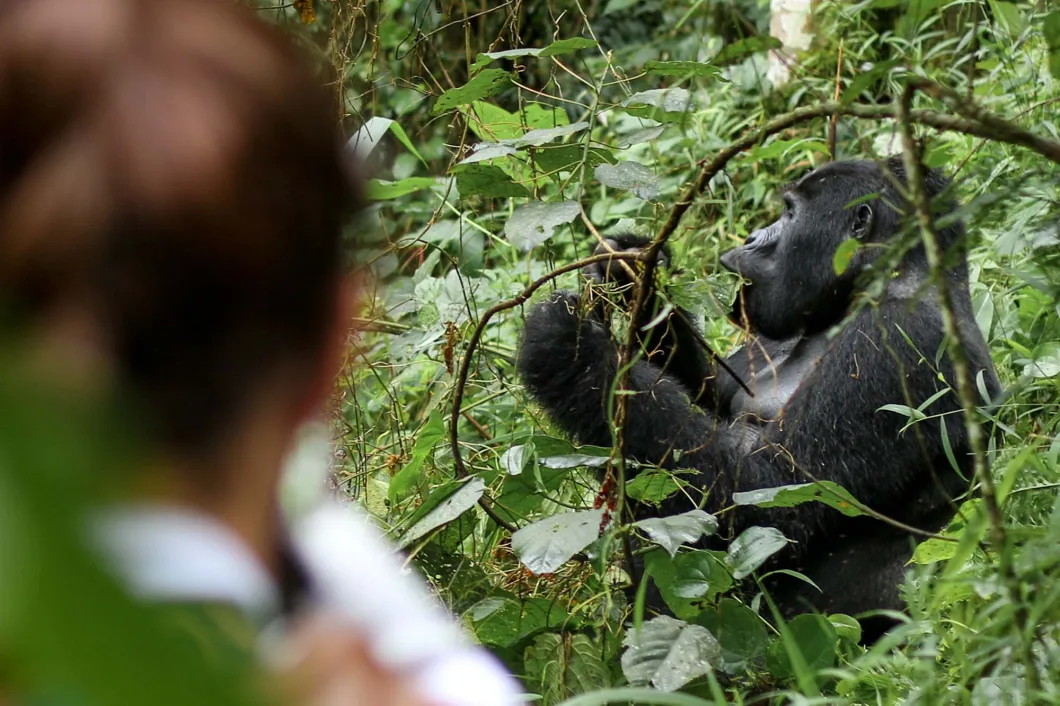
The best time to go gorilla trekking in Uganda is during the dry seasons — June to August and December to February — when trails are firmer and visibility is clearer. These months offer ideal hiking conditions and a higher chance of uninterrupted encounters with the gorillas.
Uganda’s gorilla parks sit within the tropical rainforest belt, so rain can fall any day of the year. Yet even in wetter months, showers are short and followed by bright skies. Bwindi and Mgahinga remain open year-round, and gorilla sightings are almost guaranteed regardless of season.
Seasonal Breakdown
| Season | Months | Trail Conditions | Crowd Levels | Pricing & Lodges | Travel Notes |
|---|---|---|---|---|---|
| Dry Season I | June – August | Dry trails, clear forest views | Peak demand | High-season rates, book permits 6–12 months ahead | Excellent for photography and longer treks |
| Wet Season I (Green) | March – May | Occasional heavy rain, lush scenery | Low visitors | Up to 30% discounts on lodges | Great for photographers and budget travellers |
| Dry Season II | December – February | Stable weather, cool mornings | Moderate crowds | Standard high rates | Ideal balance of comfort and availability |
| Wet Season II (Green) | September – November | Light rain, misty forests | Low to moderate visitors | Discounted rates, easy permit access | Fewer crowds, softer light for photos |
Updated Nov 2025 — verified by Nkuringo Safaris field team.
Understanding Uganda’s Weather
Temperatures in Bwindi and Mgahinga range between 10°C and 25°C (50°F–77°F) year-round. Bwindi, with its thicker canopy, tends to receive more rain, while Mgahinga’s higher volcanic slopes stay slightly drier. The high elevation means mornings are cool, and mist often settles until late morning.
Even during the green months, trekking continues daily, and sightings remain consistent at over 95%. Our Nkuringo guides record weather patterns weekly to help travellers plan better and choose the right trekking sector for the season.
Travellers who don’t mind a little rain often find the forest at its most beautiful between March and May, when everything glows emerald and the air smells fresh after short downpours.
Is gorilla trekking in Uganda possible during the rainy season?
Yes — treks run daily all year, even in rain. Showers are usually brief, and gorilla sightings remain steady. Travelling during the green season also means fewer crowds, relaxed schedules, and better chances to secure your preferred sector and lodge.
Tips for Choosing the Right Time
- Book early for dry-season permits (especially July and August).
- Travel in shoulder months (May, September) for better value and fewer crowds.
- Carry light rain gear year-round — the rainforest is unpredictable.
Uganda’s gorilla parks never truly close. The difference between seasons is in mood, not access — crisp air and open views in the dry months, deep green quiet in the rains. Both have their magic.

What to Expect During Your Gorilla Trek in Uganda
What happens during a gorilla trek in Uganda?
The day begins early, as mist drifts between the ridges of Bwindi and the volcanic slopes of Mgahinga. By 7:30 a.m., trekkers gather at the park headquarters for registration and a safety briefing led by Uganda Wildlife Authority rangers. Over steaming coffee, your guide outlines the trekking rules, assigns groups (maximum eight people per gorilla family), and describes the day’s expected terrain.
Treks are safe and carefully managed. Every group is accompanied by an armed ranger and certified local guides who know the forest intimately — some have tracked the same gorilla families for years.
Setting Out
Armed rangers lead the group into the forest around 8:00–8:30 a.m., following old elephant paths and muddy trails that twist beneath giant ferns. The air is damp with scent of earth and orchids, and bird calls ripple through the canopy. Trackers ahead radio updates on the gorillas’ movements, while your guide interprets forest signs — a snapped vine, a warm nest from the previous night, a faint musky scent.
Trek lengths vary. Some families are found in 45 minutes; others take three or four hours. Elevation shifts between 1,200 and 2,600 metres, and terrain can be steep, but the pace is unhurried, with frequent stops to rest or photograph the forest. Porters, available for a modest fee, carry your bag and offer a steady hand on slippery slopes.
“Our guide whispered, ‘They’re just ahead,’ and the forest went still.” — A guest’s note from Nkuringo Bwindi Gorilla Lodge.
The Encounter
When your guide signals silence, the group gathers in a small clearing. A rustle, a low grunt — and then they appear. A silverback steps into view, eyes calm and aware. Females groom nearby, a youngster tumbles through vines. You’ll spend one magical hour in their company, observing without intrusion. The official viewing distance is ten metres, though the gorillas sometimes shorten it themselves, wandering curiously closer.
Photography is allowed (no flash). Many travellers simply put the camera down to absorb the moment — the sound of breathing, the shimmer of light through leaves, the feeling of being tolerated by something ancient and intelligent.
See our small-group treks with guaranteed permits →
After the Trek
The return hike feels lighter. The forest seems familiar now, each ridge holding a sense of reward. Back at the trailhead, you’ll receive your trekking certificate — a small but meaningful token of a once-in-a-lifetime journey.
Trekkers usually return to their lodge by early afternoon. Most lodges offer foot massages or hot baths, and evenings often carry a quiet celebratory mood as travellers trade stories over dinner, still processing the experience.
Learn how to prepare for your gorilla trip →
Practical Notes
- Duration: 2–6 hours depending on gorilla location and terrain.
- Group Size: Maximum 8 trekkers per gorilla family.
- Age Limit: Minimum 15 years.
- Altitude: 1,200–2,600 metres above sea level.
- Distance: Maintain 10 metres; let gorillas approach if they wish.
- Guides: Uganda Wildlife Authority rangers and certified local guides accompany every trek.
- Fitness Level: Moderate; porters can assist with steep sections.
- Safety: Treks are peaceful, professionally managed, and always escorted by armed rangers.
The memory that stays longest isn’t the photograph; it’s the silence between heartbeats when you realise you’re being watched by a creature that understands more than you imagined.
Updated Nov 2025 — verified by Nkuringo Safaris field team.

How Gorilla Trekking Supports Conservation and Communities
When you buy a gorilla trekking permit, you’re not just securing a wildlife encounter — you’re funding one of Africa’s most successful conservation stories. Mountain gorillas were once on the brink of extinction, with fewer than 300 individuals in the 1980s. Today, thanks to conservation tourism, their population has rebounded to over 1,060 across Uganda, Rwanda, and Congo.
How does gorilla trekking help protect mountain gorillas?
Gorilla trekking directly funds conservation through permit revenue, ranger protection, and community investment that reduces poaching and habitat loss. Every trekker plays a role in keeping Uganda’s rainforests safe for both wildlife and people.
Conservation in Action
In Uganda, gorilla trekking is managed by the Uganda Wildlife Authority (UWA) under strict protocols designed to protect both visitors and gorillas. Only eight people can visit each family per day, and only for one hour. These rules reduce stress on the animals and minimize disease transmission.
Permit revenue supports ranger patrols, veterinary programs, and research teams that monitor gorilla groups daily. UWA’s Revenue Sharing and Community Conservation Programme ensures that conservation success benefits nearby communities. Anti-poaching units also protect elephants, duikers, and countless bird species — showing how saving gorillas safeguards entire ecosystems.
At Nkuringo Safaris, our field teams and partner lodges, including Nkuringo Bwindi Gorilla Lodge, follow low-impact, eco-certified practices: solar energy, plastic-free operations, and guided treks led by trained naturalists. Every traveler contributes directly to the health of these forests.
“Before tourism, many of us cut trees to survive. Now we protect the forest that feeds our families.” — John, porter and community elder, Nkuringo Village
Community Partnerships and Local Benefit
Twenty percent of every gorilla permit fee goes directly to communities surrounding Bwindi and Mgahinga. That money builds schools, health centres, and clean-water projects — tangible results of conservation tourism.
Through our non-profit arm, the Gorilla Junction Foundation, Nkuringo Safaris helps fund children’s education, empower women’s cooperatives, and support the tea buffer zone project — a living green boundary that keeps gorillas from raiding community crops.
When trekkers walk through nearby villages, they often see this impact first-hand — children heading to school in uniforms, women weaving baskets under banana trees, guides proudly sharing their conservation stories. The same permit that protects a gorilla also helps pay a teacher’s salary and a farmer’s future.
A Sustainable Future
Gorilla tourism proves that conservation works when local people share in its success. Travelers’ spending supports hundreds of families in Bwindi’s highlands while giving endangered wildlife a reason to survive.
Choosing to trek with a responsible operator like Nkuringo Safaris ensures that your visit leaves a measurable, positive footprint. It’s not charity; it’s a fair exchange between visitor and land — one that keeps both the forest and its people thriving.
As you leave the misty hills behind, you carry more than memories. You carry proof that mindful travel can keep a species alive.
Learn how Nkuringo Safaris supports conservation →
Updated Nov 2025 — verified by Nkuringo Safaris field team & Uganda Wildlife Authority data.
Planning Your Gorilla Trek in Uganda (Permits, Packing & Preparation)
Updated Nov 2026 — verified by Nkuringo Safaris travel consultants.

How to Plan a Gorilla Trek in Uganda
The best gorilla trekking experiences begin long before you step onto the trail. Because permits are limited to protect the species, the first step is securing yours early — ideally 6–12 months in advance if you’re traveling in the high season (June–August or December–February).
You can obtain a gorilla trekking permit directly through the Uganda Wildlife Authority (UWA) or have it arranged by a licensed operator such as Nkuringo Safaris, who handle the entire process and secure your preferred sector. A permit is valid for a single day and a specific gorilla family, so booking early gives you flexibility with dates and lodges.
Don’t worry if this is your first trek — rangers guide every step and keep the pace comfortable for all hikers.
How do I get a gorilla trekking permit in Uganda?
You can purchase permits through the UWA head office in Kampala or through a registered tour operator like Nkuringo Safaris, who manage all logistics and ensure sector availability.
Learn more about permit availability →
Choosing Your Trekking Sector
Each Bwindi sector — Buhoma, Ruhija, Rushaga, and Nkuringo — offers a distinct experience.
- Buhoma: The original trailhead, with the easiest terrain and excellent lodge access.
- Ruhija: Perfect for birders and moderate hikers seeking solitude.
- Rushaga: Home to many gorilla families and habituation experiences.
- Nkuringo: The most scenic and challenging, with unmatched views over the Rift Valley.
If you prefer shorter hikes, Buhoma or Rushaga are ideal. For dramatic forest descents and sweeping mountain vistas, Nkuringo rewards those willing to climb.
Internal flights from Entebbe to Kihihi or Kisoro take about 1 hour 10 minutes, followed by a scenic drive to the trailheads.
Uganda Gorilla Trekking Preparation: What to Pack
What should I pack for gorilla trekking?
| Essential Item | Why You Need It |
|---|---|
| Sturdy hiking boots | Trails can be muddy and steep; ankle support is essential. |
| Waterproof jacket & trousers | Sudden tropical downpours are common. |
| Long-sleeved shirt & pants | Protection from nettles, insects, and brush. |
| Gardening gloves | For gripping vines or steadying yourself on slopes. |
| Reusable water bottle | Stay hydrated without adding plastic waste. |
| Daypack with rain cover | Carry camera, snacks, and gear comfortably. |
| Insect repellent & sunscreen | Forest bugs are active year-round. |
| Camera with zoom lens (no flash) | Capture moments without disturbing the gorillas. |
Optional but useful: walking stick (often provided), gaiters, snacks, and a dry bag for electronics. Porters are available to help carry your bag and keep your hands free during the trek.
How to Prepare Physically
Gorilla trekking doesn’t require mountaineering fitness, but moderate endurance helps. Treks last from two to six hours, sometimes on steep, uneven ground. A few weeks of regular walks, light hikes, or stair climbs will make your trek far more enjoyable.
Altitude in Bwindi ranges between 1,200 and 2,600 metres (3,900–8,500 ft). Stay hydrated, walk slowly, and rest when needed — rangers adjust the pace for everyone’s comfort.
“You don’t need to be an athlete; you just need patience and curiosity,” says Robert, one of Nkuringo’s senior guides.
Practical Travel Preparation
- Visas: Uganda single-entry visa costs USD 50; East African Tourist Visa USD 100 (for Uganda, Rwanda, Kenya).
- Vaccinations: Yellow fever required; others (Hepatitis A, Typhoid) recommended.
- Currency: Uganda Shilling (UGX); ATMs in major towns, not in Bwindi.
- Connectivity: Limited mobile signal; most lodges have Wi-Fi.
- Packing Tip: Bring USD notes issued after 2016 — older ones are rarely accepted.
- Permit Validity: One day, for a specific gorilla family.
Pro Tip: Nkuringo Safaris offers complete 2026–2027 itineraries that combine gorilla trekking with wildlife safaris, cultural walks, and short scenic flights — all timed for comfort and seamless transitions.
Get started with a tailored trekking plan →
Final Checklist Before You Go
- Gorilla permit and passport copy confirmed
- Accommodation near your trekking sector
- Private driver-guide or scheduled flight to Kisoro/Kihihi
- Proper trekking gear and lightweight clothing
- Emergency medical insurance
- Porter cash (USD 20–25) ready for trek day
Plan well, travel slow, and let the forest do the rest — because when you finally meet them, it won’t feel like a tour; it’ll feel like understanding.
Plan your 2026–2027 gorilla trek with Nkuringo Safaris →

Where to Stay – Nkuringo’s Signature Lodge Circuit (2026–2027)
At dawn, mist drifts between forest ridges and the sound of hornbills wakes the valley — where you stay during a gorilla trek in Uganda matters as much as where you trek. At Nkuringo Safaris, we’ve built a connected circuit of lodges that guide travellers through the country’s southwestern wilderness — from Entebbe’s quiet gardens to Bwindi’s misted canopy and onward to Kibale’s crater lakes. Each stay carries the same rhythm of comfort, community, and conservation.
Nkuringo Bwindi Gorilla Lodge – The Forest Base
Perched high on a ridge above the Bwindi canopy, Nkuringo Bwindi Gorilla Lodge is the heart of our story and one of Uganda’s most celebrated eco-lodges. Every stone cottage opens toward the Virunga Volcanoes, and every guest wakes to the forest’s chorus below.
From this vantage point, you trek directly into the Nkuringo and Rushaga sectors, two of Bwindi’s most rewarding gorilla regions. The lodge runs on solar power, employs residents from nearby Nkuringo Village, and serves farm-to-table meals grown within walking distance.
As one guest wrote in our lodge journal: “This isn’t just where you stay before your trek — it’s where you feel the forest breathe with you.”
Papyrus Guesthouse Entebbe – Your Arrival & Departure Haven
Your journey begins and ends at Papyrus Guesthouse Entebbe — a tranquil base ten minutes from the airport. Nestled in tropical gardens with shaded verandas, it’s designed for rest after a long flight and quiet preparation before the forest adventure ahead.
Guests appreciate the easy transfers, warm service, and the sense of continuity — the moment you land, you’re already under Nkuringo’s care.
Mirima Lodge Kibale – Forests, Lakes & Chimpanzees
Part of our growing eco-collection, Mirima Lodge brings Nkuringo’s understated design and community ethos to the crater-lake region near Kibale Forest. Guests combine chimpanzee tracking with nature walks between Lake Nyinabulitwa and Lake Nyamirimira, returning to glass-walled cottages that overlook the forest edge.
Mirima connects seamlessly with Bwindi, creating a circular route through Uganda’s primate heartland that finishes back at Entebbe or the western savannahs.
Partner Properties We Recommend
We also collaborate with a few carefully chosen lodges that share our conservation values and complement our circuit:
- Sanctuary Gorilla Forest Camp (Buhoma Sector) – An intimate camp within Bwindi’s boundary, where gorillas sometimes wander through the property.
- Mount Gahinga Lodge (Mgahinga National Park) – A boutique retreat beneath the volcanoes, pairing luxury with cultural immersion through Batwa community programs.
- Mahogany Springs Lodge (Buhoma Sector) – A serene riverside escape near the park gate, perfect for travellers trekking northern Bwindi.
These partnerships extend comfort and consistency for guests combining multiple regions within Uganda.
Designing Your Stay with Nkuringo Safaris
Our itineraries weave these lodges into a cohesive circuit, linking Uganda’s forests, lakes, and savannahs with private drivers or short scenic flights. From Entebbe’s shaded gardens to the silver-green canopy of Bwindi, every transition is handled by our in-house team — ensuring seamless logistics, responsible practices, and no third-party handovers.
Travellers can extend their journey beyond gorillas — adding chimpanzee tracking in Kibale, wildlife safaris in Queen Elizabeth National Park, or post-trek recovery days by the crater lakes. We build every itinerary around personal pace and comfort, under one trusted roof.
Experience Uganda through our lodge circuit →

8-Day Classic Primates & Wildlife Safari.
From US $3,865 per person
- Chimpanzee & Gorilla Trekking
- Game drive & boat safari in Queen Elizabeth National Park.
- Stay in mid-range luxury lodges.

12-Day Explore The Best of Uganda Safari.
From US $5,518 per person
- Primates – gorillas & chimp treks.
- Game drives and boat safaris in Queen and Murchison Falls.
- Both rainforest & savannah adventures.
A Note on Other Options
Bwindi and Mgahinga host many fine lodges, from community cottages to five-star retreats. But for travellers who value local ownership, consistent quality, and direct community benefit, staying within Nkuringo’s lodge circuit ensures your journey sustains the forests and people who make gorilla trekking possible.
When you stay with us, you’re not simply visiting — you’re part of the living story that keeps these misted hills alive.
Plan your 2026–2027 Uganda lodge circuit with Nkuringo Safaris →

Planning With Nkuringo Safaris
Planning a gorilla trek in Uganda can feel complex — permits, routes, lodges, timing — but with Nkuringo Safaris, the process becomes simple, personal, and deeply connected to the places we call home. Our team lives and operates in the gorilla highlands; these are not distant destinations to us but familiar landscapes where we work, guide, and welcome travellers.
For over two decades, we’ve helped visitors experience the forests of Bwindi and Mgahinga with insight and care. We’re a Uganda-based tour operator, licensed under AUTO and the Uganda Wildlife Authority (UWA), and trusted by international travel partners across Europe and North America. From our Kampala head office to Nkuringo Bwindi Gorilla Lodge on the forest’s edge, every part of your journey stays under our guidance — managed by people who understand both the traveller and the terrain.
What We Handle for You
From the first inquiry to your last morning in Uganda, we coordinate every detail of your gorilla trekking safari:
- Gorilla trekking permits: Reserved directly with the Uganda Wildlife Authority, with your chosen sector and trek date confirmed in advance.
- Domestic travel: Private 4×4 transfers or charter flights between Entebbe, Kisoro, and Kihihi.
- Accommodation: Priority booking within our Nkuringo lodge circuit and trusted eco-partner lodges.
- Pre-trek preparation: Personalized guidance on packing, fitness, and trail conditions.
- Guest support: 24-hour contact with our teams in Entebbe and Bwindi throughout your safari.
When you book with Nkuringo Safaris, you’re not passing through an agency chain — you’re speaking directly with the people who will greet you on arrival and wave you off at the end of your trek.
Tailored Gorilla Trekking Itineraries
Every traveller walks the forest differently. Some come for a single trek; others weave gorillas into a longer journey across Uganda’s landscapes. Our gorilla trekking tours in Uganda are crafted from scratch to match your interests, time, and fitness.
We design private itineraries for solo travellers, couples, families, and small groups — combining gorilla trekking with chimpanzee tracking in Kibale, wildlife safaris in Queen Elizabeth National Park, or quiet days by Lake Mutanda. Each itinerary is built to your pace, with a safari consultant guiding every decision.
The Booking Process
Booking your gorilla trekking safari with Nkuringo Safaris is straightforward:
- Send us an inquiry through our website or by email.
- Within 24 hours, a safari specialist will contact you to discuss preferences.
- We check permit availability and hold your space with the Uganda Wildlife Authority.
- Your accommodation and transfers are reserved upon confirmation.
- You receive your final safari plan, invoice, and direct contacts for on-ground support.
Our prices are transparent, payment protection verified, and operations licensed by the Uganda Tourism Board. No middlemen, no hidden markups — just clear costs and genuine people.
Why Travellers Choose Nkuringo Safaris
Travellers choose Nkuringo not only for expertise but for the way we host. We live in the same communities that protect the gorillas and forests. Many of our guides grew up in Nkuringo Village, our chefs source food from nearby farms, and our lodges reinvest part of every booking into education and conservation projects through the Gorilla Junction Foundation.
“When you travel with Nkuringo, you don’t just see the forest — you meet the people who keep it alive.”
Start Planning Your Trek
Every trek we design carries a part of our story — and yours. When you choose Nkuringo Safaris, you join a circle of travellers, guides, and communities who keep Uganda’s mountain gorillas thriving through mindful tourism.
Your journey begins here — plan your 2026–2027 gorilla trek with Nkuringo Safaris →

Testimonials
What Our Travellers Say
Discover more about
Our sustainability and conservation commitment
Nkuringo Safaris gives back by supporting local education, conservation, and creating jobs through community-driven tourism.