
9-Day Serengeti & Zanzibar Tanzania Safari


Overview
This 9-day Tanzania itinerary is built around the classic East Africa combination — the Serengeti for wildlife and the Indian Ocean for rest — with both elements delivered at an elevated quality tier. Onsea House in Arusha is the orientation night: a hilltop estate on the outskirts of the city with gardens, Maasai Steppe views, and cooking by a Michelin-trained chef. The Serengeti segment uses Olakira Migration Camp, an Asilia Africa mobile camp that relocates seasonally to follow the wildebeest migration — positioned at the Mara River crossings from June to November, and at the Ndutu calving grounds from December to March. The Zanzibar segment is at Matemwe Lodge on the island’s quieter northeastern coast, with access to Mnemba Atoll for diving and snorkelling.
The itinerary works year-round precisely because Olakira repositions with the herds — visitors in peak migration season (July–October) get the Mara River crossing experience; those travelling in the green season get the calving spectacle at Ndutu, where hundreds of thousands of wildebeest calves are born over a six-week window, drawing cheetah, lion, and wild dog in extraordinary concentrations. Outside migration season, the Serengeti’s resident wildlife — lion prides, leopard, elephant, cheetah, and buffalo — delivers strong game drive results in every month.
It suits couples, honeymooners, and travellers wanting a structured but unhurried Tanzania trip combining the continent’s premier wildlife destination with a genuine beach recovery.
Key Information:
- Duration: 9 days
- Departure Location: Arusha / Kilimanjaro International Airport
- Trip Type: Tailored (enquire for pricing)

The combination of Olakira and Matemwe is one of the most satisfying Tanzania packages we offer. Olakira tracks the migration — you're always where the action is. Matemwe is calm, private, and beautiful. The contrast between the two is exactly what makes the trip work.
Highlights
- Olakira Migration Camp — a mobile luxury camp that follows the wildebeest migration
- Mara River crossings (June–November) or Ndutu calving season (December–March)
- Three full days of Big Five game drives in the Serengeti
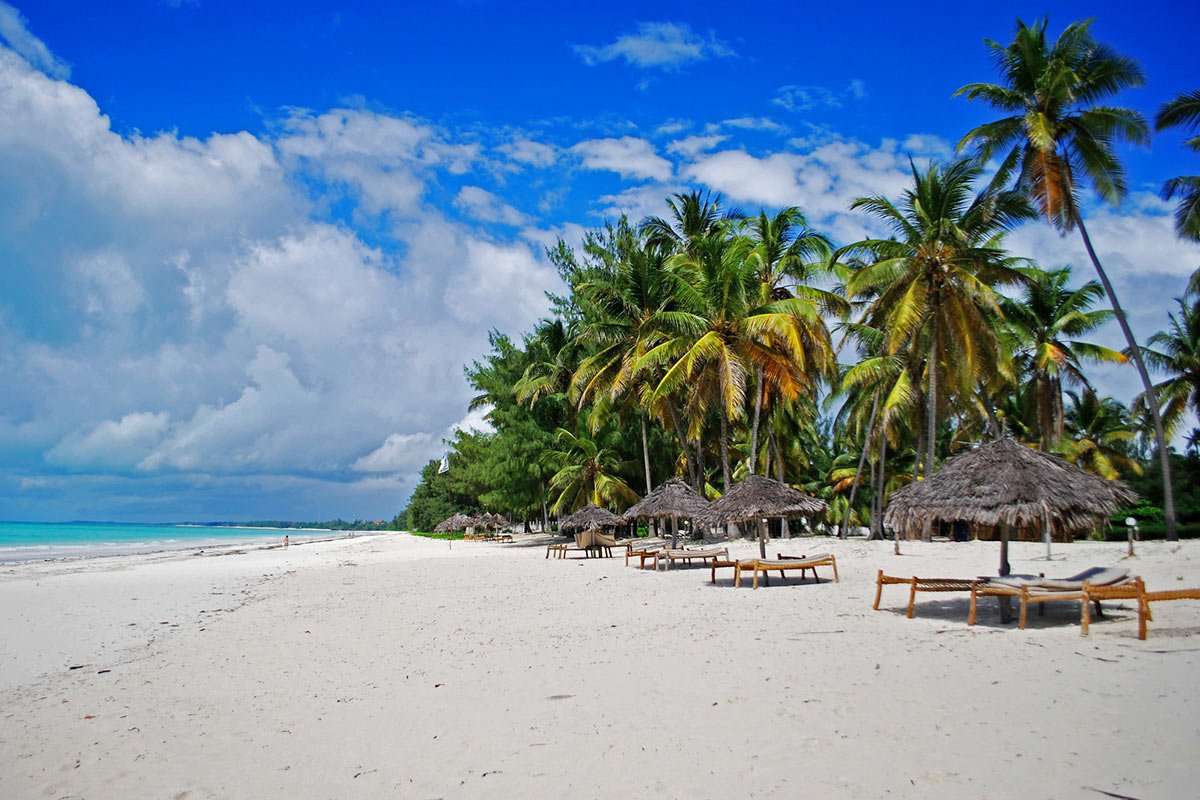
- Matemwe Lodge, Zanzibar — northeast coast, private beach, Indian Ocean
- Mnemba Atoll diving and snorkelling — one of East Africa’s premier reef dive sites
- Stone Town and Prison Island day trip from Zanzibar
- Zanzibar spice plantation visit
- Onsea House, Arusha — Michelin-trained chef, hilltop estate arrival night

General Information
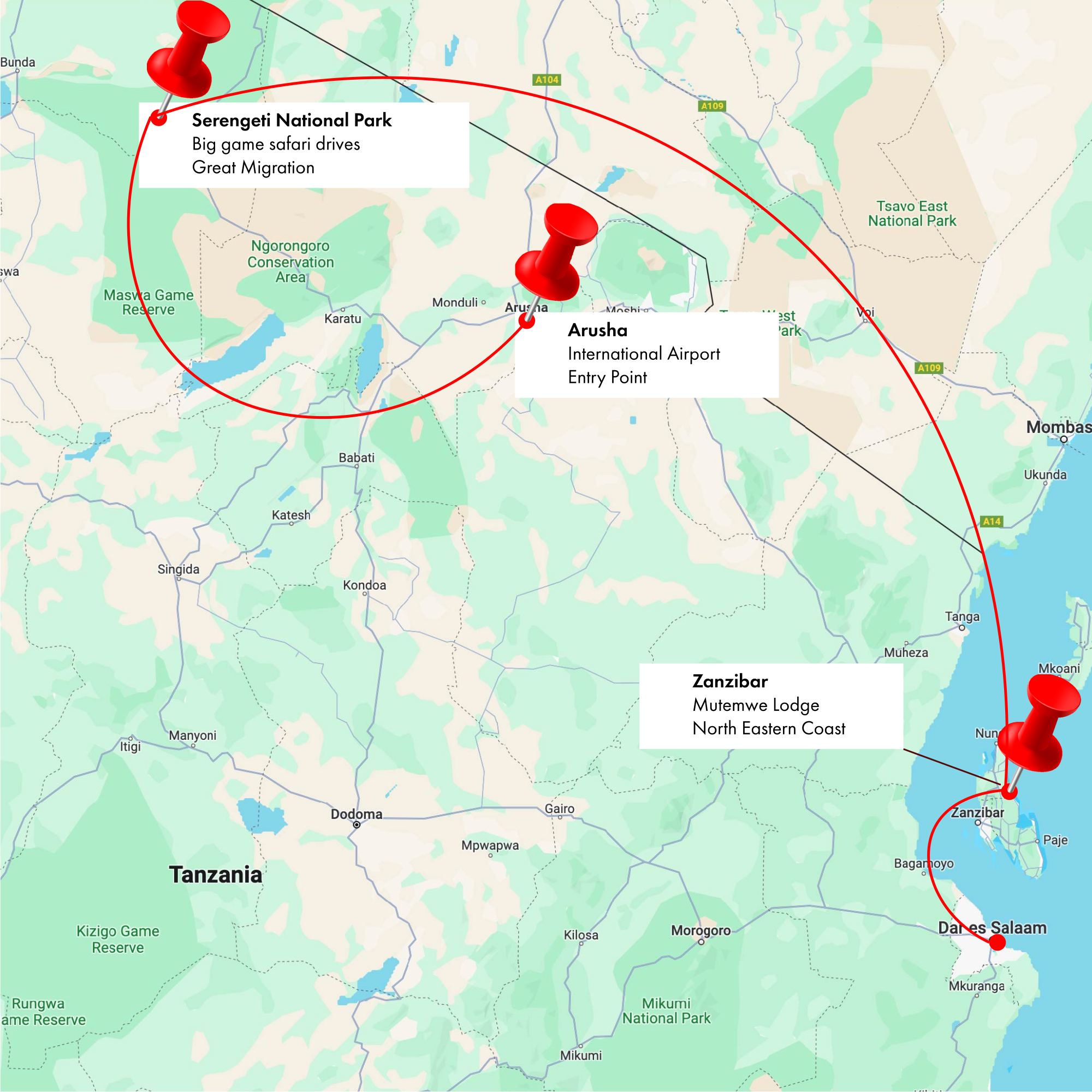
Tanzania’s two flagship tourist experiences — the Serengeti ecosystem and Zanzibar’s Indian Ocean coast — sit on opposite ends of the country but are connected by a short domestic flight. The combination is one of East Africa’s most established travel formats precisely because the contrast is so complete: the open savannah and its wildlife give way within hours to white sand, warm water, and the Swahili coast’s relaxed rhythms.
The Serengeti National Park covers nearly 15,000 km² and is the northern anchor of the larger Serengeti-Mara ecosystem extending into Kenya. It holds the world’s largest annual mammal migration — around 1.5 million wildebeest, 250,000 zebra, and 500,000 gazelle moving in a clockwise circuit across the ecosystem in response to rainfall. The migration is a year-round phenomenon rather than a single seasonal event.
Zanzibar is a semi-autonomous archipelago off Tanzania’s coast — historically a hub of the Indian Ocean spice and slave trade, now most visited for its beaches, reef diving, and the UNESCO-listed Stone Town. The northeastern coast, where Matemwe Lodge sits, faces the open Indian Ocean and the protected Mnemba Atoll conservation area — one of the most biodiverse reef systems in East Africa.

What's Included?
- Accommodation throughout, meals as indicated
- Concession and park fees (Serengeti)
- Asilia Conservation Charge (Olakira Migration Camp)
- Domestic flight: Arusha to Kogatende Airstrip (Serengeti)
- Domestic flight: Kogatende Airstrip to Zanzibar
- Domestic flight: Zanzibar to Dar es Salaam (Julius Nyerere International Airport) for onward connections
- Intercamp and airstrip transfers
- Government taxes
- International flights to/from Kilimanjaro, Dar es Salaam, or Zanzibar
- Travel insurance (required — not provided)
- Tanzania tourist visa costs and processing
- Extra activities and meals not listed in the itinerary
- Extra luggage on domestic flights
- Service tips, gratuities, souvenirs, and snacks
- Accommodation and meals at Onsea House (Day 1) — confirm inclusion status with the team at booking as this may be an add-on rather than included
Detailed
Itinerary
This 9-day itinerary has a simple two-chapter structure: Serengeti for four nights, Zanzibar for four nights, with Arusha as the entry point and Dar es Salaam as the exit. The domestic flights connecting the three stages are all included, keeping the logistics clean.
Olakira Migration Camp’s positioning by season is the key variable — the camp moves between the northern Serengeti (Bolongoja area, near the Mara River crossings) in the June to November dry season, and Ndutu in the southern short-grass plains for the December to March calving season. In either location, guests are positioned to experience the migration at its most dramatic. The Serengeti’s resident wildlife is excellent in all months regardless of migration position.
The four Zanzibar nights are structured for decompression — the pace shifts entirely from the early starts and active game drives of the Serengeti to the beach, water sports, and optional cultural excursions of Matemwe.
Testimonials
What Our Travellers Say


Some of Our
Frequently Asked Questions
This is a relaxed itinerary. All Serengeti game drives are vehicle-based. The Zanzibar activities — diving, snorkelling, Stone Town walking tour, and spice farm visit — range from easy to moderate. No hiking or extended physical effort is required at any point. Diving requires current dive certification; snorkelling is open to all swimmers.
Olakira Migration Camp tracks the migration year-round, so there is no bad time. The Mara River crossings in the northern Serengeti peak between July and October — this is the most dramatic window and the most sought-after. The Ndutu calving season (December to March) is spectacular in a different way — enormous concentrations of newborns and predators on the open southern plains. June and November are shoulder months between the two positions. The team will advise on Olakira’s current position for your specific travel dates.
Olakira is an Asilia Africa tented camp that physically relocates twice a year to follow the wildebeest migration — north to the Bolongoja area near the Mara River for the dry season crossings, and south to Ndutu for the calving season. The camp moves before guests arrive, so all stays are in a fully established camp. The benefit is always being positioned where the migration is most active, rather than in a fixed location that the herds may not be visiting at that time.
Mnemba Atoll is a marine conservation area off Zanzibar’s northeastern coast — one of the most biodiverse reef systems in the western Indian Ocean, with coral gardens, large fish species, green and hawksbill turtles, spinner dolphins, and seasonal whale sharks (October to February). Scuba diving requires current PADI or equivalent certification. Snorkelling is available without certification and delivers excellent visibility at the reef’s shallower sections. Matemwe Lodge can arrange dive courses for beginners on request.
Yes. The Ngorongoro Crater can be added before or after the Serengeti for travellers wanting to include it — a one to two day extension from Arusha. Additional Zanzibar nights are easily added for those wanting more beach time. The itinerary can also be extended with a Uganda or Rwanda gorilla trekking component at the start for a full East Africa trip.
Zanzibar is warm year-round, with sea temperatures between 25°C and 29°C throughout the year. The long rains (April–May) bring overcast weather and occasional heavy downpours, though beach days are still possible. The short rains (November) are shorter and less disruptive. The calmest seas for diving and snorkelling are during the dry seasons — July to October and January to March. The Mnemba Atoll is diveable for most of the year, with the best visibility in the June to October window.
