
Mburo Eagle’s Nest
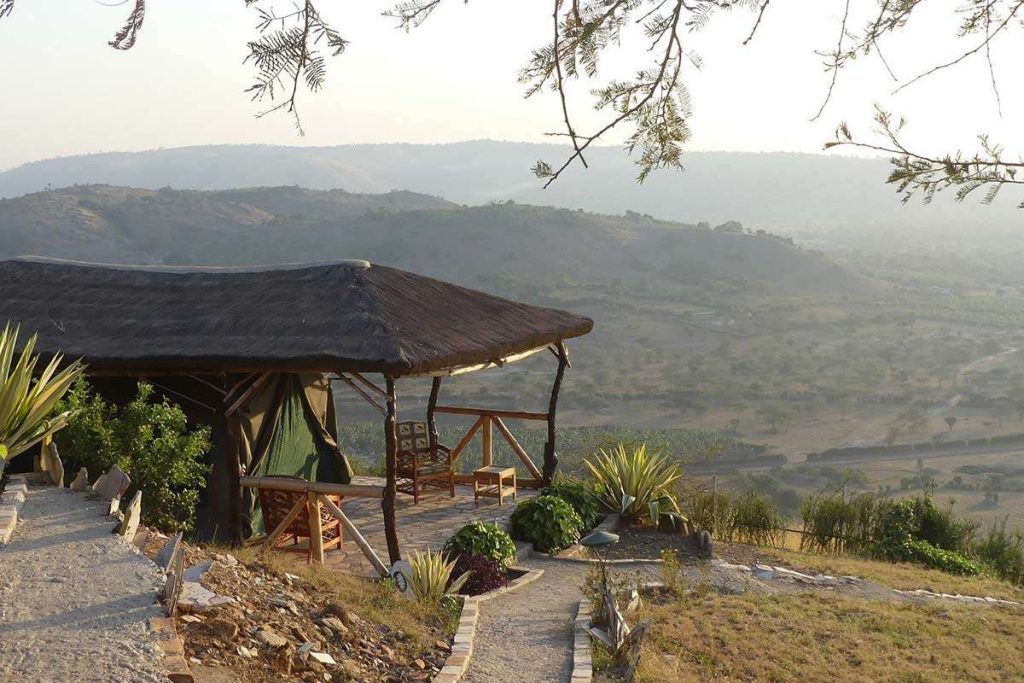
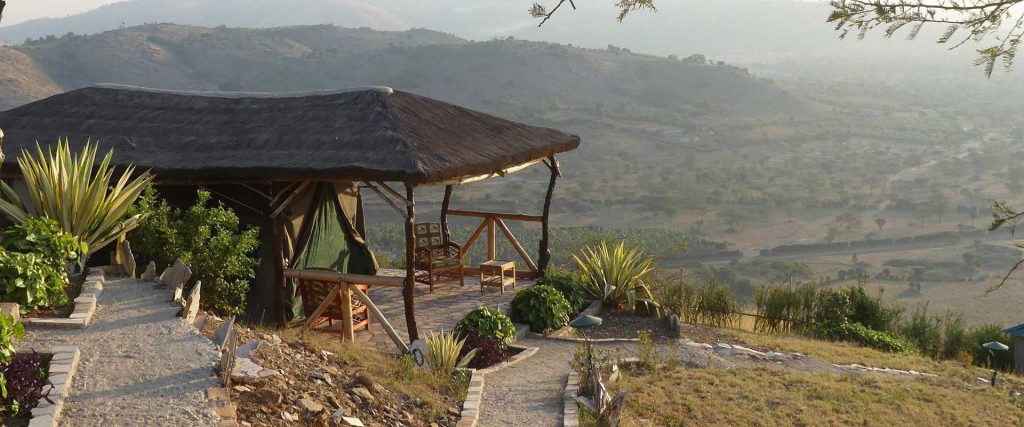
Mburo Eagle’s Nest is a budget tented camp perched on a high hill at the edge of Lake Mburo National Park in southwestern Uganda, approximately 1 km from Sanga Gate. Ten permanently erected en-suite canvas safari tents each have a private veranda facing directly over the park’s savannah plains — the elevated hilltop position gives the camp some of the widest open views of any property in the Lake Mburo area. Basic non-self-contained tents with shared facilities provide the lowest-cost option in the Nkuringo Lake Mburo portfolio. The camp is a natural stopover on the Kampala–Bwindi overland route, sitting roughly halfway between the two.

Hilltop Park Views
En-suite Safari Tents
Private Verandas
Restaurant & Bar
Campfire Dinners (Potjiekos)
Wi-Fi Available
USB Charging Points
Night Game Drives
Mburo Eagle’s Nest
Mburo Eagle’s Nest is a budget tented camp on the edge of Lake Mburo National Park in southwestern Uganda, positioned on a high hill approximately 1 km from Sanga Gate. The camp’s hilltop site gives it unobstructed views across the park’s savannah, wetlands, and acacia woodland — guests regularly spot zebra, impala, and warthog from their tent verandas without entering the park.
Lake Mburo National Park covers 371 km² of mixed savannah, acacia woodland, wetlands, and five lakes. It is the smallest of Uganda’s national parks and the only one to protect impala. It lacks lion and elephant, which makes it one of the safest parks for walking safaris in Uganda. The park is commonly used as a stopover on the Kampala–Bwindi gorilla trekking route, with the drive from Kampala taking four to five hours and the camp sitting roughly halfway to Bwindi.
Mburo Eagle’s Nest is the most affordable camp in the Nkuringo Lake Mburo portfolio. Published rates are available — see the pricing section below.
Accommodation at Mburo Eagle’s Nest
The camp has two categories of tent.
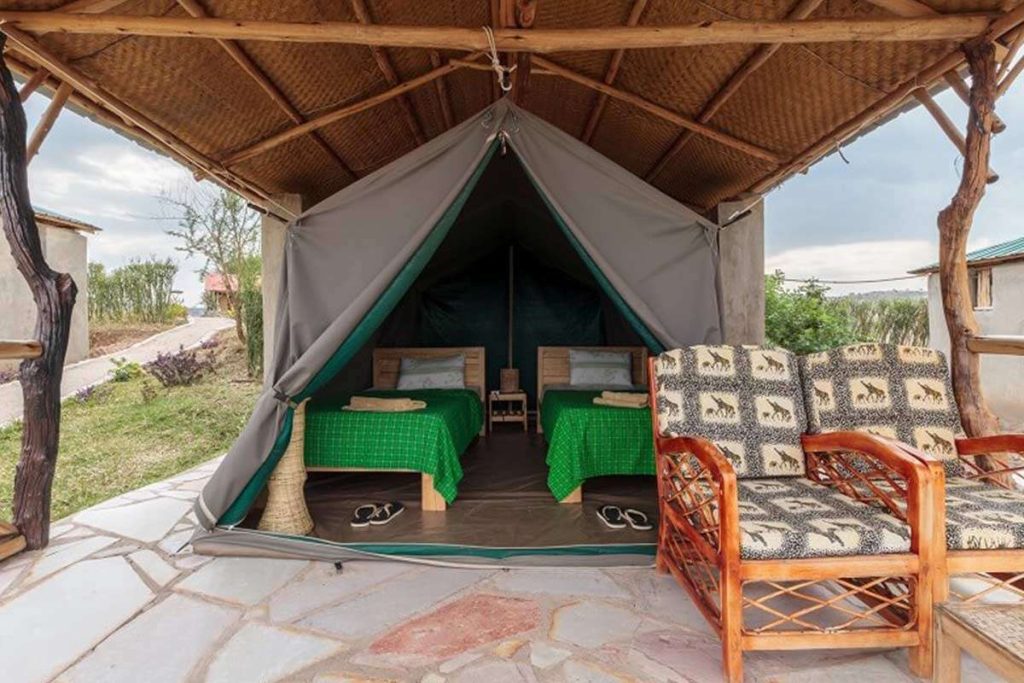
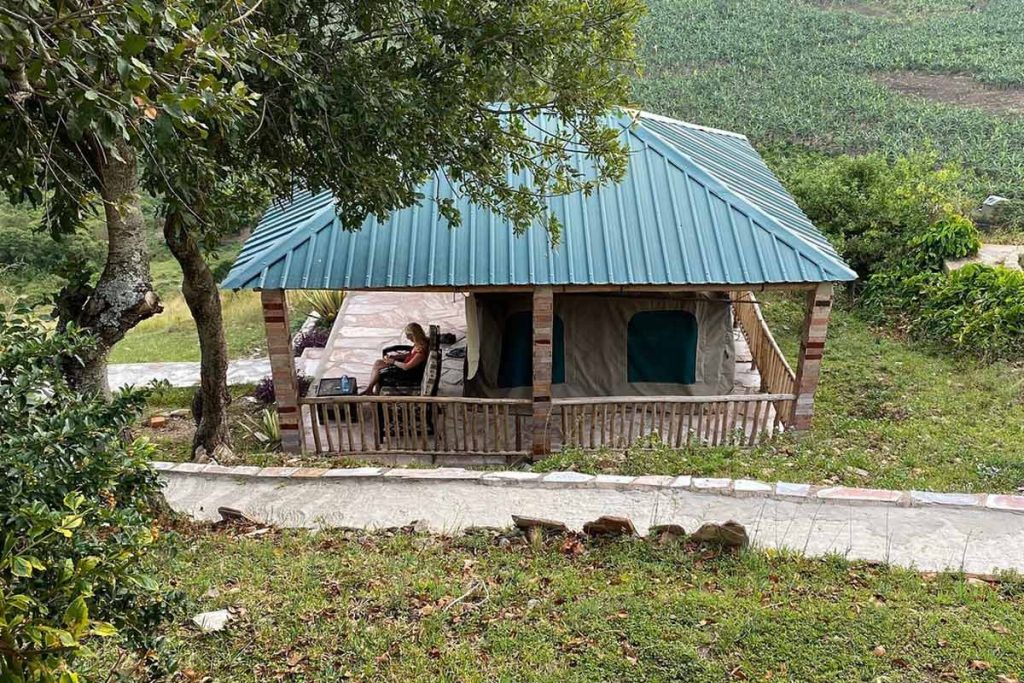
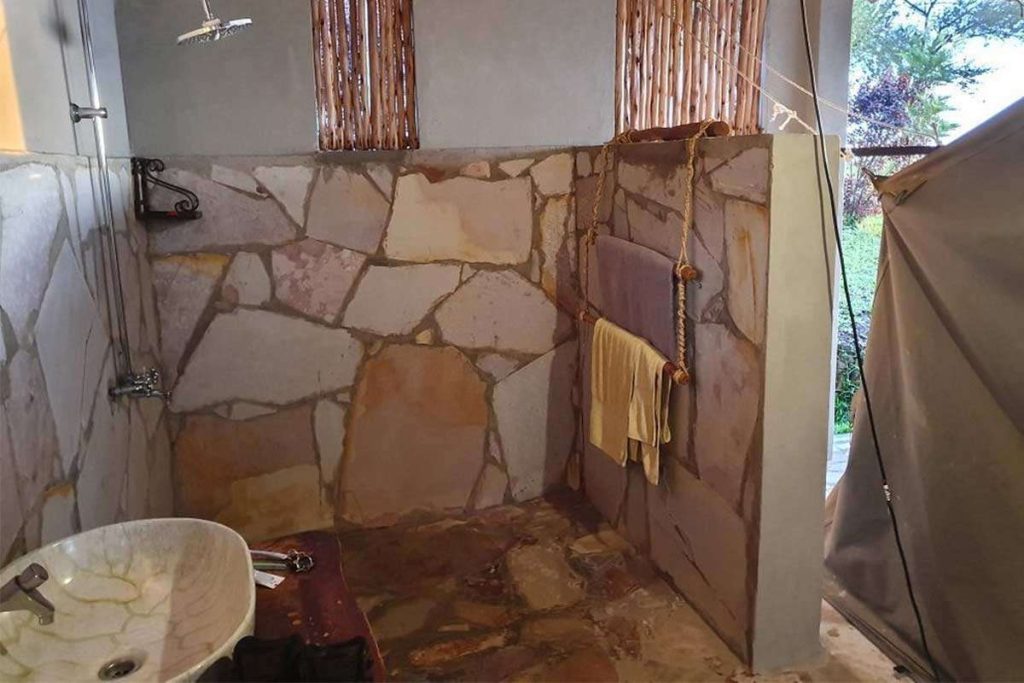
En-suite Safari Tents (10): Canvas tents permanently set up on the hillside, each under a thatched roof and with a private outdoor living area. Every tent faces the park and has its own veranda with seating. En-suite bathrooms feature a bush shower (hot water filled on request) and an eco-friendly toilet. Twin bed configuration. Views of the park’s plains are visible from inside the tents through large windows and from the veranda. Zebra can sometimes be spotted grazing in the park from the tent itself.
Basic Tents (non-self-contained): Simpler canvas tents under thatched roofs, sharing a communal ablution block with showers and flushing toilets. Each tent is furnished for up to two occupants with twin single beds, a bedside table, and USB charging points. All bedding and towels are provided. These tents also have private outdoor terrace areas.
Dining
All meals are served in the central restaurant and bar building, which sits in the middle of the camp. The kitchen is open for breakfast, lunch, and dinner. The menu spans continental, Italian, and Indian dishes, with buffet-style options at dinner.
The camp’s most distinctive dining feature is its potjiekos tradition — dinner is prepared over a wood fire using large cast-iron pots, a Southern African cooking method that turns the evening meal into a social, campfire event. Guests typically hear the sounds of the bush — crickets, frogs, night birds, and distant bush pigs — during dinner. Packed lunches and early breakfasts are available for guests with early departures.
Activities
Lake Mburo National Park is open for a wide range of activities and, unusually for Uganda, allows walking throughout the park when accompanied by an armed ranger guide.
Game Drives: Day game drives in the park cover acacia woodland, wetlands, grassy hillsides, rock outcrops, and seasonally flooded valley floors. Wildlife includes zebra, impala, topi, warthog, waterbuck, eland, bushbuck, buffalo, and the shy sitatunga. The park hosts a significant leopard population. Kazuma lookout — reached on foot from the vehicle after parking — gives panoramic views over the plains. Early morning and late afternoon are the most productive times.
Night Game Drives: Lake Mburo National Park is one of the few Ugandan parks that offers night drives. Bush pigs, genet cats, white-tailed mongoose, spotted hyena, and leopard all become more active after dark. Night drives are guided with a spotlight and offer a different perspective to the standard daytime circuit.
Nature Walks: All walks in the park require an armed UWA guide. A two-hour loop from the camp covers valleys, ridges, and swamp sections — the swamp walk includes raised viewing platforms over the wetland, where sitatunga and shoebill stork are occasionally seen. The park’s wildlife is generally calmer around walkers than larger vehicles, and the absence of lion and elephant makes Lake Mburo one of Uganda’s most accessible parks for walking.
Boat Safari on Lake Mburo: Boat trips depart from Rwonyo jetty throughout the day, with the last departure at 17:30. The two-hour cruise covers the eastern bank of the lake, with reliable sightings of hippo, crocodile, buffalo, and waterbirds including African fish eagle, shoebill, pied kingfisher, hammerkop, and African finfoot. UWA guides narrate wildlife and local folk tales during the cruise. Cost: approximately $20 per person (foreigners) on a shared small boat; approximately $30 per person on a larger boat. Prices subject to change — confirm with UWA or Nkuringo Safaris.
Biking Safari: Mountain bikes can be hired from the camp to explore sandy tracks outside the park. Trails suit a range of fitness levels, from gentle family rides through the ranchlands to more technical routes inside the park. A guide can be arranged.
Game Drive Outside the Park: The Ankole ranchlands surrounding the park support free-roaming wildlife: zebra, impala, topi, warthog, waterbuck, and eland move freely beyond the park boundary. An outside game drive provides wildlife sightings even if the park day entry has expired, and passes Bahima pastoralist homesteads and long-horned Ankole cattle.
Fishing: Lake Mburo contains around six fish species. Tilapia is the most common. The designated fishing spot is at Mazinga on the lake.
Location & Getting There
Mburo Eagle’s Nest is located near the last village on the Sanga Gate access road, approximately 1 km from Sanga Gate into Lake Mburo National Park.
From the Mbarara-Masaka highway: Take the Sanga Gate (northern access) road, which branches south approximately 37 km east of Mbarara. The access road is unpaved dirt, rough in sections, and may require a 4WD vehicle during wet seasons. The drive from the highway to Eagle’s Nest takes approximately one hour.
From Kampala: Four to five hours overland (approximately 230 km) via the Mbarara-Masaka highway.
From Bwindi Impenetrable National Park: Approximately 3.5–4 hours, making Lake Mburo a natural overnight stop on the Bwindi-Entebbe return journey
PRICE INFORMATION
Price From: $30 per person (Basic Tent, B&B single occupancy) Price Range: 1 (budget)
Full Rate Table (as published on source page):
| Room Type | B&B | Half Board | Full Board |
| Safari Tent — Single Occupancy | $70 | $80 | $90 |
| Safari Tent — Double/Twin Occupancy | $85 | $110 | $130 |
| Extra Bed | $30 | $45 | $55 |
| Basic Tent — Single | $30 | $65 | $75 |
| Basic Tent — Double | $50 | $65 | $75 |
Price from
Enquire
Price Range
-
Hilltop Park Views
-
En-suite Safari Tents
-
Private Verandas
-
Restaurant & Bar
-
Campfire Dinners (Potjiekos)
-
Wi-Fi Available
-
USB Charging Points
-
Night Game Drives

Some of Our
Frequently Asked Questions
The en-suite safari tents (10 in total) are the main accommodation: permanently erected canvas tents under thatched roofs, each with a private veranda facing the park, twin beds, and a private bush bathroom (shower filled on request, eco-friendly toilet). The basic tents are simpler canvas structures sharing a communal ablution block with showers and flushing toilets. Both tent types include bedding, towels, and USB charging points, and both face the park views.
Eagle’s Nest is approximately 1 km from Sanga Gate, the northern entrance to Lake Mburo National Park — around 10 minutes by road. Game drives, walking safaris, and boat trips on the lake are all accessed from or near the camp. UWA guides are required for all activities inside the park and can be arranged at the gate or through the camp.
No. Lake Mburo National Park does not have lion or elephant, which distinguishes it from Uganda’s larger parks. The park’s wildlife includes zebra, impala, topi, warthog, waterbuck, eland, buffalo, sitatunga, and bushbuck. Leopard are present in good numbers. The absence of large predators and elephant makes Lake Mburo one of the best parks in Uganda for walking safaris.
Potjiekos is a Southern African cooking tradition in which meals are prepared slowly over a wood fire in large cast-iron pots. At Eagle’s Nest, dinner is cooked this way each evening, with guests gathering around the campfire as the food is prepared. The surrounding bush sounds — insects, frogs, distant animals — provide an immersive backdrop. The menu also covers continental, Italian, and Indian dishes, and buffet-style options are available. Packed lunches and early breakfasts are provided for guests departing before standard meal times.
Yes. Lake Mburo National Park sits approximately halfway on the Kampala–Bwindi overland route. Adding one night at Eagle’s Nest allows a boat safari, a game drive, and a walking safari without significantly extending the overall journey time. The camp is four to five hours from Kampala and approximately 3.5–4 hours from Bwindi — breaking the drive into two manageable legs.
The access road from the Mbarara-Masaka highway to Eagle’s Nest is unpaved dirt and can be rough, particularly during wet seasons (March–May, September–November). A 4WD vehicle is recommended during the rains. In dry conditions (June–August, December–January) the road is generally passable in a standard vehicle. Allow approximately one hour from the highway to the camp.
Testimonials
