
9-Day Treasures of Tanzania Safari


Overview
This 9-day Tanzania safari itinerary covers three parks that together give the fullest picture of what the northern circuit offers. Tarangire National Park opens the trip — less visited than the Serengeti but arguably its equal in certain seasons, with some of the largest elephant concentrations in East Africa gathering along the Tarangire River during the dry months, and baobab-studded acacia woodland that looks unlike anywhere else in Tanzania. The fringe-eared oryx and lesser kudu add species you won’t find in the parks further north.
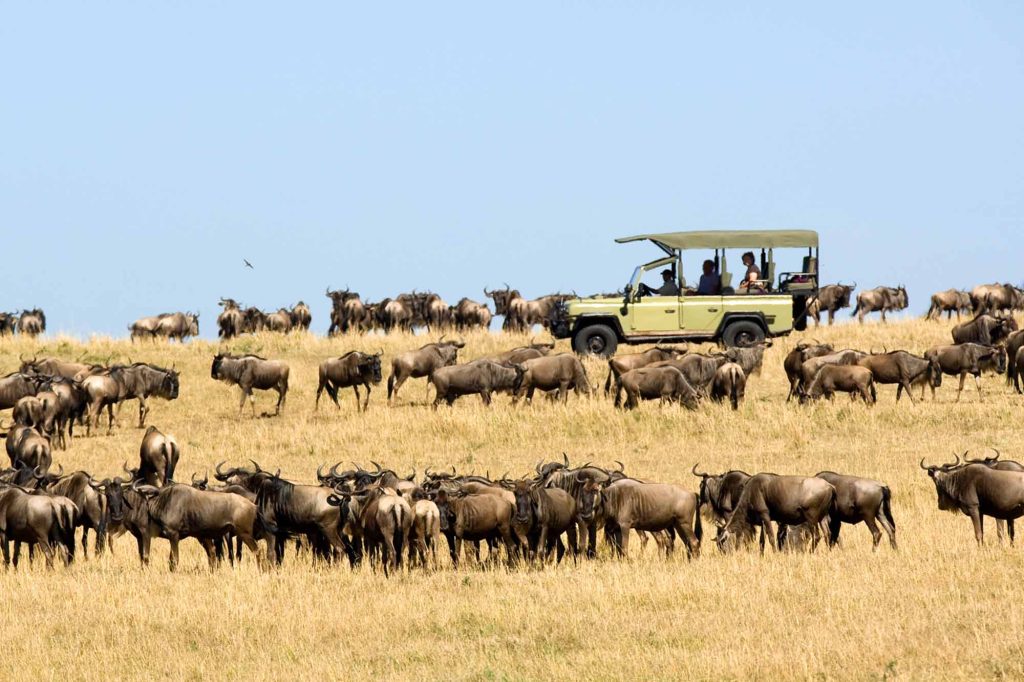
From Tarangire the route moves west into the Serengeti — two full days covering the Grumeti River corridor and the Seronera Valley, the park’s most wildlife-dense central zone. Predator sightings here are among the most reliable in Africa: resident lion prides, cheetah on the open plains, leopard in the fever trees along the rivers, and the seasonal presence of the Great Migration’s millions of wildebeest and zebra pushing through from south to north.
The itinerary ends in the Ngorongoro Conservation Area — a full day descending into the crater, with the Olduvai Gorge stop en route adding an unexpected dimension to the transfer day. The crater floor delivers the Big Five in a concentrated, enclosed setting that the open plains of the Serengeti can’t replicate.
It suits travellers who want more depth than the standard 7-day Serengeti–Ngorongoro circuit offers, with Tarangire adding a genuinely different ecosystem and a calmer, less-visited alternative to start the trip.
Key Information:
- Duration: 9 days
- Departure Location: Arusha / Kilimanjaro International Airport
- Trip Type: Tailored / Family safari


Most people fly straight into the Serengeti. Starting in Tarangire gives you something different first — the baobabs, the river elephants, the quieter pace. By the time you hit the Serengeti you're already deep in it.
Highlights
- Elephant herds at the Tarangire River — some of the largest concentrations in East Africa
- Fringe-eared oryx and lesser kudu, unique to the Tarangire ecosystem
- Big Five game drives across the Serengeti’s Grumeti and Seronera corridors
- Great Migration wildebeest and zebra movement (season-dependent)
- A full day on the Ngorongoro Crater floor, including black rhino sightings
- Olduvai Gorge stop en route to Ngorongoro
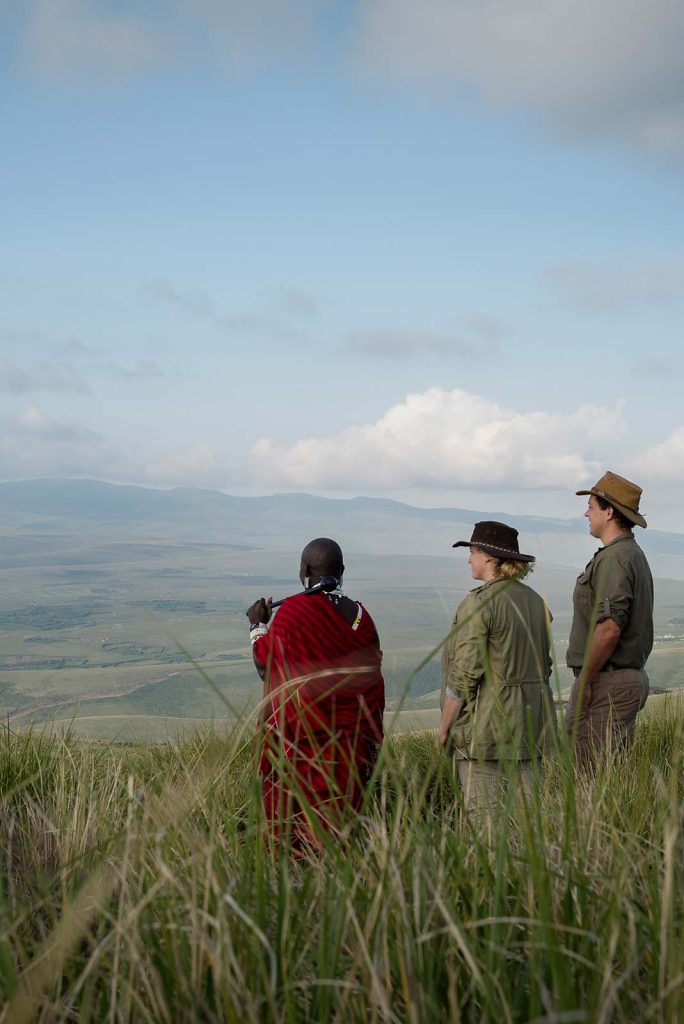
- Maasai village cultural visit in the Serengeti

General Information
Tanzania’s northern safari circuit sits within a relatively compact area of highland and savannah stretching west from Arusha — making it possible to cover Tarangire, the Serengeti, and Ngorongoro in a single overland itinerary without retracing ground. Each park sits in a distinct ecological zone: Tarangire’s semi-arid acacia and baobab woodland along a permanent river; the Serengeti’s vast open grassland ecosystem; and the Ngorongoro highlands, where the collapsed caldera creates a self-contained world 600 m below the crater rim.
The Serengeti alone covers nearly 15,000 km² and shares its wildlife population with Kenya’s Masai Mara to the north — the same herds that cross the Mara River in the Kenyan dry season push south again through the Serengeti in the green season, in a continuous annual loop. Tarangire, by contrast, functions as a dry-season refuge — wildlife from across a vast migratory system converges on the permanent Tarangire River when surrounding water sources fail, creating extraordinary concentrations from June to October.
Arusha is the gateway to the entire northern circuit, sitting at 1,400 m in the shadow of Mount Meru with Kilimanjaro International Airport nearby. Most Tanzania northern circuit itineraries begin and end here.

What's Included?
- Accommodation as indicated in the itinerary, full board throughout (Day 1 bed & breakfast)
- All meals as per meal plan
- Local English-speaking guide and driver throughout
- All in-country land transfers by 4×4 safari vehicle
- Park entry fees for Tarangire, Serengeti, and Ngorongoro Conservation Area
- Ngorongoro Crater descent and game drive fees
- All activities and excursions listed in the itinerary
- AMREF emergency evacuation cover
- Government taxes and service tips
- International flights to/from Kilimanjaro or Arusha
- Travel insurance (required — not provided)
- Tanzania tourist visa costs (apply in advance or on arrival)
- Personal expenses — drinks, souvenirs, additional gratuities
- Optional hot air balloon safari over the Serengeti (available at additional cost)
- Optional activities not listed in the itinerary
Detailed
Itinerary
This 9-day itinerary follows the natural flow of Tanzania’s northern circuit from east to west and back again — Tarangire first, then deeper into the Serengeti, then back through the Ngorongoro highlands to Arusha. Each park is given enough time to breathe: two nights in Tarangire for proper coverage of the river and woodland zones, two full days in the Serengeti covering different game drive corridors, and two nights at Ngorongoro for one full crater day plus the transfer-day stop at Olduvai Gorge.
The overland routing throughout means every drive between parks passes through scenery and landscapes that are part of the experience — Maasai settlements, highland scenery, the escarpment views approaching Ngorongoro, and the gradual shift in terrain from park to park.
Testimonials
What Our Travellers Say




Some of Our
Frequently Asked Questions
This itinerary is suitable for all fitness levels. All game drives are vehicle-based throughout. The Olduvai Gorge stop involves a short, easy walk on flat ground. The Ngorongoro Crater descent and ascent are done entirely by vehicle on graded tracks. Optional guided walks in Tarangire are available but not required.
The key addition is Tarangire National Park — two full days in a park with a distinct ecosystem and a different cast of wildlife to the Serengeti. Tarangire’s dry-season elephant concentrations, fringe-eared oryx, lesser kudu, and baobab landscapes are found nowhere else on the northern circuit. Travellers with an extra two days will get a noticeably richer overall experience.
All three parks deliver strong wildlife year-round. The dry season (June to October) is the peak window for Tarangire — the Tarangire River draws wildlife from across the ecosystem as surrounding water sources dry up, creating the park’s most dramatic elephant concentrations. The Great Migration’s Serengeti river crossings peak between July and October. The Ngorongoro Crater is excellent in every month — its resident wildlife population doesn’t migrate.
All accommodation is mid-range to luxury, full board. Options include Tarangire Safari Lodge or Tarangire Kuro Treetops (Tarangire), Serengeti Sametu Camp or Nasikia Mobile Camp (Serengeti), and Ngorongoro Serena Safari Lodge or The Manor at Ngorongoro (Ngorongoro). Alternatives at the same tier can be discussed at the planning stage.
Yes. Game drives work well for children of all ages, and the variety across three distinct parks gives a genuinely varied experience — Tarangire’s baobabs and river elephants, the Serengeti’s open plains, and the enclosed drama of the crater floor are all different enough to hold interest. The Olduvai Gorge stop is a strong educational element for older children. The Maasai village visit is engaging for all ages.
Yes. Lake Manyara National Park sits between Tarangire and the Serengeti and can be added as a half-day or full-day stop — it’s known for tree-climbing lions and prolific flamingo concentrations. Zanzibar makes a natural extension for three to four nights of beach time after the safari circuit ends in Arusha. The trip can also be combined with Uganda or Rwanda gorilla trekking for a wider East Africa itinerary.
